Gaia Vince's remarkable book is far more than a litany of the problems of global warming and mass extinction, writes Robert Hunziker. It's also an inspiring account of how people can respond to such crises in wonderful, imaginative, creative ways, achieving seemingly impossible tasks from seeding glaciers in the Himalayas, to holding back the desert with dew.
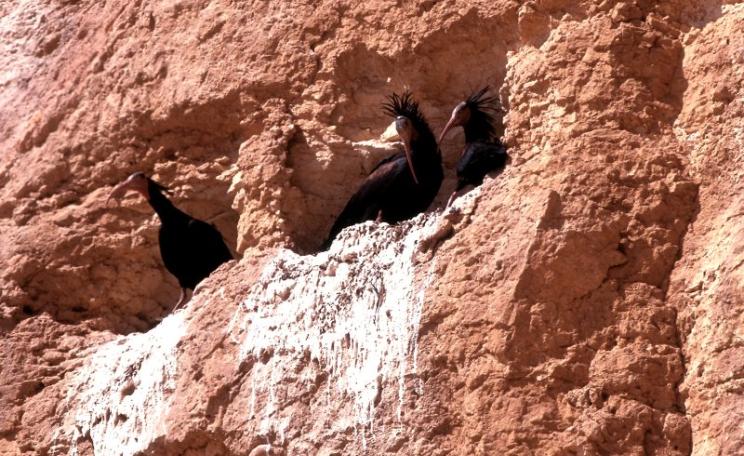
Reports that Syria's iconic Northern Bald Ibis colony is endangered by IS's capture of Palmyra are mistaken, writes Gianluca Serra. The species is already extinct as a breeding population for reasons unconnected with IS. The war that is destroying Syria came only as the last straw for a long-dwindling species whose plight the world chose to ignore.
Africa's poor environmental record has its roots in colonialism, which cut artificial boundaries through peoples and ecosystems, and left a rigid 'fortress conservation' ethic, writes Willem Daniel Lubbe. It's time for countries to adopt a new pan-African environmentalism, and transcend their colonial past.
The strongly protected marine reserve in Lamlash Bay, Arran, has been a huge success, write Bryce Stewart & Leigh Howarth, with abandant life returning to the once denuded waters. The government's refusal to expand such protections represents a huge wasted opportunity for both fishing and the marine environment.
A coveted award has put the campaign to protect and recover marine life in the Firth of Clyde, Scotland, into the international limelight. Goldman Prize winner Howard Wood explains how Arran Islanders' efforts to keep scallop dredgers out of Lamlash Bay has brought life, and fish, back to the sea.
Large areas of forest remain around the world, writes David Edwards, but many of them are - in biological terms - dying on their feet as their species diversity erodes due to fragmentation. To conserve the full richness of our forests, we must keep them entire and unbroken, and rebuild the continuity of forest islands.
Advanced molecular genetic techniques are allowing scientists to breed disease resistance from wild grape varieties into susceptible domestic cultivars used for making wine, writes Andrew Walker. And it's all being done by conventional plant breeding accelerated by the use of DNA markers - with not a GMO in sight!
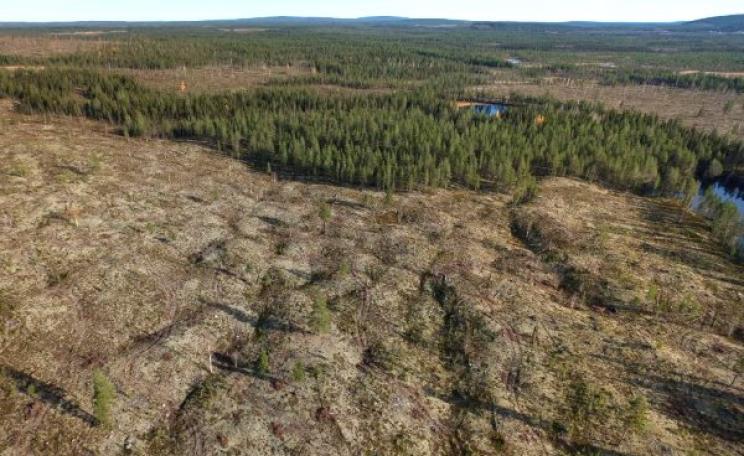
Sweden's biodiverse ancient forests will be largely wiped out within two decades, writes Alec Forss - and along with it will go thousands of species that depend on mature forest ecosystems. But with powerful logging companies riding roughshod over the law, regulators, politicians and certifiers, who is to stop the destruction before it's too late?
Countries at the UN have agreed to start formal negotiations on a new 'legally binding instrument' to conserve the biological riches of the high seas that cover 45% of planet Earth, and ensure their sustainable use for the benefit of all mankind.
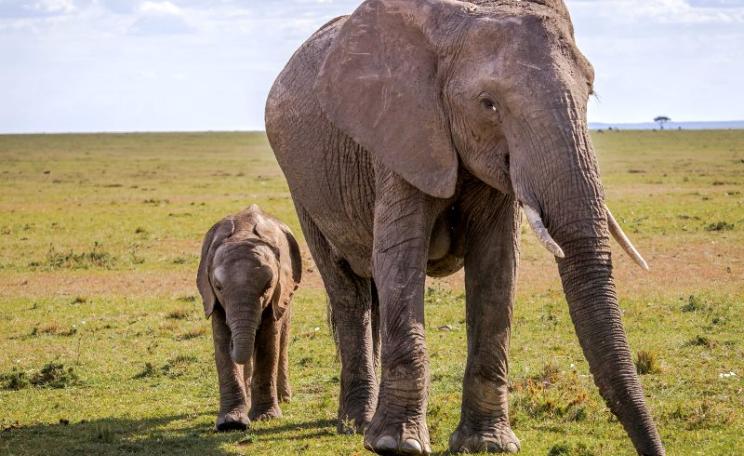
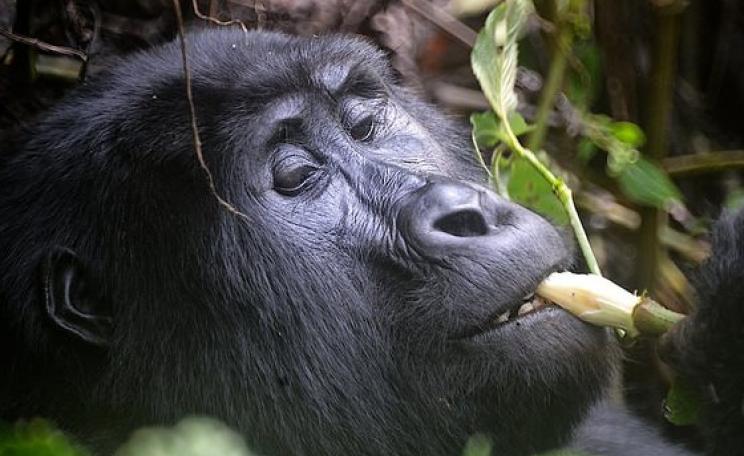
Ebola has wiped out a third of chimps and gorillas since the 1990s, writes Meera Inglis, and together with hunting and deforestation is pushing them towards extinction. So why haven't we even used a safe, effective Ebola vaccine developed for chimps and gorillas?
Ranchers can deliberately abuse public land and the wildlife that lives on it at will, writes George Wuerthner, confident that any breaches of the law are likely to be overlooked. But it's another thing altogether if you're trying to protect that land from destructive exploitation. Why the double standard?
In this imaginary letter to the father of modern taxonomy and ecology, Carl Linnaeus, about the current status of life on Earth, Gianluca Serra suggests renaming the human species from the self-satisfied 'wise' to 'obtuse' - if only to spare us from the ridicule we so richly deserve for our collective insanity.
Bangladesh's Sundarbans forest, home of incredibly rich biodiversity, is under unprecedented threat, writes ASMG Kibria. The recent oil tanker capsize on the Shela river puts the forest at risk of widespread biodiversity loss, but just this week, the authorities re-opened the Shela river to shipping with no restrictions on hazardous cargoes.
Nuclear energy is essential to preserve the world's biodiversity, according to 69 conservation scientists. But there's a mysterious omission in their analysis, writes Jim Green: nuclear weapons proliferation. And after a major exchange of nuclear bombs, and the 'nuclear winter' that would follow, exactly how much biodiversity would survive?
The white rhino is in deep trouble after a new surge of poaching. But the fact that it's there at all is largely thanks to one man: Ian Player, who saved the white rhino from near-certain extinction in the 1960's. Earlier this year Nicola Graydon met Dr Player at his home in South Africa, to record his last major interview.