Recognising nature as a legal stakeholder with inalienable rights in environmental law proceedings is a powerful counterbalance to corporate dictatorship, writes Mumta Ito. It empowers people and governments to stand up for nature - the underlying basis of our economy and our lives. And it stands in contrast to feeble approaches based on the financialisation and commodification of nature, which may be twisted to justify more destruction.
A $4m plan to move 80 rhinos from South Africa to Australia is inept, patronising, a waste of scarce resources that contributes nothing to conservation, and betrays an outdated neocolonial mindset, writes Matt Hayward. The money should be spent on successful but underfunded community-based rhino conservation initiatives in Africa that benefit entire ecosystems.
It's barely mentioned in the election campaign or reported in the media. But a powerful faction of Tory ministers, ex-ministers and backbench MPs are bent on using Brexit to ignite a massive bonfire of 'spirit-crushing' laws on wildlife protection, air and water pollution, pesticides, renewable energy and public health, writes Brendan Montague. At risk are not just EU directives and regulations but even the UK's own Climate Change Act. May's Brexit may not just be hard, but very, very dirty.
Who are the best guardians of forests and other wild places? Governments? Conservation NGOs? Corporations? No, writes Prakash Kashwan, it's the indigenous peoples who have lived in harmony with their environment for millennia. But to be able do so, they must first be accorded rights to their historic lands and resources, both in law and in practice. Among the countries leading the way, Mexico. Among the laggards, Kenya and India.
A new study in Pennsylvania, USA shows that fracking is strongly related to increased mortality in young babies. The effect is most pronounced in counties with many drinking water wells indicating that contamination by 'produced water' from fracking is a likely cause. Radioactive pollution with uranium, thorium and radium is a 'plausible explanation' for the excess deaths.
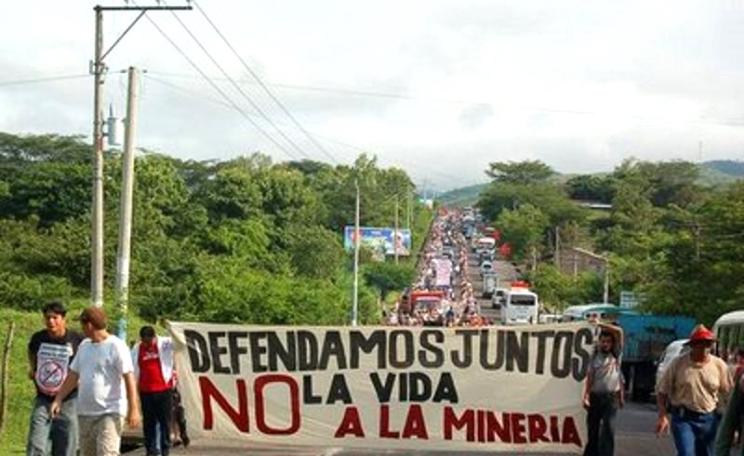
Mining was imposed on the Salvadoran people as a dream industry to aid development, create jobs and yield taxes to pay for schools and hospitals, write Ricardo Navarro & Sam Cossar-Gilber. But the reality was a nightmare of polluted water, stolen farmland, corporate violence, and murder. After a long campaign, El Salvador has just become the first country to ban all metal mining.
The Conservation Optimism Summit, (taking place on 20th-22nd April), is gathering together some of the biggest names in conservation to share the oft-neglected triumphs. Stories of mass reforestation and renewable technologies might not get a look-in on the front pages, but they constitute a breath of fresh air writes MARCUS NIELD
Venezuela is set to hand over 12% of the nation's territory in the upper reaches of the Amazon rainforest to mining corporations, writes Lucio Marcello, with 150 companies from 35 countries poised to devastate the army-controlled 'special economic zone'. But resistance is growing, and a counter-proposal aims to protect the area's precious biodiversity, indigenous cultures and water resources in a new South Orinoco Mega Reserve.
Warming sea waters - caused by climate change and extreme climatic events - threaten the stability of tropical coral reefs, with potentially devastating implications for many reef species and the human communities that reefs support warn scientists at Exeter University
A recently discovered peatland in northeast Peru contains two years worth of US carbon emissions, writes Joe Sandler Clarke, but it's under threat from the rapidly advancing 'palm oil frontier'. Now scientists are calling for the wetland's immediate protection - before it's too late to save it.
Over 90% of major armed conflicts between 1950-2000 occurred in countries containing biodiversity hotspots,writes Alex Reid, and more than 80% of these took place in the hotspot areas themselves. This poses a major challenge to the conservation community: to work in combat zones to strengthen environmental protection before, during and after conflicts. Or better still, to defuse incipient conflicts and resolve those under way, to reduce their toll on people, and nature.
A new study sets out the huge benefits of organic farming to people and the environment, writes Peter Melchett, including more wildlife, healthier consumers and farm workers, lower greenhouse gas emissions, reduced soil erosion and increased water retention. We need more of it, fast!
Ecologist reporter MAXINE NEWLANDS sat down with the world's leading coral reef expert, distinguished Professor Terry Hughes FAA, Director of the Australian Research Council Centre of Excellence for Integrated Coral Reef Studies, (ARCCOE) at James Cook University and asked him directly what are the chances for the Reefs' survival?
New Zealand's Maui dolphin, the world's smallest, is headed to extinction after a half-century of lethal encounters with fishermen's nets. Even as government-funded scientists detail its decline and opposition Labour and Greens call for net bans - which opinion polls show most Kiwis support - the ruling National Party, headed by a fishing magnate, denies there is any problem. CHRISTOPHER PALA reports ...