Campaigners against nuclear weapons on a 'Wrap up Trident' demo at the Ministry of Defence in London today have a new spring in their step, writes Paul Ingram. Thanks to the new electoral geometry of the 2015 general election, they could finally get to close down Britain's £100 billion nuclear weapons programme - and not a moment too soon!
After spending twelve days on a small island in Palau without the ample resources of modern life in developed cities, Andrew Broadbent ponders the crucial role trust will - and must - play in restoring our communities.
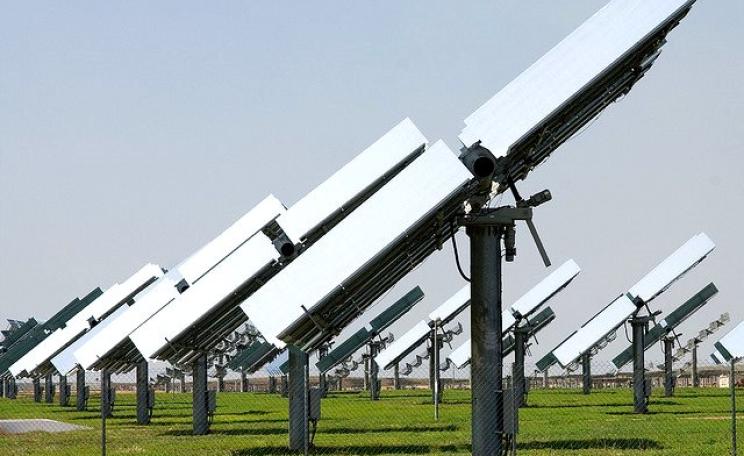
Launched at Davos this week, a WEF report on electricity generation predicts that solar power will cost twice as much in 2030, as the lowest cost sources today, writes Chris Goodall. It's sources? WEF isn't telling. But if 'facts' like these are driving the decisions of big energy CEOs, heaven help their companies in years to come.
Austria will launch its legal challenge against the UK's massive support package for the planned 3.2GW Hinkley Point C nuclear power station by April, writes Arthur Nelsen. The move will add years of delay to the controversial project, and may well finish it off altogether as fears over the troubled EPR reactor design grow, and renewables continue to fall in cost.
President Obama will shortly be on his way to India. In this Open Letter, Vandana Shiva invites him to join in securing the essential human freedoms to seeds and food - and to set aside any plans to pressure India into changing its laws to allow the corporate domination of life.
For 16 years the Thai government has ignored the plight of a community where toxic lead mine waste is causing severe chronic poisoning - defying both a 2013 court order, and its international obligations. It's just one of many toxic sites across Thailand that need to be cleaned up - but the government's main concern is to encourage further industrialisation.
Germany cut emissions and boosted renewables to record levels last year, writes Henner Weithöner. Yet the country's coal burn remains the EU's highest - and ambitious emissions targets can only be met by closing coal-burning power stations.
As hundreds of British dairy farmers are forced out of business by milk prices well below production cost, writes Patrick Holden, it's time for a 'fair trade' British milk label that guarantees a fair price to smaller scale farmers operating to good environmental and animal welfare standards.
As Greece prepares for its election this weekend, the leftist Syriza coalition stands alone as a progressive force committed to rebuild democracy and civil society, writes Elati Pontikopoulou-Venieri - and opposed to the austerity, bigotry, corruption and violence offered by the mainstream parties. Thanks to Greece's young voters, it could just win.
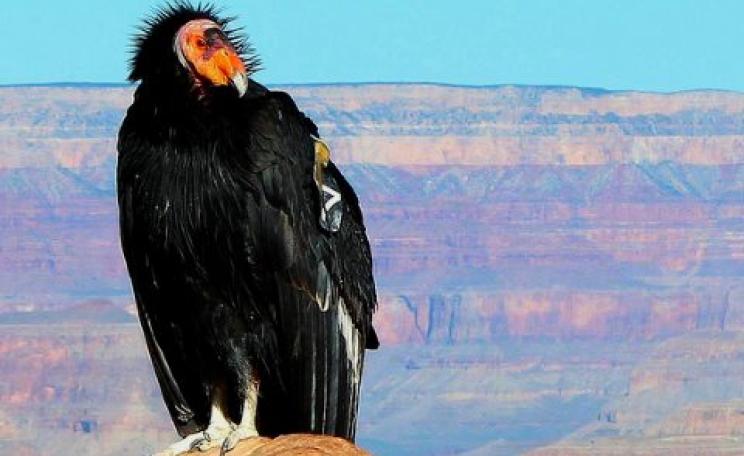
The recent death of Ventana the condor in Los Angeles zoo illustrates a simple truth, writes Dawn Starin: wild condors cannot survive so long as the dead amimals they eat are riddled with lead from spent ammunition. With lead poisoning to blame for 60% of condor deaths, it's time to ban lead ammunition across their entire range - and beyond.
A legal challenge has been launched against what would be Australia's biggest coal mine, writes Samantha Hepburn. If it succeeds, all future coal mine assessments will have to include the impacts of the resulting CO2 emissions on Australia's most important nature sites, such as the Great Barrier Reef.
The world's collective failure to tackle climate change comes down to one big problem, says Naomi Klein: the clash of climate necessities against corporate power and a triumphant neo-liberal world order. So after decades of government dithering, she told Oliver Tickell, it's time for civil society to unite and build a radical justice-based movement for climate action.
When 97% percent of respondents to a European Commission 'consultation' on the TTIP EU-US trade deal opposed it outright the Commission accused them of 'hijacking' the process, writes Nick Dearden - and pressed ahead with negotiations. Whose Europe is it anyway?
UK politicians and officials are studiously ignoring the growing evidence that fracking is an economic and environmental disaster, writes Paul Mobbs. As the circle of 'acceptable' view spins ever smaller, industry PR is dominating a phoney debate that's increasingly remote from reality, public opinion and core democratic principles.
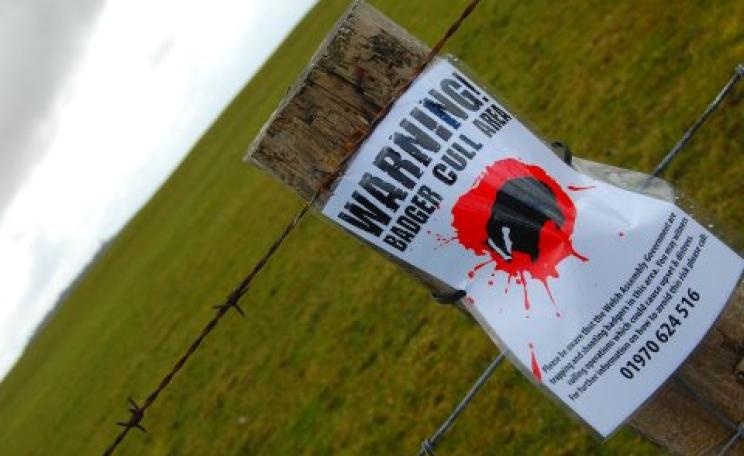
Sneaked out just before Christmas, Defra's assessment of the 2014 badger cull inspired NFU leaders to claim 'success', writes Rosie Woodroffe. But the figures indicate the precise reverse: that too few badgers were killed to be effective against bovine TB, indeed the cull may even help to spread the disease.