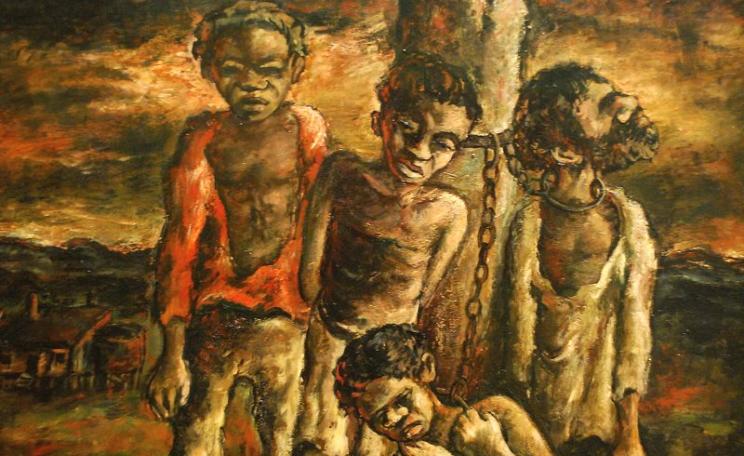
For most Australians, 26th January is a day of family celebration, writes John Pilger. But for its indigenous peoples the only thing to celebrate is their survival after over two centuries of rape, murder, theft and vicious racism that continues to this day, and has even found new expression in Australia's war on refugees, incarcerated in barbaric Pacific Island concentration camps.
The Paris Agreement is facing its first big test in Queensland, Australia, writes Justine Bell. After a long process beset by legal challenges, the massive Carmichael coal mine is inching closer to approval - which would open up the entire 250,000 sq.km Galilee basin and its 28 billion tonnes of coal to exploitation. Both state and federal governments have the power to ban it. But will they?
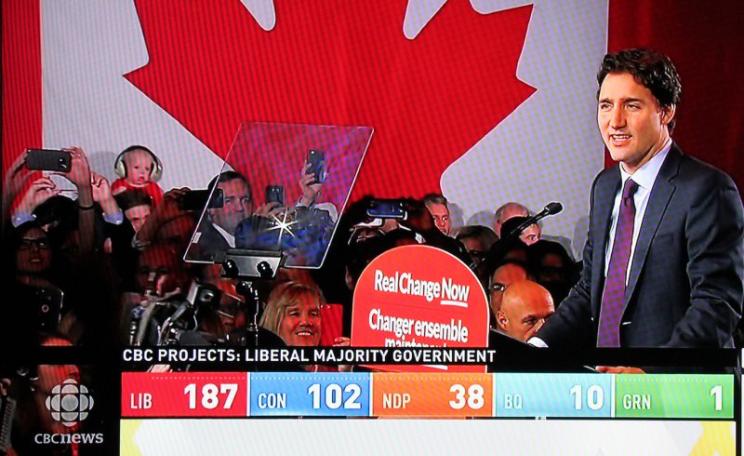
Political earthquakes in Canada and Australia have seen climate-sceptic leaders replaced by new ones committed to effective climate action, write David Konisky & Matto Mildenberger. It may be going too far to say that's why they were elected - but these elections do show that green policies are no electoral drawback.
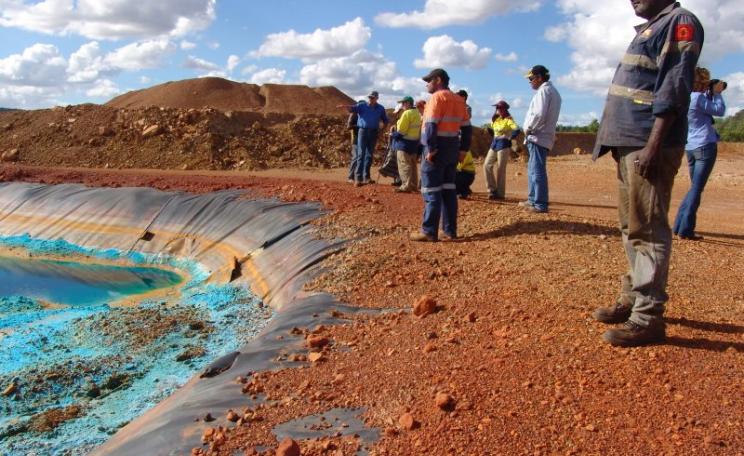
Indigenous Australians are systematically deprived of the benefits of mining and other developments, writes Seán Kerins, and being left to suffer their environmental impacts. As Abbott's government prepares a bonfire of 'red tape', it's time to put Indigenous interests first, and place their communities at the centre of decision making.
Following six shark attacks this year on the beaches of New South Wales, Australia, the press are demanding a shark cull as a 'permanent solution' to the problem, writes Jane Williamson. Trouble is, culling is indiscriminate, ineffective, disrupts ocean ecosystems, and diverts resources from more effective responses.
Moving to 100% clean, renewable energy is a win-win option for South Australia, writes Mark Diesendorf. First of all it's highly doable over a 25-year transition period. It will also bring lower power prices, more employment, better health and a cleaner environment. What's not to like?
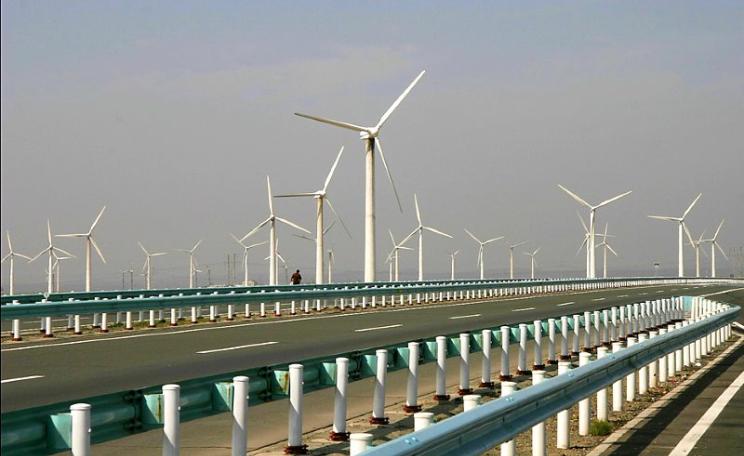
Renewable energy is all go in China, as set out in its climate pledge this week, writes John Mathews, with huge growth planned for wind and solar. The one big loser - coal exporters who can expect falling sales volumes in coming years. Wake up Australia!
A legal judgment in Australia has fatally damaged the 'official' ICRP model of health damage by nuclear radiation, writes Chris Busby - reflecting the fact that cancer originates through the mutation of individual cells, not whole organs or organisms. The ruling is good news for Britain's bomb test veterans whose day in court is coming up; and for all who suffer radiation induced cancers.
A successful, low-cost scheme in New South Wales to safeguard indigenous Australians in police custody is to lose federal funding, writes Eugene Schofield-Georgeson, even though it is demonstrably saving lives. Rather than cut funding, the government should be financing similar schemes across the country.
Australia's government can breathe a sigh of relief as UNESCO keeps the Great Barrier Reef off its 'World Heritage in danger' list, writes Emily Lindsay Brown. But in return, it has committed to protect the reef from farm run-off and dredgings, and to implement its 'Reef 2050' sustainability plan. If Australia fails, the Reef could be officially 'in danger' as soon as 2020.
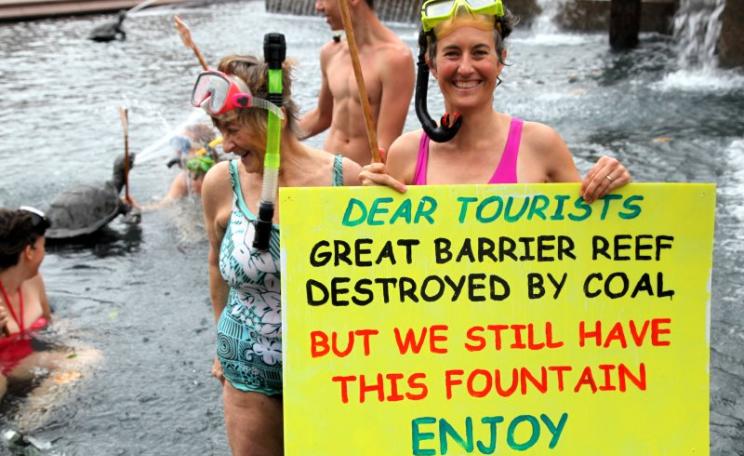
As part of a global week of action campaigners from Divest London have gathered to ‘Raise the Heat' on the Commonwealth Bank of Australia, writes Hal Rhoades - protesting its plan to invest in a ‘carbon bomb' coal project that endangers global climate and threatens to finish off the Great Barrier Reef.
Over the Great Barrier Reef's coral has already been lost, writes Ove Hoegh-Guldberg, and UNESCO is expected to add the site to its 'World Heritage in danger' list. The reef's survival will depend on the world's ability to control carbon emissions. So why is Australia planning to open vast new coal mines in the Galilee Basin?
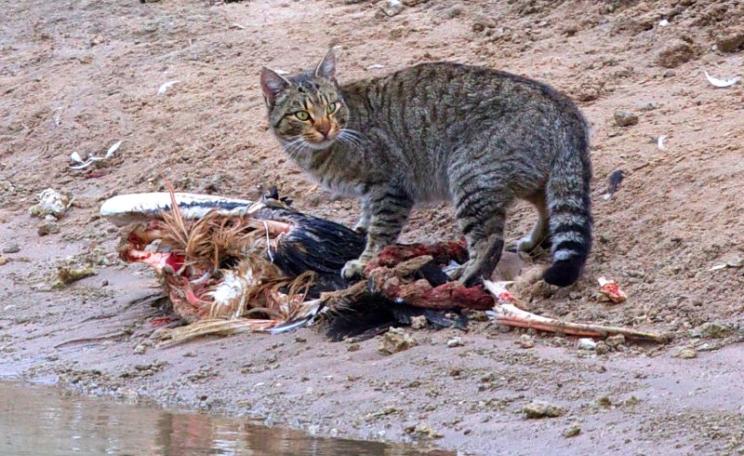
A study of feral cats in Tasmania shows that culling them to reduce their impact on native wildlife had a paradoxical effect - their population went up! If you can't take 'pest' animals out faster than they can reproduce and move in from nearby areas, writes Christopher Johnson, you're better off not bothering at all.
A new WWF report puts eastern Australia among the world's deforestation hotspots, write Martine Maron & Bill Laurance - estimating that 3-6 million hectares of native forest will be cleared there over the next 15 years. Queensland's new Labor government could reverse the destructive policies - but will it turn a new leaf?
Australia's deliberate and calculated attacks on its indigenous population carry many of the hallmarks of genocide, writes John Pilger. And things are getting worse, not better, as states that have grown rich by exploiting Aboriginal land evict and demolish remote Aboriginal communities.
Australia's aboriginal communities inhabit remote Outback regions of enormous importance for wildlife conservation, write Craig Moritz, Emilie-Jane Ens & Jon Altman - and they, and the land management services they provide, are essential to maintain both biodiversity and ancient indigenous knowledge. So why is Prime Minister Tony Abbott putting all that at risk?
Indian coal firm Adani is struggling to finance its proposed mega coal mine in Australia's Galilee Basin, write Marina Lou & Christine Ottery, as promised government support evaporates and a major investor looks set to pull out.
A powerful call has gone out the the US Export-Import Bank not to finance a massive coal mine, railway, port terminal and dredged 'canal' through Australia's Great Barrier Reef with $1 billion in loans and guarantees.
A legal challenge has been launched against what would be Australia's biggest coal mine, writes Samantha Hepburn. If it succeeds, all future coal mine assessments will have to include the impacts of the resulting CO2 emissions on Australia's most important nature sites, such as the Great Barrier Reef.
Australia must acknowledge the horrors lurking in its own history, writes Fiona Broom, and admit to its continuing Aboriginal genocide. It's made harder by the deliberate ignorance of Australia's mainstream culture, politics and media. But with John Pilger's outstanding film, 'Utopia', the excuses are fast running out.
The official investigation into the downing of MH17 is without precedent in the history of aviation, writes James O'Neill, as it gives one of the prime suspects, Ukraine, a veto power over publication of the report. Grieving families of the victims may never know know the truth, as geopolitics triumphs over justice.
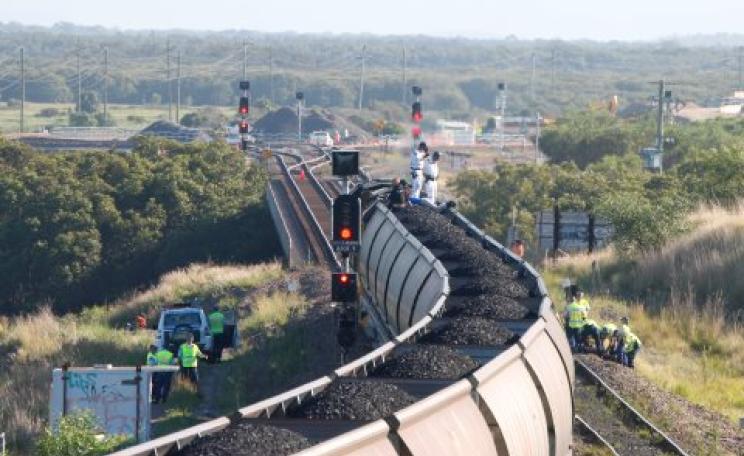
Despite record heat and drought Australia's emissions and coal exports are soaring, says a new report, and both are increasing as a matter of government policy. But a homegrown climate action movement is putting a spanner in the works - and just stopped its first coal train.
Australia's Labor scored a big win in Victoria's election this weekend - and with the party's 'green' policies that's potentially good news for the state's exploited forests. Now's the time to keep campaigning for the early creation of a Great Forest National Park.
Australia is betting the farm on huge increases in coal exports, writes Stephen Bygrave - just as key markets in China, India, Korea and Japan are drying up, with rising tariffs and huge renewable energy and efficiency programs. The policy is totally out of touch with reality - and will lead to revenue shortfalls in the AU$100 billions.