When Prime Minister Theresa May went to Brussels to hand in her 'Article 50' Brexit notice, she was also pursuing a separate, covert objective, writes Zachary Davies Boren. Leaked papers show that the UK was lobbying to gut new EU rules and targets on renewable energy and energy efficiency - even though they will only come into force after Brexit.
A huge raft of environmental reforms is promised in the Labour Party's draft manifesto, writes Oliver Tickell. Among the highlights: a ban on fracking; a clean energy policy based on renewables and efficiency; no commitment to new nuclear power; to meet our Paris Agreement obligations on climate; to give companies a legal obligation to protect the environment; to retain all EU environment laws post-Brexit; and multilateral nuclear disarmament.
It's barely mentioned in the election campaign or reported in the media. But a powerful faction of Tory ministers, ex-ministers and backbench MPs are bent on using Brexit to ignite a massive bonfire of 'spirit-crushing' laws on wildlife protection, air and water pollution, pesticides, renewable energy and public health, writes Brendan Montague. At risk are not just EU directives and regulations but even the UK's own Climate Change Act. May's Brexit may not just be hard, but very, very dirty.
MEPs vote today on proposals to cut air pollution by setting up an independent EU monitoring body to ensure that a scandal like Dieselgate never happens again, writes Keith Taylor. However fears are growing that Brexit promises the UK a bonfire of environmental laws including those on air pollution. We need a strong, new Clean Air Act now!
Many eco-minded Brits are rightly worried about the prospect of a ‘hard Brexit'. But what if another ‘alternative' Brexit that delivered a Greener economy were possible? VICTOR ANDERSON and RUPERT READ of Green House have just delivered a new report on Brexit and trade from an ecological perspective. Here, they share their key findings with the Ecologist...
Government promises of 'leaving our environment better than we found it' are melting away in the heat of Brexit, writes Jeremy Robson. Ministers have said that a third of all EU environmental laws may never be transposed into UK statute, while many Tory MPs are anxious to rip away the 'red tape' that prevents building on precious nature sites. We must make British nature great again!
As UK Prime Minister triggers Article 50 and the negotiations for Britain's exit from Europe today (29th March, 2017) serious activists should take a step back, reflect on the hydra-like nature of capitalism and how their own lives have become ensnared by it, and then begin to organize for the long game, writes WILLIAM HAWES
Post Brexit, get ready for a massive attack on our liberty, especially on the right to protest, writes Paul Mobbs. With the UK likely to secede from the European Convention on Human Rights, prepare for a new empowerment of police to act with impunity against peaceful activists. We must be ready to stand up, with honour and dignity, for our ancient British right to dissent.
With most of our food exports going to the EU, and most of our food imports coming from the EU, Molly Scott Cato wondered what plans the government had for the sector after Brexit. The answer? None! Two reports published today map out a positive future of sustainable farming, local food, thriving rural economies and abundant biodiversity. But is the government on the same page?
After leaving the EU the government could allow dangerous pesticides banned elsewhere in Europe to be used in the UK, writes Keith Tyrell. Today, Pesticides Action Network is launching a new campaign calling on citizens to fight back against the pesticide industry - and ensure that EU directives and regulations serve as a baseline for British pesticide laws.
The impending US-UK trade deal threatens the irreversible loss of public protections on health, safety, labour and environment in both countries, writes Stephen Devlin. Last week Trump signed an executive order forcing systemic corporate deregulation - and the UK's 'pro-business' government is all too keen to go along with it.
MEPs have signalled that any Brexit deal that allows Britain to scrap the environmental laws it has signed up to as an EU member faces veto, writes Charlotte Burns. They are not prepared to countenance a bad neighbour 'dirty Britain' just off the EU's shores, nor to see the EU's environmental progress undermined by unfair competition.
Leaving the European Union and reaching a trade deal with President Trump's US would create a perfect storm for UK farmers, writes Liberal Democrat Environment Spokesperson Kate Parminter, with new EU tariffs, reduced subsidies and drastically lower standards. The changes would also pose a serious threat to our natural environment, food quality and public health.
The UK's abject failure to implement national and EU laws on energy efficiency in buildings is a disgrace, writes Andrew Warren, and one that is costing us dear in higher fuel bills now and for long into the future, while adding to air pollution and climate change.
An extreme right-wing coup is unfolding day by day, writes Donnachadh McCarthy, as the government exploits Brexit to justify more huge cuts to public services, extreme deregulation and massive corporate empowerment. A new political leadership must step up to defend our hard-won rights and our children's futures.
Will the UK keep Theresa May's promise to 'leave the environment in a better state than it found it' in the Brexit negotitions? Or is the government bent on the 'bonfire of red tape', including environmental protections, demanded by right-wing former and serving ministers? Viviane Gravey sets out four 'green lines' by which to judge the Brexiteers' true colours.
Leaving the EU provides a "once in a lifetime opportunity" for England to change the way its land is managed so that nature, the environment, and society are better off according to a new report by the UK charity People Need Nature which is published to coincide with this week's Oxford Real Farming Conference. KATHRYN HINDESS reports
It's now clear what place government ministers and senior officials want for the UK in a post-Brexit world, writes Mark Curtis - and it's not pretty! A new era of corporate 'free trade' colonialism looms, spearheaded by aid spending, with ramped-up arms exports to the world's most corrupt and repressive regimes, all backed up by military force to project the Britain's global financial interests.
Australian Greens' Leader Richard Di Natale has called for the prospect of a Trump Presidency and a post-Brexit Britain to be the chance to break old alliances and forge new deals to save the planet. MAXINE NEWLANDS reports
Both Trump and Brexit can be explained by the failure of mainstream political elites to address the pain inflicted on ordinary citizens in the neoliberal era, write Helena Norberg-Hodge & Rupert Read. In the US and the UK, working class voters rightly rejected the corporate globalisation that has created so much poverty and insecurity. But the real solutions lie not in hatred, but relocalisation.
Progressive green thinkers have been seduced by the EU, but now it's time for the Greens to seize the moment, reclaim their radical roots and take the lead on Brexit writes PAUL KINGSNORTH
With European climate policy in post-Brexit lockdown, and US delegates gripped by uncertainty (even for their own jobs) following Trump's election, a new global climate leader is emerging, writes Natalie Bennett. China is stepping up as the country with the finance, technology and industrial might to take forward the Paris Agreement - and for its companies to reap the benefits.
Chemical and pesticide industry lobbyists are striving to abolish the European precautionary principle in favour of a so-called 'science-based' approach, write Lora Verheecke & Laura Große. If the EU succumbs to the spin, human health and the environment across Europe will be sacrificed to corporate profit.
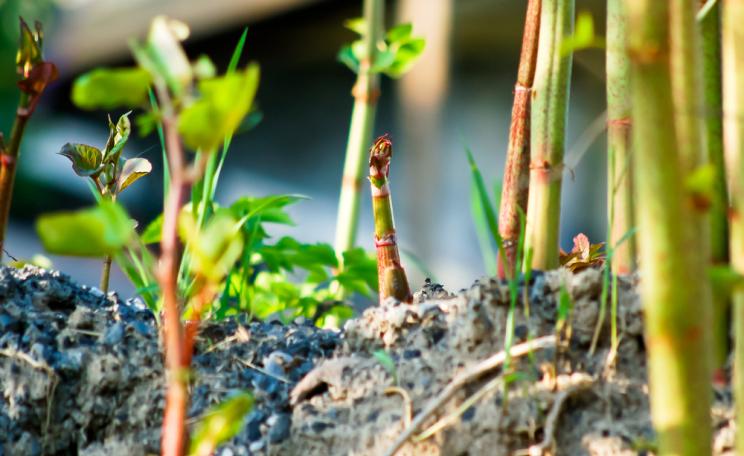
As leading figures from the world of law, ecology and technology prepare to come together and discuss how best to deal with non-native invasive plants in the UK, more research is still needed on how best to manage these species taking over the countryside writes LAURA BRIGGS