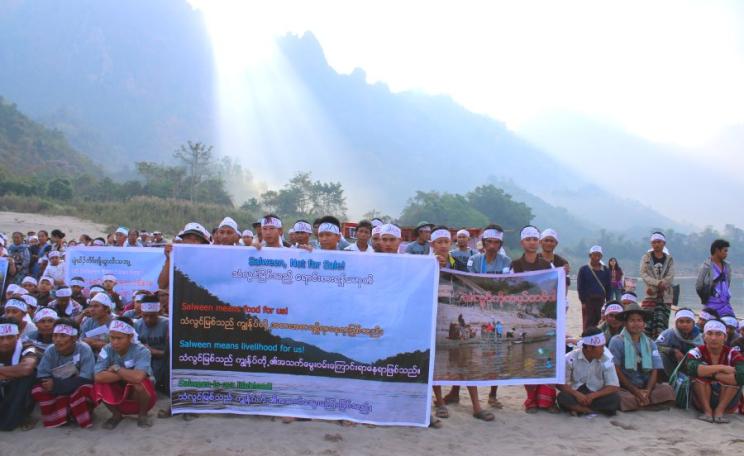
The free-flowing Salween is the last big undammed river in Southeast Asia, home to a flurry of endangered species including tigers and clouded leopards, writes Tom Fawthrop in Hpa-an, Karen State, Myanmar. And thanks to support from both the indigenous Karen people, and senior officials in China who see the huge ecotourism potential of the river and its dramatic gorge, it could just stay that way.
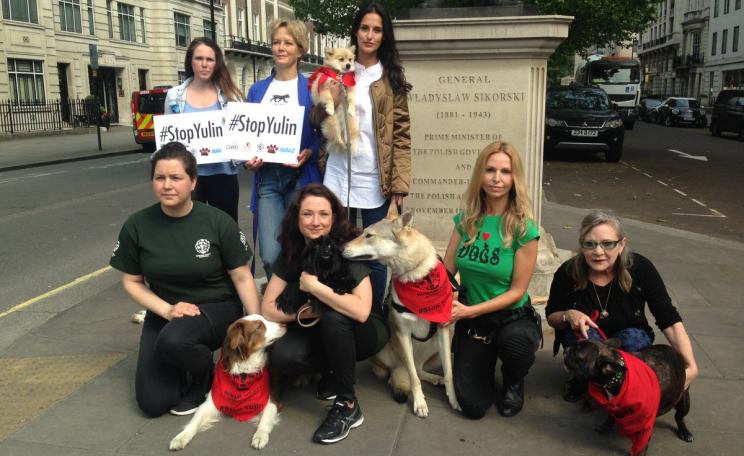
Star Wars' actress ‘Princess Leia' Carrie Fisher joined animal-loving celebrities & MP's to present a petition created by Humane Society International (HIS) and featuring almost 12 million signatures to The Chinese Embassy in London, requesting an end to the gruesome annual Yulin dog & cat eating festival in China.
Twin nuclear reactors at Taishan in China have been sealed into their concrete domes despite fears that the reactor vessels have serious metallurgical defects. No safety test data has been released by the two companies in charge, EDF and CGN, to show that the reactors will not crack in operation, releasing radioactivity.
Another week, another series of disasters for EDF and it's Hinkley C nuclear power project, writes Oliver Tickell, with the company's credit rating downgraded partly due to its exposure to the project, and its Chinese partner CGN ruling out a takeover of the site. How much longer can the tragicomedy continue before the curtain falls?
New development financiers like China's Asian Infrastructure Investment Bank are driving a global attack on the environment, writes Bill Laurance. With their fast track 'no questions asked' procedures, they are financing a wave of destructive mega-projects, giving the World Bank and other lenders the excuse to lower their already weak safeguards.
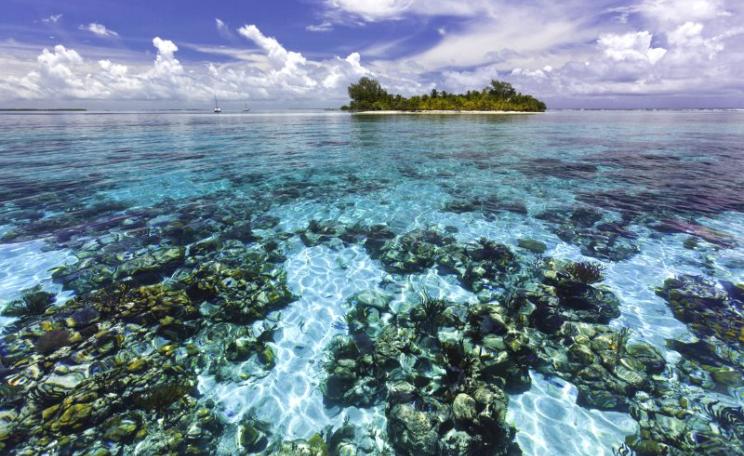
Precious World Heritage Sites that protect vital biodiversity and human cultures are at risk from oil decelopment and other industries. Under threat are not just nature, wildlife, land and water but the 11 million people who depend on the 114 sites' environmental quality for their livelihoods.
MPs today grilled EDF Energy supremo Vincent de Rivaz over the troubled Hinkley C nuclear plant in Somerset. He insisted that the project was definitely going ahead - but refused to say when the 'final investment decision' was due. Confused? Bewildered? Frustrated? So were the MPs.
The world is in the grip of a massive wave of militarism of which most of us are blissfully ignorant, writes John Pilger. When did mainstream media last tell you about the US's $1 trillion nuclear weapon renewal? NATO's massive build up of military power on Russia's eastern frontier? The encirclement of China by nuclear-armed US bases? The world is at war. Pass it on!
For the second year running CO2 emissions flatlined even as the global economy was growing at around 3%, writes Alex Kirby. But sharply rising temperatures show the need for further massive renewable energy deployment to actually bring emissions down.
Improved technology and falling costs are moving electric car sales into the fast lane as manufacturers seek achieve significant economies of scale, writes Kieran Cooke. And now China is leading the EV charge with its plans for 5 million plug-in vehicles by 2020.
An occupation of EDF's site office for Hinkley C turned into a celebration today as the EDF Board postponed its 'final investment decision' for the tenth time. With strong opposition among French unions and the project afflicted by severe technical and financial problems, it's not just Hinkley that's going down, but the UK's entire nuclear programme.
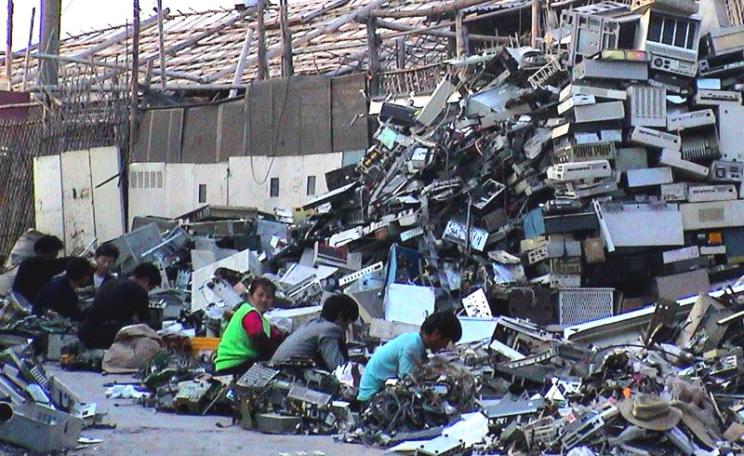
Our thirst for the latest gadgets has created a vast empire of electronic waste, writes Ian Williams. The EU alone produces some 9 million tonnes of it a year, of which some 70% is still working when disposed of, and over a third is disposed of illegally. With increasingly affordable electronic devices available to ever more people, it's high time for effective global regulation.
The Aedes mosquitos that carry the Zika virus and dengue fever are not just perfectly adapted to life in cities, writes Nadia Pontes. They are also being helped along by warming climates which increase their range. It's time to get serious about the health implications of a hotter planet.
Despite the endless rhetoric about a 'nuclear renaissance', there are fewer power reactors today than there were a decade ago, writes Jim Green. The one country with a really big nuclear build program is China, but no one expects it to meet its targets. And with over 200 reactor shut-downs due by 2040, the industry will have to run very hard indeed just to stay put.
Just as EDF was due to make its 'final investment decision' on Hinkley C, writes Oliver Tickell, another delay. In spite of incredibly generous subsidies, the company is unable to finance it. Its last hope is to persuade the French state to take a 10% stake in the doomed project.
The EDF board is meeting tomorrow to reach its 'final investment decision' on Hinkley C. It was meant to be a rubber stamp but now it's anything but, as EDF's share price sinks to a new low, unions and employee directors harden their opposition to the project, and projects in France, Finland and China run way over time and cost with severe technical problems and safety concerns.
Over in Davos world leaders are desperately trying to find a 'fourth industrial revolution' to keep the 'growth' juggernaut rolling, write Bennet Francis & Rupert Read. But their efforts are doomed: the real challenge we face is to build a healthy, more equal society and a green, sustainable future for us all.
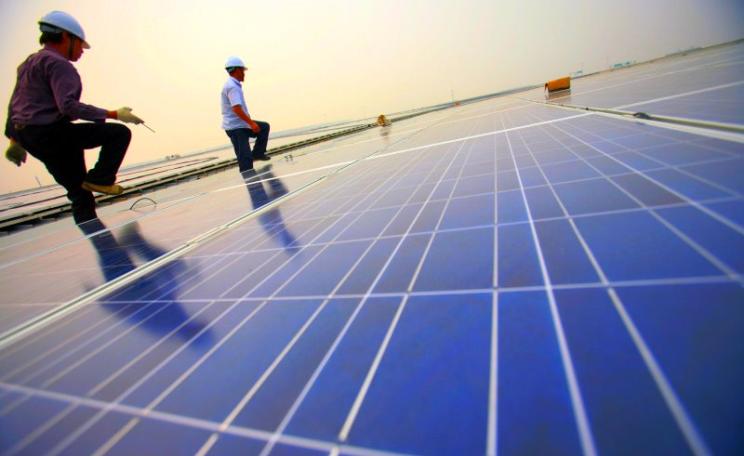
China's 2015 carbon emissions fell for the second year running, by an amount equal to all of Poland's, while total power consumption increased, writes Lauri Myllyvirta. Credit goes to the massive expansion in renewable energy, with a record-breaking 47GW of wind and solar capacity added.
The cash-strapped French energy giant EDF may sell off profitable stakes in its in its eight existing UK nuclear reactors to raise money for the Hinkley Point C project. But with no example of the EPR design planned for Hinkley even near completion, it may all prove a risk too far.
The EU's decision to renew 'punitive' tariffs on imports of PV modules and cells from China will cost the EU's solar installers an extra £700 million, writes Oliver Tickell - just as the UK industry is reeling from 87% government cuts.
'Pay up or there's no deal', a coalition of 134 developing nations have warned the rich industrial countries at COP21 in Paris - the ones that caused the climate problem in the first place. As Paul Brown writes, much more than the $64 billion so far pledged will be needed to get them on board.
Luxembourg will join Austria's legal challenge to the UK's support package for the Hinkley C nuclear power station. Meanwhile EDF has laid off 65 engineers working on the project in Paris, and the EU Commission has initiated proceedings against Hungary over its Paks II nuclear project with Rosatom.
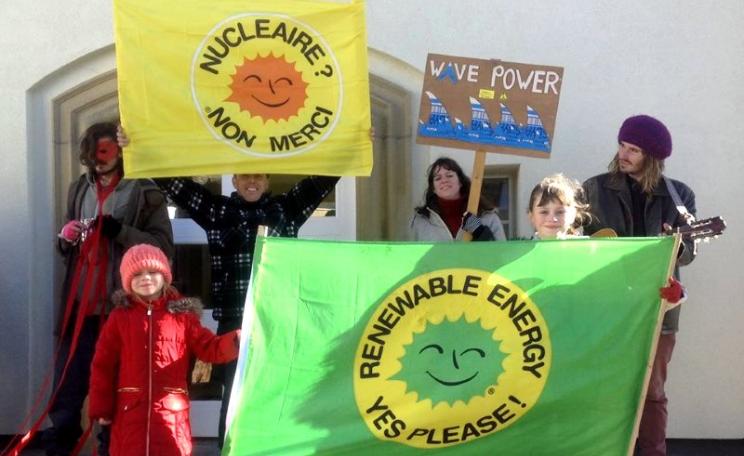
The UK-China plan for new nuclear build in England defy the evolving reality of 21st century power networks, writes Paul Dorfman. In China itself, the nuclear dream is hitting construction problems and delays, while wind and solar blossom at ever falling cost. But the phenomenon is global. Despite some governments' nuclear obduracy, renewables are winning the race hands down.
The UK's nuclear deal with China makes no sense, writes Jeffrey Henderson - unless you factor in the simultaneous agreement to forge lucrative links between UK and Chinese financial markets. Lucrative, that is, for the City institutions whose interests the British government so assiduously represents. As for the rest of us, our task is simple: to bear the ever-growing cost.