Churches turned into pubs. Brooding Victorian warehouses replaced with sparkly identikit apartments. Family shops and independent cafes bankrupted by Starbucks, Tesco’s et al. When will we wake up to this grim, placeless reality?
If you go down to Barnes today you're in for a big surprise. The sterile concrete of a former reservoir has been turned into a world renowned haven for birds and wildlife. Bridget Nicholls wises a happy fifth birthday to the London Wetland Centre
Paul Kingsnorth talks to Stephanie Roth, the former Ecologist campaigns editor who has
just been awarded the 'environmental movement's Nobel prize' for risking life and limb
to prevent the exploitation of the largest gold reserves in Europe
Are SUVs a crime against civilisation, or paragons of efficiency? Are they ugly, arrogant and antisocial, or bright, beautiful and mobile? And do the polar passions they arouse pit the politics of envy against the Americanisation of British culture? Paul Kingsnorth and Michael Harvey discuss
Imagine you could turn 30 per cent of your household waste, at no cost, into high-quality compost for your plants, while also reducing toxic emissions from incinerator plants...
Do you want the best for your baby, but don’t want to harm the environment? Then use reusable nappies. Contrary to popular belief, modern reusables are cheaper and more hygienic than disposables, and you won't have to spend hours cleaning them.
The US authorities have allowed Formosa Plastics and other chemicals corporations to poison the waterways of the Texas Gulf Coast for decades. When local shrimp-boat operator Diane Wilson found out what was going on she single-handedly set about forcing Formosa to clean up its act.
The mainstream farming media dismiss biodynamics as a fad affordable only by the wealthy – so why are big arable farmers sowing seeds under full moons?
The community of Machynlleth has gone beyond just investing in someone else’s wind turbine. They’ve clubbed together and planned, built and paid for one of their own.
‘If we could think locally, we would take far better care of things than we do now. The right local questions and answers will be the right global ones. The Amish question, "What will this do for our community?" tends toward the right answer for the world.’ Wendell Berry
I’m sitting opposite the large Coca-Cola bottling plant next to the village of Plachimada in the southern Indian state of Kerala. Plachimada is a farming village of about 800 families, many of them tribal. The ugly factory looks rather out of place in such a beautiful setting, the Western Ghats mountains clearly visible in the distance.
Do wind turbines provide an affordable means of harnessing a limitless source of clean power, or are they inefficient blots on the landscape that devastate birdlife and are more likely to exacerbate than reduce CO2 emissions?
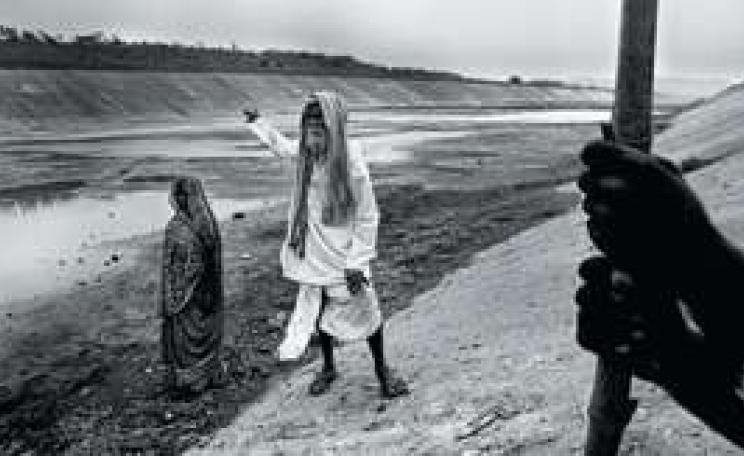
Some 245 Indian villages are in the middle of being destroyed by a $7 billion dam project that will consume more energy than it provides and has even been condemned by its World Bank sponsors.
Ladakh is framed by the Karakoram mountains to the north and the Himalayas to the south. Yet even in this remote environment the forces of global consumerism are intruding. Nicola Graydon reports on the locals' inspiring defence of their culture
Have you ever heard of – let alone tasted – the Rats Tail radish, the Crookneck squash or the Prince of Prussia pea? We report on what’s being done to save Britain’s rich agricultural heritage.
In the 1930s US dentist Weston Price travelled the world to study the diets of ‘primitive’ peoples. He found a startling lack of disease and proof that a system of environmentally-friendly local food production is the best way to ensure human health.
The GM public debate, which runs throughout June and July, is the public’s chance to express any concerns it may have over the growing of GM crops in Britain. Andy Rowell explains why your participation is vital
For all its obsession with international terrorism, Washington fails to see how the phenomenon is driven by its own model of globalisation – a model that is itself uniquely vulnerable to terrorist attacks. Fritjof Capra on security and sustainability