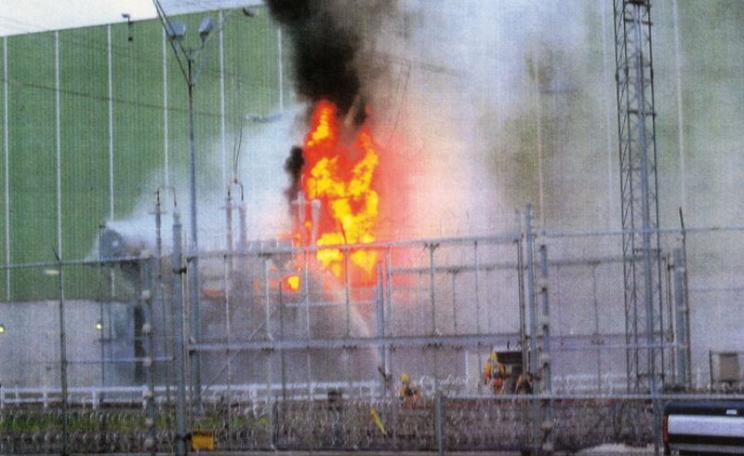
As the G20 meet in China this weekend, it's time for governments to finally get tough on the world's tax dodgers, write Dipti Bhatnagar & Sam Cossar-Gilbert. The missing tax revenues would be able to finance a 100% renewable electricity system covering half the planet by 2030 - a major step in raising living standards and tackling climate change.
Big conservation NGOs increasingly resemble the nature-destroying corporations they should be opposing, writes Margi Prideaux. This ideological capture is reflected in their vapid marketing to conservation 'consumers'; the serious abuse of indigenous communities they should be engaging as partners; and their willing sacrifice of core objectives to money and influence.
The very first GE product, a dietary supplement, poisoned thousands of people of which dozens died, writes Steven M. Druker. The first GE food, the 'Flavr Savr' tomato, caused stomach lesions. But a long campaign of concealment and deception by regulators and corporate scientists re-engineered the truth to present GMOs as so safe they did not even need to be tested for safety.
This month wood pellet mills in the southern US that supply the UK's Drax power station were awarded 'sustainability' certificates under a voluntary scheme governed entirely by energy companies. The certificates provide no credible guarantee that the fuel does not come from ecologically valuable natural forests and wetlands, clear-cut and replaced by industrial plantations.
Leaked documents show that Natural England, the official wildlife agency, is to increase its income from 'discretionary chargeable advice' to developers and landowners, writes EMMA HOWARD - while also failing to prosecute wildlife crime or challenge damaging developments.
India celebrates its Independence Day today, writes Colin Todhunter. But the highly visible system of British colonial dominance has been replaced by a new imperial hegemony: the invisible, systemic rule of transnational capital, enforced by global institutions like the World Bank, while US-based global agribusiness corporations have stepped into the boots of the former East India Company.
The real reason why 'golden rice' remains uncultivated after a 20 year effort is its poor agronomic performance, write Angelika Hilbeck & Hans Herren. But beyond that, the very idea of golden rice as a 'solution' to Vitamin A deficiency fails to recognise the real causes of malnutrition - poverty, hunger and poor diet. How will golden rice reach poor children in the first place? And will they ever get the rich, oily diet they need to assimilate its fat-soluble nutrients?
Ten advisers and civil servants working in DECC, the former UK energy department, were seconded from EDF or had other links to the company, writes Joe Sandler Clarke. This may help to explain the 'preferential treatment' EDF has received over the 3.2GW nuclear power station it wants to build at Hinkley Point in Somerset.
This autumn the Monsanto Tribunal will assemble experts from around the world to set out the evidence against the global mega-corporation, which will stand accused of monstrous 'crimes' against people and the environment. The Tribunal's verdict will not be legally binding - this time. But on a future occasion, it may be.
Internal Glasgow University emails show that it terminated geophysics professor David Smythe's email account and access to scientific papers because his concerns about the impacts of fracking were upsetting its 'industrial research partners', writes Kyla Mandel - not as part of a 'routine review' as previously stated.
The NRC routinely fails to enforce its own safety codes at nuclear power plants, writes Linda Pentz Gunter - putting all of us at risk from accidents. It's the US's most extreme example of regulatory capture, rivalling Japan's 'nuclear village' of crony agencies and feeble regulation that led to the Fukushima disaster. How long can it be before the US experiences another nuclear catastrophe?
French energy giant EDF will today give the formal go-ahead for the Hinkley C nuclear power station in Somerset, writes Chris Goodall. But that's no reason for the UK to sign up to a disastrous deal that will cost us over £1 billion per year for 35 years - money that should be used to support the green technologies of the future.
A new UN report warns of a threefold increase in extraction of the Earth's primary materials between 1970 and 2010, writes Alex Kirby. The boom in the production of minerals, ores, fossil fuels, timber and biomass and will be to intensify climate change, increase air pollution and reduce biodiversity.
EDF's 'final investment decision' on the Hinkley C nuclear power station next week will be pure theatre, writes David Toke. The truth is that no concrete is to be poured until 2019 at the earliest. Meanwhile post-Brexit UK is running out of money to pay for it, and EDF is under investigation by the Financial Markets Authority for concealing information on Hinkley from investors.
The idea that our profit-oriented, growth-driven economic system can deliver a sustainable society is a beguiling one, write Lili Fuhr, Thomas Fatheuer & Barbara Unmüßig. But it is doomed to failure. The changes we need are in the first place political, and will be driven by a new democratic will to put people and planet before money.
A new dam on indigenous lands at Muskrat Falls will join a network of other hydroelectric projects spanning Innu territories across the Labrador-Quebec peninsula, writes Colin Samson. The continual violation of Innu rights imperils their ability to enjoy healthy and sustainable lifestyles - and follows in a long tradition of indigenous land theft in North America.
Africa is being opened up like a tin of sardines to a new wave of resource extraction, writes Colin Todhunter. Masked under the soubriquets of 'investment', 'growth' and 'free trade', a handful of vast global corporations are systematically plundering the continent's mineral wealth and leaving desolation in their wake, backed to the hilt by that ever-faithful servant of capital - the UK government.
Thanks to fracking company Cuadrilla, grandmother Tina Rothery will be in court tomorrow over a £55,000 'debt' imposed on her for joining a peaceful occupation of a fracking site in Lancashire. But as she explains, she can't pay, she won't pay, and even if she could pay, she wouldn't. Someone has to stand up to corporate vandalism and abuse of justice - and in this case, it's her, no matter what the consequences.
A leaked text from the 'Trade In Services Agreement' negotiations shows that TISA is set to unleash a massive wave of deregulation affecting social, environmental and financial standards, and force the privatisation of state-run enterprises, writes Pete Dolack. So it's not just TTIP, CETA and TPP we have to fight - TISA could be the biggest corporate power grab of them all.
Over 300 major food companies used to buy palm oil from IOI, writes Annisa Rahmawati. But after the company was found to be destroying vast areas of Indonesia's rainforest and draining peatlands to make new palm oil plantations, it has been deserted by its customers. Now IOI must go beyond just sticking to the rules, and start actively repairing the damage it has caused.
The European Parliament has had a great week, writes Molly Scott Cato MEP - for those who oppose GMOs in food and farming. MEPs voted on five occasions to say no to GMOs, and gave their support to agroecology as the only sustainable way to feed the world.
The European Parliament today called on the Commission and member states like the UK to stop funding the 'New Alliance' plan to force export-oriented agribusiness onto Africa. Instead they want support for small-scale family farms and agroecology.
Twin nuclear reactors at Taishan in China have been sealed into their concrete domes despite fears that the reactor vessels have serious metallurgical defects. No safety test data has been released by the two companies in charge, EDF and CGN, to show that the reactors will not crack in operation, releasing radioactivity.
The EU referendum debate is taking place between different wings of the corporate elite, dominated by assumptions in favour of big business, free trade and endless economic growth, write Helena Norberg-Hodge, Rupert Read & Thomas Wallgren. But to vote for a sustainable future we must adopt a very different, local perspective - one you'll never find in UK's 'mainstream' media.