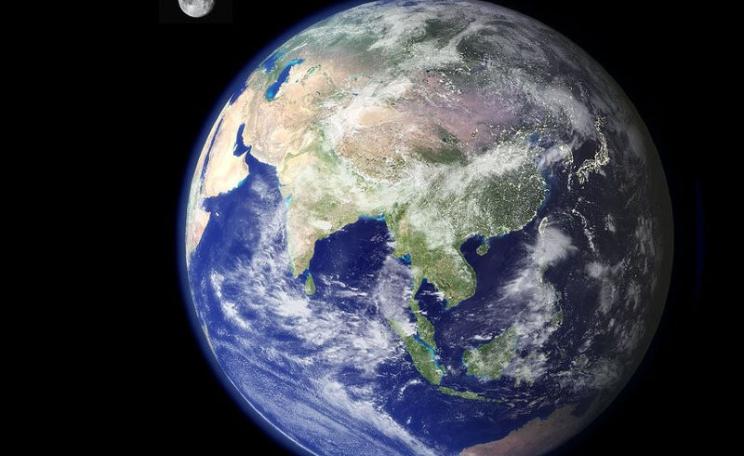
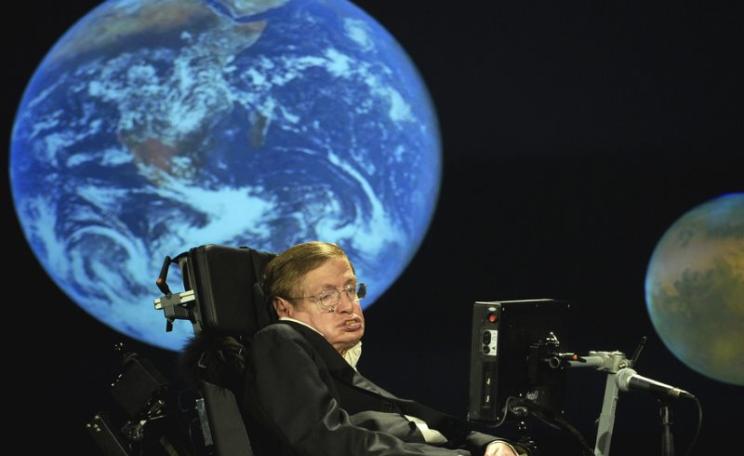
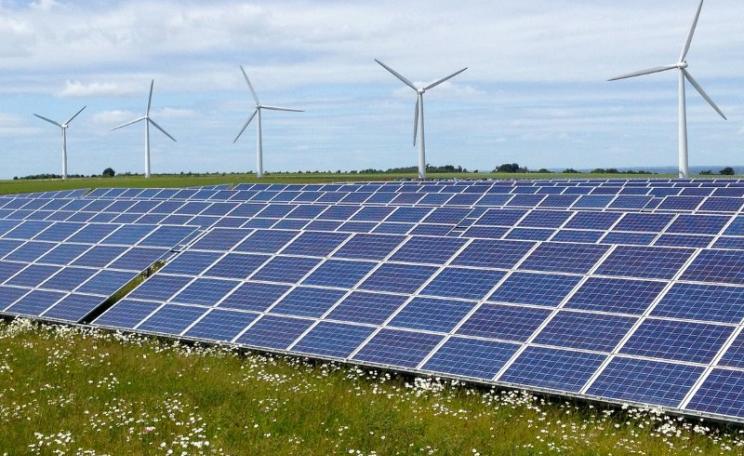
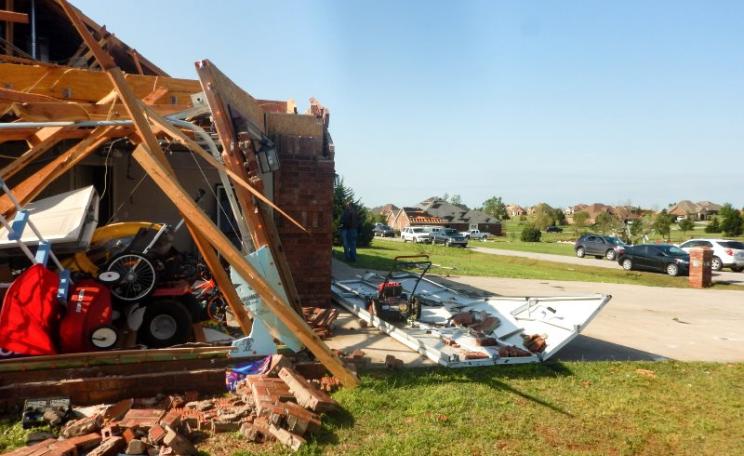
When Chancellor George Osborne delivers his Budget next month, we can be sure that climate and environment won't take a high priority, writes Alan Simpson. All the more reason for the Labour leadership to develop a new 'one planet' economics for the 21st century that delivers social justice and respects ecological limits.
Boosters of 'free trade' agreements - like the Trans Pacific Partnership that's being signed today - like to make big promises, writes Pete Dolack: trillions of dollars of economic gains, billions of dollars of investment, millions of new jobs. But there's only one certainty, and it's one they never mention: the permanent redistribution of power and income from working people to capital.
The wave of mechanization and automation that began with the Industrial revolution is not slowing down, writes Conor Lynch. Indeed it is gaining power and is driving another 'great transformation' that could produce untold opulence for the very few, and hellhole for rest of us, or an Earthly paradise for all. But which will it be? Ultimately the future is ours - to choose, and to fight for.
Why are we so surprised at the Google tax heist? It's not because there's anything new about it, writes Donnachadh McCarthy. It's because our own political class have long their noses in the trough, and the tax-dodging billionaires that own our mainstream media are anxious to hide the swindle that's keeping them rich, and us poor.
EDF's unfolding fiasco over the Hinkley C nuclear power station proves that nuclear power can come only at enormous financial cost to consumers and taxpayers, writes Caroline Lucas - and even then, investors are scared off by the risks. The government must get over its nuclear obsession and seize our renewable future.
Inequality is on the agenda at the World Economic Forum in Davos this year, write David Sogge & Nick Buxton. A good thing, right? But look at the proposed 'solutions': ramp up the neoliberal 'development' model; lighten business regulation; pursue globalisation with greater vigor ... Yes, you got it. They would all accelerate the transfer the world's wealth upwards to corporate elites.
Over in Davos world leaders are desperately trying to find a 'fourth industrial revolution' to keep the 'growth' juggernaut rolling, write Bennet Francis & Rupert Read. But their efforts are doomed: the real challenge we face is to build a healthy, more equal society and a green, sustainable future for us all.
According to classical economics Adam Smith's 'invisible' hand' of free markets produces the greatest good for us all, writes JP Sottile. But what happens when rip-roaring 'external costs' are left out of the equations? Wars, repression, pollution, resource destruction and climate change. And because that invisible hand is connected to Mother Nature, it's coming back to strike us.
The greatest myth of the consumer society is that modern lifestyles are 'normal' - and this can continue forever because we're clever little apes who can solve any problem, writes Paul Mobbs. That hubris, in the face of insurmountable ecological limits, will be our collective downfall.
The TTIP 'trade agreement between the US and the EU would devastate EU farms as it opens them up to competition from larger, less regulated US operations, writes Dario Sarmadi. This is the conclusion of a new study to be published tomorrow, which also finds that small-scale farmers would be the first to go - with the big winners the large agri-food corporations.
Almost 60 years since the world's first commercial nuclear power station began to deliver power to the UK's grid, the industry remains as far from being able to cover its costs as ever, writes Pete Dolack. But while unfunded liabilities increase year by year, governments are still willing to commit their taxpayers' billions to new nuclear plants with no hope of ever being viable.
Levels of CO2 are at their the highest in 800,000 years, writes Tim Radford, but news of a probable decline in emissions this year is providing welcome cheer at the COP21 climate summit: thanks to renewables, economic growth and falling emissions can go hand in hand.
The EU's decision to renew 'punitive' tariffs on imports of PV modules and cells from China will cost the EU's solar installers an extra £700 million, writes Oliver Tickell - just as the UK industry is reeling from 87% government cuts.
The most significant feature of COP21 is the topics that never even made it onto the agenda for discussion, writes Steffen Böhm. And the biggest of all the growth-driven economic system that ultimately thwarts all efforts at sustainability, as it drives ever increasing consumption of energy and resources.
Black Friday is yet another manifestation of a consumer culture that is both empty and destructive, writes Vicki Hird. So instead let's join in creative celebrations of Buy Nothing Day ('no purchase necessary'), and develop a new life-enhancing ethic of joyful frugality.
The governor of the Bank of England recently argued that the risk to the stability of the financial system from climate change is a responsibility of central banks, writes Matthias Kroll. They can begin by using QE - 'quantitative easing' - to finance the Green Climate Fund, and so stimulate the economy, rescue the climate, and save the global financial system.
Economics is much more than the study of money, writes Paul Mobbs. It is a belief system, and in its 'mainstream' incarnation, one that serves a very useful purpose - for those that reap the benefits. But as Brian Davey shows in his insightful new book, it's letting the rest of us down: failing to deliver human wellbeing, while driving ecological calamity.
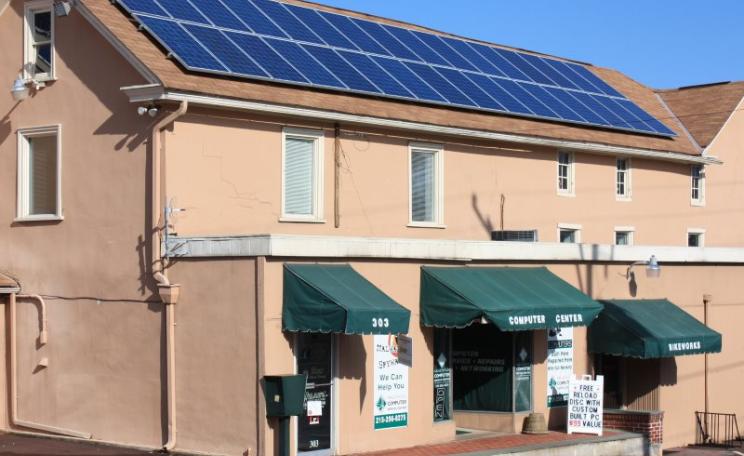
An analysis of power prices in the US state of Pennsylvania shows that if solar power increased from the 0.1% of electricity it supplies now, to 5%, then all customers would save $25 a year. Far from 'net metering' for solar being a 'burden' as utilities claim, it makes money for them, and their customers!
The UK dairy industry is in crisis, writes Megan Perry, with falling prices forcing many farmers out of business. Smaller, more sustainable farms have been the worst casualties, while the large, intensive producers survive. We must ditch market-driven 'survival of the fittest' attitudes - and recognise both the real costs of intensification, and the true value of traditional farming.
The high oil prices that turned North Dakota into a boom state have turned, writes Joshua Frank. Now high-cost oil and gas are in the doldrums everywhere, production is falling - and even if prices do pick up one day, risk aversion and the relentless advance of renewables will leave lakes of oil and caverns of gas underground where they belong. Folks, the oil party really is over!
Economist Nicholas Stern warns that the stakes have never been higher for radical action to be agreed at the Paris summit, writes Kieran Cooke: while we have the capacity to do all that's needed, it's far from clear that we will actually will.
Massive government cuts in solar 'feed in tariffs' threaten to wipe out our highly successful solar industry, writes Sonia Dunlop - and all to save £1 year off our fuel bills. Yes, that's all it would cost to keep the sector in business, employing tens of thousands of expert solar installers all over the UK.
The effect of wind and solar generation in the UK is to push down wholesale power prices, writes Oliver Tickell, taking over £1.5 billion off our bills in 2014 - that's 58% of the subsidies paid to renewable generators. Keep it up and the benefit will rise to over 100% of cost.
Fuel poverty is a complex problem with many causes, writes Mari Martiskainen, but it is also a deadly one for some 25,000 thousand people every year. And there is one surprisingly simple solution: a huge upgrade in the energy efficiency of our housing stock.