The UK's exit from the EU won't deliver for the 'victims of globalisation' whose votes were decisive in the referendum result, writes Pete Dolack. All the economic scenarios advanced to date envisage more of the 'free trade' and neoliberalism that has global empowered capital against communities and the well-paid jobs that once sustained them. Plus ca change ...
The economic impacts of the Brexit vote will very soon make themselves felt to British consumers, writes Chris Goodall - kicking off with higher fuel bills and pump prices. The good news is that nuclear power is now looking increasingly unaffordable. But renewables and green energy research are also likely to suffer, especially if under a right-wing Brexit government.
LED light bulbs are cheap and energy efficient, writes Chris Goodall. A crash programme to replace all the lights in the UK with LEDs would cut electricity bills, reduce carbon emissions and other pollution from coal and diesel generation, and reduce the risk of blackouts.
The renewable energy revolution is in full swing, writes Jeremy Leggett, with costs falling to new lows, deployment of wind and solar surging to unprecedented highs, and confidence ebbing away from fossil fuels. But global warming is also accelerating, with global temperature records broken every month for a year. Will the energy transition happen in time to avert catastrophe?
The EU referendum debate is taking place between different wings of the corporate elite, dominated by assumptions in favour of big business, free trade and endless economic growth, write Helena Norberg-Hodge, Rupert Read & Thomas Wallgren. But to vote for a sustainable future we must adopt a very different, local perspective - one you'll never find in UK's 'mainstream' media.
Government plans to pay coal and diesel generators to stay open the winter after next to 'keep the lights on' betray dangerously old-fashioned thinking, writes Chris Goodall. Not only would it subsidise our dirtiest electricity - it's also incredibly costly. Why not just pay people to reduce their demand when power supplies are stretched?
Where does the Green Party go now? Last week's uninspiring election results show that Jeremy Corbyn's Labour poses a serious challenge to us Greens, who can no longer succeed by being merely left wing. We must fulfil our own destiny, representing a distinct, authentic ecological strand in politics, making the case for living as if we only had one planet - as is in fact the case.
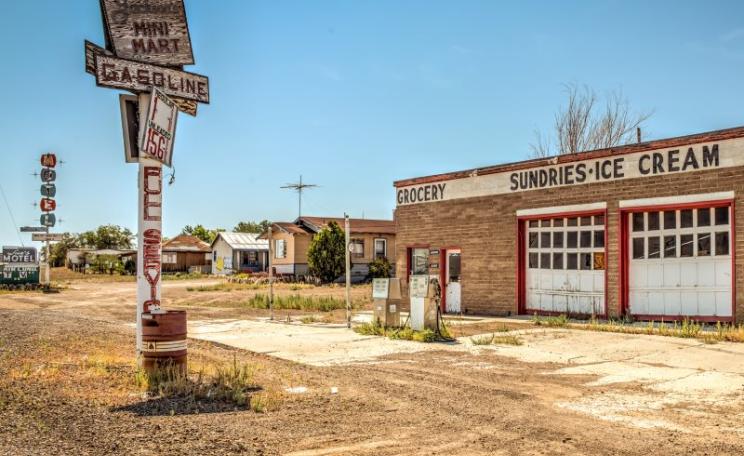
The quiet desperation of declining towns and cities across America's West is understandable, writes George Wuerthner. Of course people dream of the 'good old days' when there were wild prairies to be grazed, forests to be felled and oil wells to be sunk - and try to bring them back. But in so doing they neglect and abuse their real and enduring wealth: nature, landscape and wildlife.
With its 800 bases in 80 countries, the US's global military domination is often seen as an altruistic exercise to ensure world peace and harmony, writes Pete Dolack. It is, of course, the opposite: the essential underpinning of the US's predatory economic power, always ready to strike down any challenge to the rights and privileges of its corporate conquerors and financial oligarchy.
What's the point of farming? To produce an abundance of wholesome food, writes Colin Tudge, while supporting a flourishing rural economy and a sustainable, biodiverse countryside. Yet the powers that be, determined to advance industrial agriculture at all costs, are achieving the precise opposite. It's time for a revolution in our food and farming culture, led by the people at large.
Tate and now the Edinburgh International Festival have dropped BP sponsorship, writes Chris Garrard, with BP citing unspecified 'challenging conditions'. As indigenous campaigners accuse BP of 'sponsoring death in our communities', it's high time for the British Museum to follow their lead.
Food has never been more affordable for middle class families in rich countries. But it comes at a high cost: the impact of industrial food production on health, environment and society has never been greater as Patrick Holden explained to Emily Lewis-Brown. Now the real cost of food US production will be examined in a ground-breaking conference in San Francisco.
Britain is shipping 700kg of highly-enriched uranium capable of making scores of nuclear bombs to the US, writes Gordon MacKerron. The move is a symptom of a huge problem that's afflicting all nuclear nations - what to do with their nuclear wastes? The only real solution is deep geological disposal. But it's politically fraught, technically challenging, very expensive - and has yet to be done.
Never mind Cameron's mealy mouthed denials that he or his family benefit from tax havens, writes Donnachadh McCarthy. The real problem is systemic: Britain's entire political establishment has long been owned by tax haven wealth. Finally a senior politician, Jeremy Corbyn, has the courage to stand up to the unaccountable super-rich.
In trying to evaluate charitable interventions in 'value for money' terms, the movement for 'Effective Altruism' has lost its moral compass, Sam Earle & Rupert Read. The real changes the world needs are profound, systemic and political. There is no better example than the refugee crisis: the problem is not insufficient aid, but structural inequality, too many weapons, and too much war.
For the second year running CO2 emissions flatlined even as the global economy was growing at around 3%, writes Alex Kirby. But sharply rising temperatures show the need for further massive renewable energy deployment to actually bring emissions down.
The Chancellor's 'sport not sugar' move to tax sugary drinks was extremely welcome, writes Simon Bullock. But we need a similar Treasury approach to protect people from other threats too. So how about tackling the air pollution that's killing tens of thousands of Britons a year?
What was NATO's violent intervention in Libya really all about? Now we know, writes Ellen Brown, thanks to Hillary Clinton's recently published emails. It was to prevent the creation of an independent hard currency in Africa that would free the continent from economic bondage under the dollar, the IMF and the French African franc, shaking off the last heavy chains of colonial exploitation.
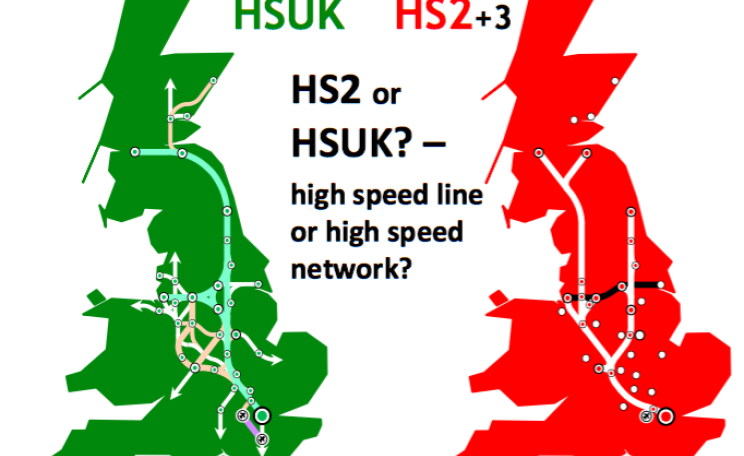
High Speed UK is the greener, well-connected alternative to HS2, write Colin Elliff, Andrew Coulson & Stephen Stretton - and it would save taxpayers billions. Financed by taxing property owners in connected cities on their windfall gains, HSUK would create a low fare, high capacity, interconnected railway network which would generate huge long-term profits for the nation.
The World Trade Organisation (WTO) has found India's huge solar initiative 'guilty' of breaking trade rules, write Dipti Bhatnagar & Sam Cossar-Gilbert, because it gives domestic manufacturers a small 10% quota for the supply of panels, leaving up to 90% for foreign competitors. It's a warning for perils of the entire WTO system, and of even harsher trade rules like those in TPP, TTIP and CETA.
The private banking system that dominates North America and Europe works very well indeed, writes Ellen Brown - for the bankers. As for us, it's a disaster, as the banks use their monopoly over the creation of money itself, at interest, as a tool to extract ever more value from us and the entire economy. But there is another way!
According to oil company executives, oil is going to be a major energy source to 2100 and beyond. So after hearing an oil man make his case, Chris Goodall went home and crunched some numbers. Money invested in solar power already produces more energy than if it's put into oil exploration and production, and the gap is only going to widen from here. Is this the new 'peak oil'?
The main engine of economic exploitation is the financial system's ever increasing extraction of value through interest payments, according to economist Michael Hudson. Paul Craig Roberts finds his analysis all too accurate, as the over-financialized economies of western countries head down a spiral of poverty, decline, injustice and despair.
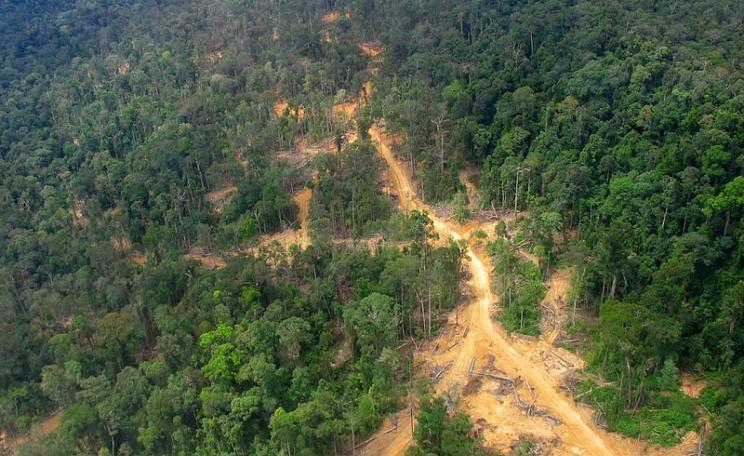
For years the 'market mantra' has been to save forests by selling the carbon they embody, writes Chris Lang, harnessing the profit motive for the benefit of trees and climate. But it never worked, and now even former fans are admitting that REDD is just another failed conservation fad. So what next? How about asking local communities to manage their forests as commons?