Alaska has put in place a 'citizen's income' paid to every resident by right - their dividend from the state's oil and gas wealth. The principle should be applied everywhere, writes Peter Barnes, compensating us for the enclosure and exploitation of the global commons, our shared inheritance of land, water and sky.
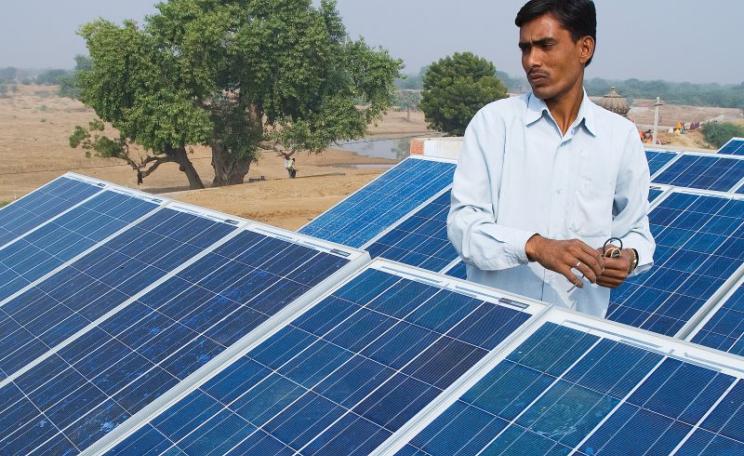
China has now overtaken the European Union as the largest new market for solar power, writes Paul Brown - as solar PV becomes one of the world's fastest growing industries - and one that's sure to keep on getting cheaper!
Current oil price volatility is a symptom of the end of cheap oil, writes Nafeez Ahmed, and it's destablising the entire global economy. The answer is a major shift to renewables - but the the International Energy Agency, which should be leading the transition, is in the grip of nuclear and fossil fuel interests. Instead the leadership must come from us, the people!
Faced with climate change, economic doldrums and collapsing oil prices, the government has the perfect opportunity to put Britain on the right track, write Simon Bullock & Tony Bosworth - reduce our dependency on fossil fuels, and invest in renewables and efficiency. So what's it actually doing? The exact opposite.
In his search for alternatives to consumerism and industrialism, Jules Pretty travelled around the world to find surviving nature-based cultures. In this extract from his book 'The Edge of Extinction', he tells of the Tuva people of the Siberian steppe - proud of their traditions and closeness to the land, but very much part of the modern world - strictly on their own terms.
As hundreds of British dairy farmers are forced out of business by milk prices well below production cost, writes Patrick Holden, it's time for a 'fair trade' British milk label that guarantees a fair price to smaller scale farmers operating to good environmental and animal welfare standards.
Peter Mandelson is 'intensely relaxed' about growing inequality, but he shouldn't be. It's the result of a 'trickle up' economy which perpetuates and fosters injustice, violence and ill health, writes Global Justice Now, and corrodes democratic societies at their very foundations.
The global economic shake-down of low oil prices continues apace, writes Alexander Reid Ross, causing environmentalists to celebrate the collapse of dirty energy projects. But the oil price collapse is the manifestation of a multi-layered conflict being fought out on the political, military and ideological battlefields of the Middle East - and it may not last much longer.
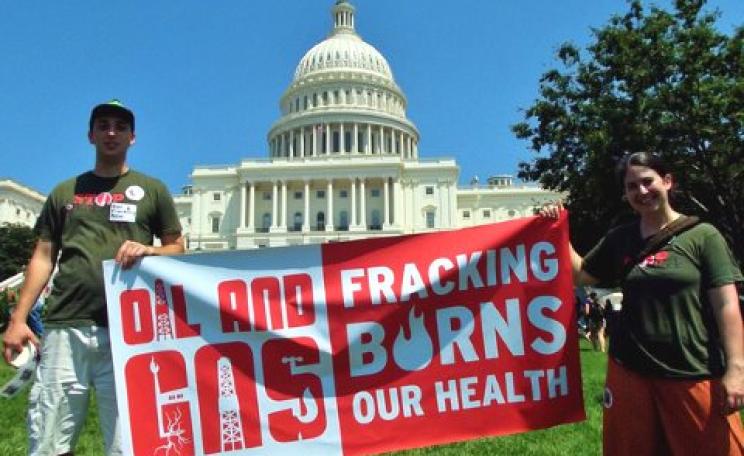
Low oil prices are putting a stop to some of the world's most environmentally damaging 'extreme energy' projects, writes Paul Mobbs, and may close down the entire fracking and tar sands industries. So why are so many 'Greens' issuing dire warnings, instead of celebrating the good news?
A KPMG study shows that the cost of solar power in India, revealed by public auctions, is barely half a cent above that of cheap local coal , writes Chris Goodall, with generators bids falling well below 5p (UK) / 7¢ (US) per kWh. The idea put about at COP21 that India and other poor but sunny countries need coal to develop their economies is fast running out of steam.
We live in an age of propaganda by the 'mainstream' media, writes John Pilger. Inconvenient stories, truths and even entire countries are airbrushed away, while dominant narratives are parroted incessantly to bludgeon our minds in acceptance of war, injustice, austerity, all to serve the interests of our ruling elites.
A new financial crisis is threatening to dwarf the 'subprime' mortgage debacle, writes Paul Mobbs. Cheap money from central banks has fuelled some $1.3 trillion of risky investments in high-cost 'unconventional' oil and gas. Now, with oil sinking below $60, all that paper is turning to junk - and that's putting the entire economic system at risk.
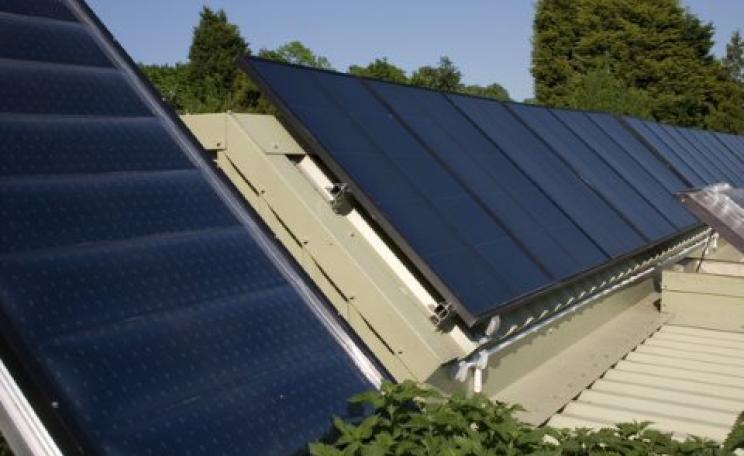
Solar power has a sunny future - even without any major breakthroughs, writes Ralph Gottschalg. There are huge gains to be made simply by getting smarter and using existing technologies more effectively. A new report shows that - given political support - solar PV could be competitive in the UK by 2020.
Are recent oil prices slumps caused by OPEC ganging up against tar sand and other high-cost producers? Or a sinister conspiracy to destabilise the Russian economy? Far from it, argue Jemma Green, Mark Andrich and Peter Newman - it's the simple result of an excess of supply over demand. And the low prices will be with us for some time to come.
Today the Green party announced a doubling of its membership since January - 500 this last weekend alone, writes Ian Sinclair. They offer an increasingly attractive alternative to the 'mainstream' parties, who have little to offer but a bleak package of privatisation, neoliberalism and never-ending austerity.
Farming today is well on the way to becoming a wholly owned subsidiary of the agro-chemical-biotech industry, writes Colin Tudge. Defra and the European Commission are all too keen to make it so, reflecting the interests of an agro-oligarchy obsessed with profits and growth at all costs. But there is an alternative. Join the 'real farming' agrarian renaissance ...
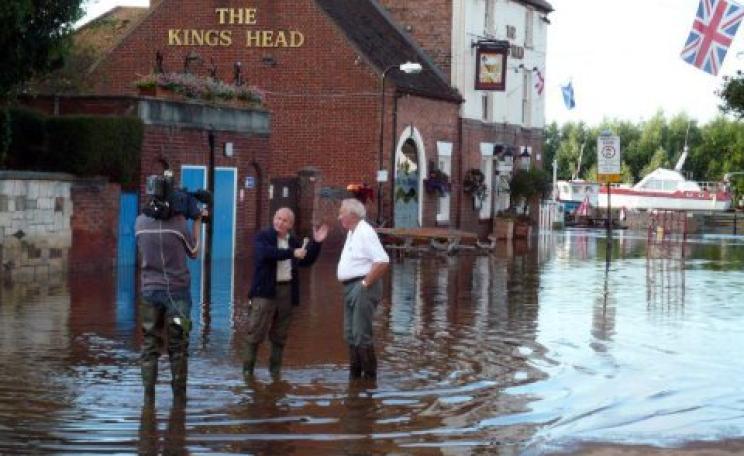
Such is the Government's neglect of our flood defences, revealed by a National Audit Office report, that they are failing to even keep pace with climate change, writes Guy Shrubsole. That alone is a national disgrace - but most shameful is that current expenditures mostly benefit the wealthy, while poor communities are neglected.
In 2003 nations pledged to place 20-30% of the world's oceans into no-take marine parks, writes Jessica Meeuwig - but more than ten years on, such areas now cover just 1% of ocean area. Now the World Parks Congress in Sydney, Australia, provides an opportunity to drive marine protection forward, and benefit both ecology and economy.
Despite promises to phase out subsidies to the coal, oil and gas industries, a new report G20 governments are still providing them with massive financial help, writes Alex Kirby. The UK alone is spending over £1.2 billion per year to support fossil fuel exploration and production at home and abroad.
A year ago Typhoon Haiyan, one of the strongest tropical cyclones ever recorded, struck central Philippines leaving tens of thousands of people dead and missing, millions homeless and livelihoods destroyed. Today climate-affected communities worldwide are demanding change.
The IPCC's 'synthesis report' makes a good scientific case on climate change and the need for action, writes Roger Jones. But its economics are weak, especially when it comes to the costs of inaction. And nowhere does it set out the core truth - that the alternative to swift, effective action is to create a hellish, dystopian world for our descendants to endure.
Hinkley C's subsidy package may have won European Commission approval - but now it faces a National Audit Office 'value for money' investigation, following a demand from a powerful Parliamentary committee.
The green dream of being a small farmer producing high quality, organic food for local people has ended up being anything but for Alicia Miller. The problem is money - there's never enough of it. But she's not alone. All over the world, life is a financial struggle for small, ethical cultivators, and constant source of stress.
The outgoing European Commission has just given the UK's controversial Hinkley C nuclear project the go-ahead, writes Paul Dorfman - approving a deal that will cost the UK public tens of billions of pounds. But now the deal faces a legal challenge in the European Court of Justice.