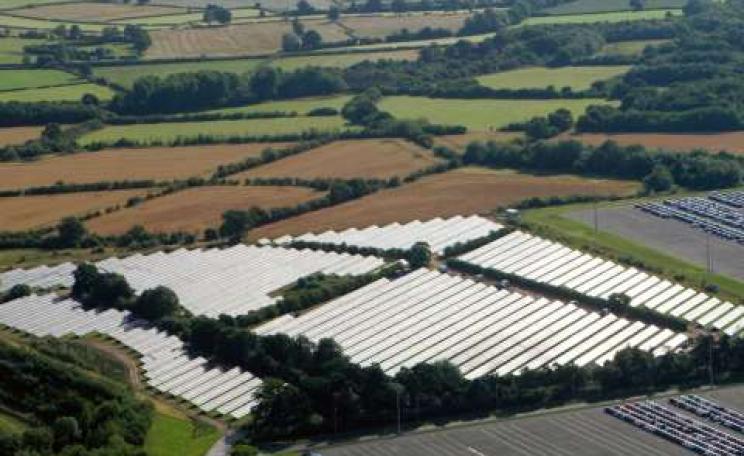
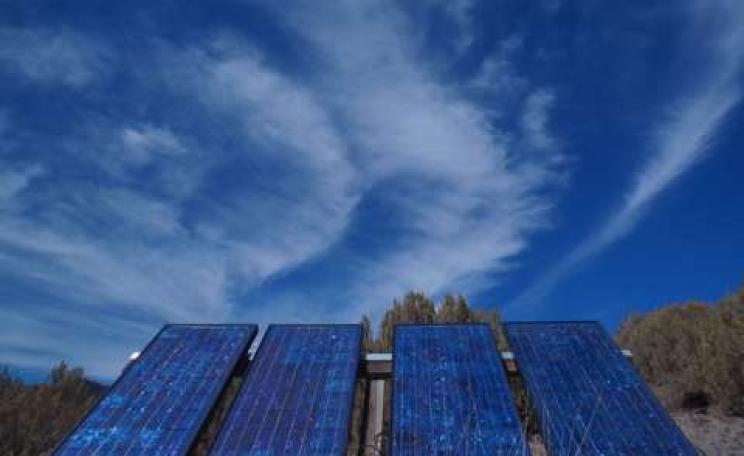
California and Texas continue to break new ground in making electricity generation from renewable sources, writes Mike G. Solar PV in particular has become a vital part of the US' energy mix, accounting for half of new generation capacity.
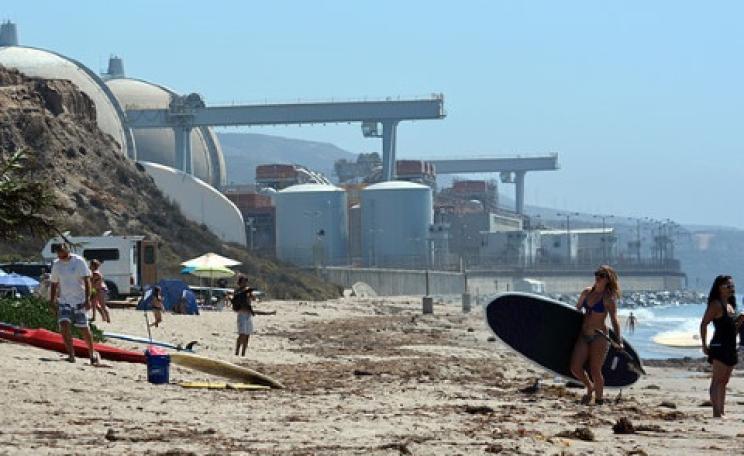
The recent closure of five US power stations is forcing the industry to confront big questions about radioactive waste, writes Paul Brown. Who is to pay the mounting costs of managing the wastes and keeping them secure? And precisely where will be their final resting place?
Never mind the 'war on terror' rhetoric, writes Nafeez Ahmed. The purpose of Israel's escalating assault on Gaza is to control the Territory's 1.4 trillion cubic feet of gas - and so keep Palestine poor and weak, gain massive export revenues, and avert its own domestic energy crisis.
Nuclear power advocates believe the technology is essential to building a fossil fuel free world energy system. In fact it is optional, writes David Elliott - and not even very helpful. Efficiency and the 'new renewables' can do the job faster, and at much lower cost.
The UK's conservative Daily Telegraph warns: investors in fossil fuels are 'throwing good money after bad', reports Nathan Wood, as renewable energy takes off leaving a potential $19 trillion of oil assets 'stranded'.
Our current electricity system cannot accept much wind and solar power because they lack the 'inertia' of spinning turbines that stabilises grid voltage, writes Marek Kubik. But that's no reason to limit renewables - there are new, smart solutions ready for deployment.
If we're serious about cutting CO2 emissions, there's no place for nuclear power, writes Ian Fairlie - because it's the least cost-effective way to do it. By far the best way is to improve energy efficiency. But tell the Government the truth, and it'll close you down.
in Ukraine, as in Afghanistan, Libya, Iraq, and Syria, US policy is all about dominating the world's fossil fuel supplies, writes Mike Whitney - in this case, the gas pipelines from Russia to Europe. But the 'great aggressor', Vladimir Putin, is refusing to play his part. So what next?
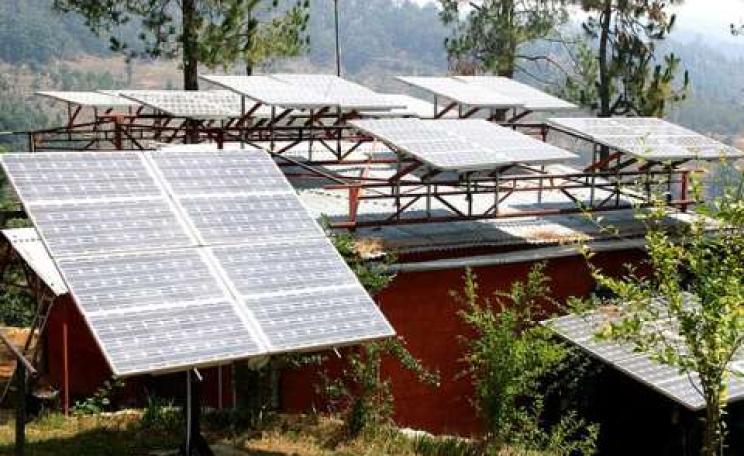
With the Government wilfully undermining the UK's small but fast-growing solar power sector for the second time, Jonathon Porritt wonders ... why the attacks on what is our second lowest cost source of renewable energy, and getting cheaper all the time?
Two thirds of the world's investment in building new power generation until 2030 may go to renewable energy, reports Rosie Murray-West, causing CO2 emissions to peak at end of the 2020s.
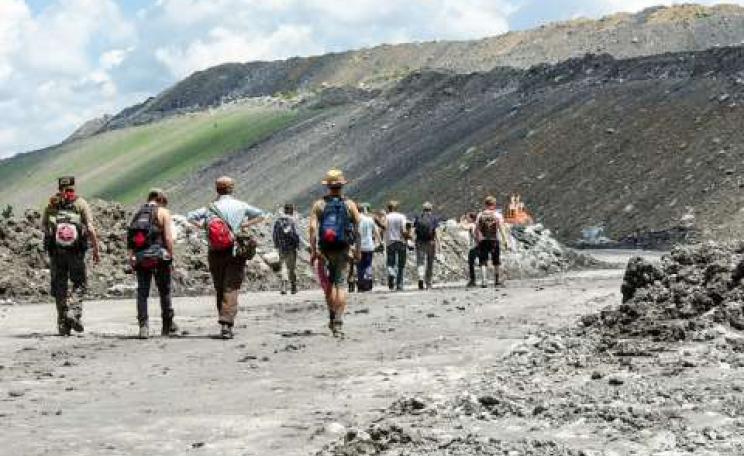
In modern India any form of dissent from the neoliberal corporate model of development is being criminalised, writes Kumar Sundaram. Opponents of nuclear power, coal mines, GMOs, giant dams, are all under attack as enemies of the state and a threat to economic growth.
The World Bank is still deciding how to respond to Kosovo's request for funds to build a new 600MW power station burning filthy 'brown coal', writes Michael Brune. It's time for the World Bank, with strong US backing, to give the project a firm 'no way'!
Tackling global warming with better public transport, increased energy efficiency, renewable energy, clean cookstoves, better waste management could increase global GDP by $2.6 trillion. The alternative is growing risk from harshening climates ...
Lord Smith's views on fracking betray an total ignorance of a large body of published, peer reviewed science that contradicts his conclusions, writes David Lowry - not to mention those of his political masters. Is 'groupthink' leading the UK astray?
The UK Government's self-declared war on onshore wind farms will make it very difficult for the UK to meet its EU renewable energy targets, writes David Elliott - especially as it cuts support for solar PV. Is the UK's energy policy being written by UKIP?
A Spending Bill now under debate in Congress would cut over $100 million from renewable energy, grant extra funds for dumping nuclear waste and fossil fuel research, exempt 'mountain top removal' coal from regulation, and limit the EPA's power to enforce clean water laws.
Nuclear power is neither beautiful, nor safe, nor cheap, writes Justin Keating - a message to the United States, where the Obama administration has pledged to waste over $200 million financing the 'Small Modular Reactor' (SMR).
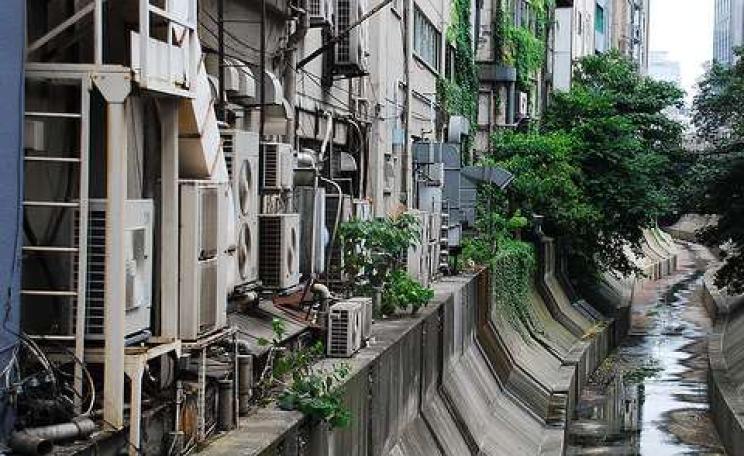
Increasing use of air conditioners to stay cool is making entire cities warmers in a 'vicious circle' of increasing energy use and discomfort, writes Tim Radford.
As renewables grow in scale, and fall in price, the threat to electric utilities becomes ever more clear, writes Tyler Hamilton. The last thing they needed was Barclays downgrading their corporate bonds ...
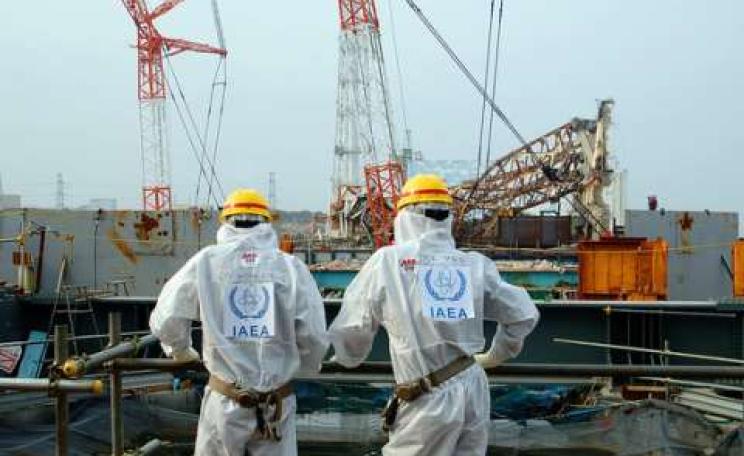
Fukushima has largely disappeared from the mainstream news, writes Harvey Wasserman. After all, who wants to read about children with cancer, continuing huge radiation leaks, and the very real possibility of another catastrophe as big as Chernobyl?
Oil company Soco International is suspending all operations in Virunga World Heritage Site - Africa's oldest national park. It has also committed to keep out of all other UNESCO World Heritage Sites.
There is more to sustainable transport than cutting emissions, writes Nicola Spurling - like reducing car dependence, cutting congestion, and reducing the need for travel. The Tesla Model S is a wonder of engineering, but does little to address the real challenges.
A decision by parties to an obscure Convention has huge implications for Europe's ageing nuclear reactors, writes Jan Haverkamp. Licence extensions must follow EIAs which compare the potential impacts to those of alternatives - including wind, solar and other renewables.
What do the Australian Environment Foundation, the Renewable Energy Foundation and the Global Warming Policy Foundation have in common? They are all fiercely anti-environment, writes William Laurance - and we must beware their 'eco-doublespeak'.