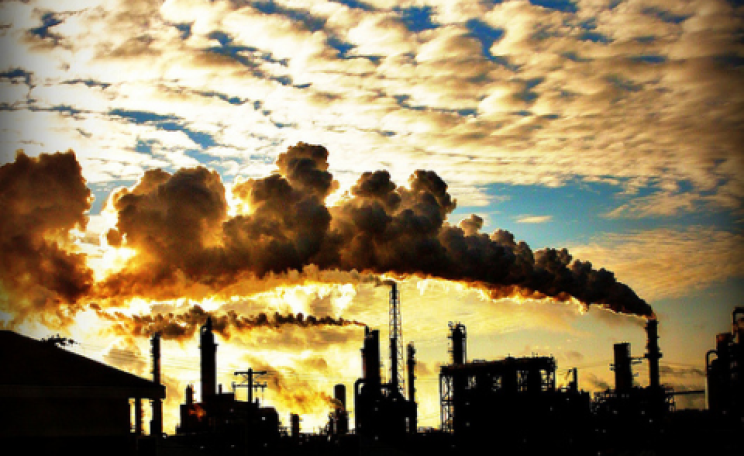
The latest IPCC report urges a dash for gas to allow us to reduce the burning of coal, including shale gas from fracking. But as Alex Kirby reports, their calculations appear to be based on an arithmetical flaw.
The UK tried to make the EU relax its rules on State Aid to allow subsidies to nuclear power. Now we know - it failed. The chances that the Hinkley C power station will ever be built have fallen another notch.
As the European Commission considers the £100 billion subsidy package the UK has offered EDF to build and operate Hinkley C nuclear power station, Paul Dorfman explains why the 'deal' is illegal, anti-renewables, and ruinous to energy users and tax payers.
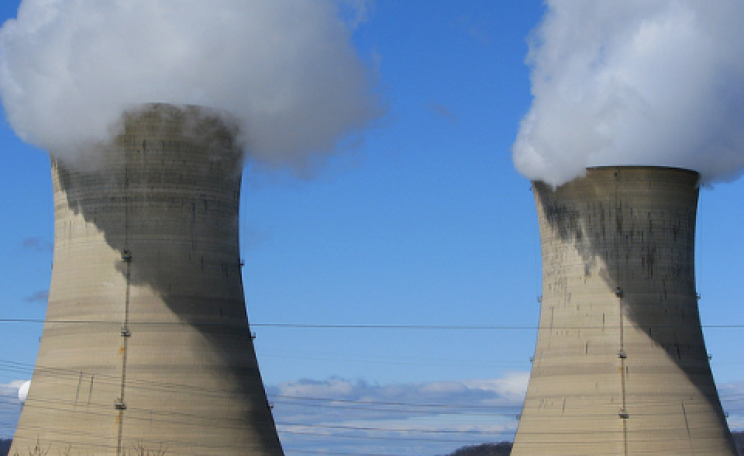
The UK should continue to use nuclear power, in order to reduce greenhouse gas emissions, writes Stephen Tindale. It should also test new nuclear technologies that can burn plutonium, such as the PRISM reactor, and develop molten salt reactors.
A report by Alberta's energy regulator links emissions from tar sands oil production with serious health impacts in the Peace River region that have forced families to flee their homes, reports Carol Linnitt. The findings reveal 'a huge information gap'.
The UK Government is seeking to 'Justify' the Hitachi ABWR reactor type for new nuclear build at Wylfa and Oldbury. But as Mark Hackett reveals, the design is a dismal failure in Japan, costs more than alternatives, and brings serious health hazards.
The IPCC's latest report makes a stark contrast with Osborne's recent budget, writes Molly Scott Cato. It was all about sacrificing our future for short term benefit - when as the IPCC makes clear, what we need is the precise opposite.
In the lead-up to tonight's Earth Hour one organisation is putting the creative community on the front lines of the battle for climate change. Rebecca Cooke reports on the remarkable series of 29 posters to provoke and intrigue us into climate action.
Thirty-five years ago today the USA had its worst ever civilian nuclear accident with a reactor meltdown at Three Mile Island. Linda Pentz Gunter reports on the lies and cover ups about the true scale of the radiation release and its impacts on human health.
Jonathon Porritt finds Mark Lynas's latest pro-nuclear tome 'gratifyingly short' and reasonably open-minded. But Lynas falls into the trap of seeing nuclear technologies as fast developing, while renewables are stuck - when the reverse is the case!
According to Goldman Sachs US home-owners will find it's technically and economically viable to go off-grid by 2033, writes Michael Mariotte. The big losers will be fossil and nuclear power generators.
Climate policy could bite on fossil fuel resource values much faster than financial markets anticipate, writes Sam Fankhauser. It's time investors wised up to the hazards of investing in fossil fuels, when two thirds of them may have to remain unexploited.
The era of mass consumption has reached India, bringing about a frenzy of over-consumption, pollution and ecological havoc. But so long as there's money to be made, asks Subhankar Banerjee, why worry about climate change?
A coal-fired power station in Italy that has caused an estimated 442 deaths has been closed down following a court order. A case of corporate manslaughter is under investigation.
A nuclear reactor designed to burn up surplus Cold War plutonium has been closed by the US Department of Energy. Initially it was meant to cost $1bn. So far it has cost $4bn. To complete and operate would cost $25-34bn.
The European Commission has launched its public consultation over the UK's proposed state aid to the proposed Hinkley C nuclear plant in Somerset - and in the process delivered a mighty broadside against the UK Government's plans.
Who and what are biofuel sustainability standards designed to benefit? They are meant to safeguard forests and communities, writes Almuth Ernsting - but their real purpose is to protect the biofuel industry ...
Illinois is one of six US states that allows communities to aggregate and specify their energy purchases. Now 91 - comprising 1.7 million people - have used that power to buy 100% renewable electricity.
First the UK made a mess of wind and let Denmark take the prize. And now, writes Godfrey Boyle, the government's prevarication is risking our lead in another key renewable energy sector - marine power.
The solar industry is going great, with tens of gigawatts of new capacity planned for 2014 alone. But as Jonathon Porritt writes, the solar revolution could be going even faster - with smart, consistent policies for solar power in Europe and Japan.
The UK's nuclear decommissioning authority has a problem - what to do with over 100 tonnes of plutonium. Jim Green evaluates the NDA's options, and sees another generation of nuclear white elephants in the making.
Electricity usage in the US has been declining since 1993, writes Steven Nadel. Among the reasons for the fall, improved energy efficiency is emerging as a key factor, especially post-2007.
The European Commission is assessing how it should augment its nuclear disaster insurance. Ingmar Schumacher calls for full transparency of insurance costs in the cost-benefit evaluation of the nuclear industry.
UK solar entrepreneur tells world leaders at Davos: fracking for shale oil and gas cannot help to avert a global energy crisis - and a global oil crisis could strike in 2015. Alex Kirby reports.