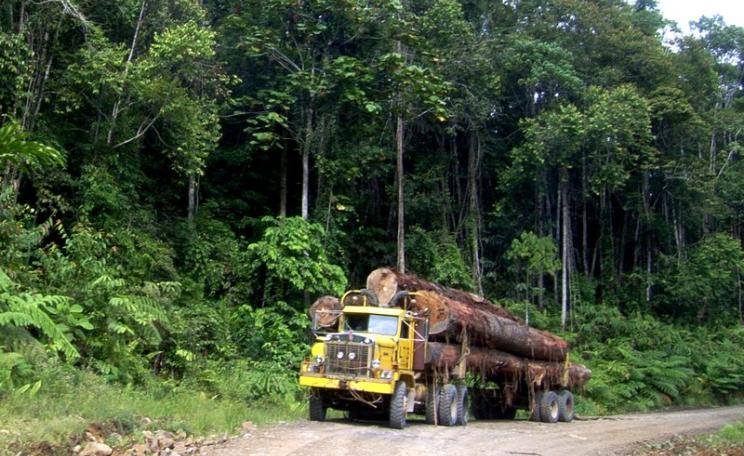
Just as Indonesia's forests are going up in flames, in part as a result of illegal logging on a massive scale, the country's Trade Minister has issued a regulation that would rubber stamp exports of illegal timber - also undermining a timber agreement with the EU that's due to come into force next month.
Political groups in the European Parliament have sent a clear message to the Commission on its GMO proposals, writes Molly Scott Cato - we are not willing to have piecemeal and vaguely-defined 'opt-out' legislation forced down our throats.
The European Parliament voted this week to regulate nano-materials in the pending EU law on novel foods, write Jaydee Hanson & Evan Bromfield. But no such moves are taking place in the US. Let's make this the last time our children are exposed to these hazardous substances in their Halloween candy!
There's been a big fuss about the 'ISDS' clauses in the TTIP trade deal that would allow US corporations to sue the EU and its member states for 'lost profits', writes Maude Barlow. But ISDS is already in CETA, the already negotiated EU-Canada trade deal - and nothing would be easier than for US companies to use it as their 'back door'. We must make sure CETA is rejected at its final hurdle.
The UK dairy industry is in crisis, writes Megan Perry, with falling prices forcing many farmers out of business. Smaller, more sustainable farms have been the worst casualties, while the large, intensive producers survive. We must ditch market-driven 'survival of the fittest' attitudes - and recognise both the real costs of intensification, and the true value of traditional farming.
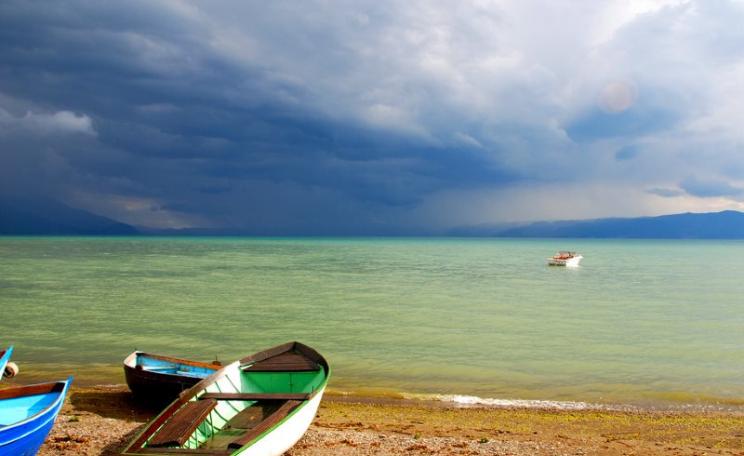
UNESCO's Lake Ohrid-Prespa Biosphere Reserve at Mount Galicica, Macedonia, is at risk from a raft of aggressive developments, write Elena Nikolovska & Daniel Scarry: tourism complexes, a new expressway and ski resort all threaten its tranquility and stunning diversity of wildlife, backed by loans from the EU's taxpayer-funded Bank, the EBRD.
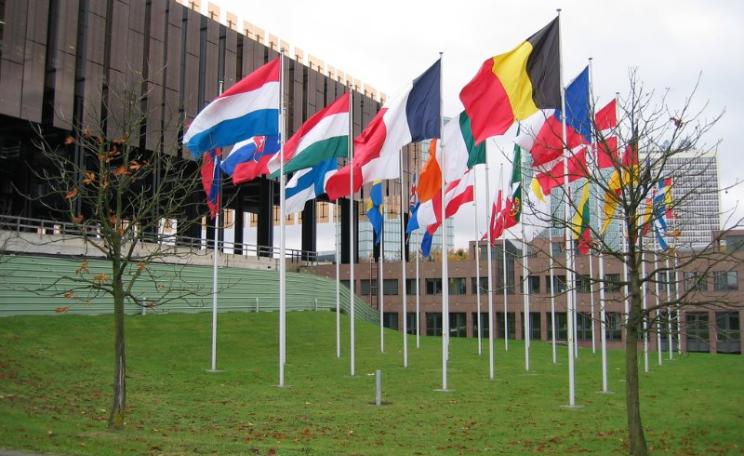
The investor protections in the US-EU TTIP treaty would privilege US corporations over the EU's own citizens and businesses, writes Laurens Ankersmit & Oliver Tickell. That would sideline EU courts and undermine the completion of the internal market. It is therefore essential that the EU Court be asked to rule whether they are legal.
Austrian timber company Schweighofer is linked to large-scale illegal logging which accounts for half of Romania's timber production. An EIA investigation finds that almost all the illegal timber ends up in the company's mills.
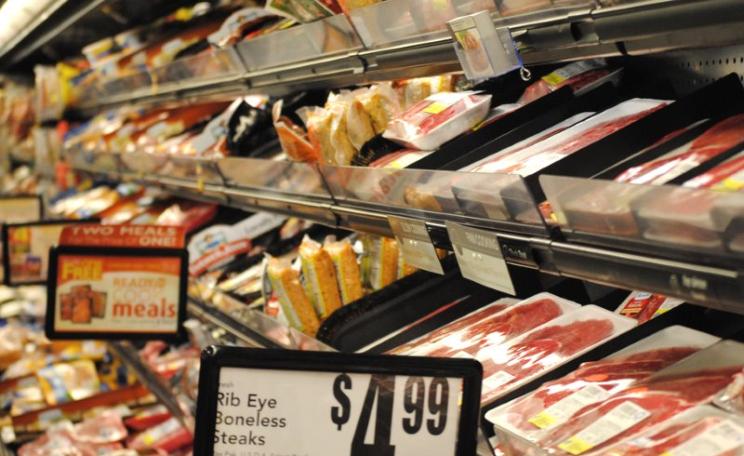
The 'regulatory cooperation' clauses in TTIP threaten to strip away vital EU protections on food, health and environment, writes Alex Scrivener. Indeed it has already begun: the mere prospect of TTIP has persuaded the EU to back off on plans to ban lactic acid-treated beef and 31 toxic pesticides. We must reject the entire package!
It was a remarkable spectacle, writes Damian Kahya: MPs trying to get straight answers out of VW's top man in the UK over the 'dieselgate' scandal. Of course our cars gave false test results. But who would ever believe those stupid tests anyway? How many people died from all the extra pollution? None! There was no pollution!
With all the EU's GMO exemptions filed, a clear majority - by number, population and area of farmland - have chosen to be GMO-free, writes Mary Dobbs. But the rules surrounding their opt-outs are complex in the extreme and many countries will find it hard to maintain their GMO-free status - specially if the Commission and the biotech corporations like Monsanto and Syngenta choose to exercise their powers.
Fifteen EU states have now joined the GM-free movement as the 3rd October deadline for registration nears, along with four regions. They collectively account for 65% of the EU's arable cropland, and 65% of its population, and Greenpeace expects more to sign up.
With the deadline for EU countries who wish to ban genetically GM crops drawing near, writes Oliver Tickell, Poland is the latest to register with the European Commission to go GM-free. Now the division of the EU into pro and anti-GM zones may test the single market beyond its limits.
With all diesel cars failing EU clean air standards in real world driving, and the worst 22 times over the limit, there's only one real solution, write Steffen Böhm & Ian Colbeck: adopt sustainable transport strategies to keep cars off our streets and break our dependence on them.
The discovery that Volkswagen has been 'gaming' vehicle emissions tests has taken the world by storm, writes Paul Nieuwenhuis. But it comes as no surprise to campaigners who have long been aware of the huge gap between 'official' emissions and real word pollution. Where were the regulators? And why did it take an NGO to uncover the scandal?
The EU Court has made a landmark judgement we should all be glad of, writes Tess Crean, firming up our right to know when products contain chemicals known to be seriously damaging to health. Now we must make sure that reluctant regulators step up to the mark.
Taxpayer-financed development banks have lent €500 million to Ukraine's biggest agribusiness company so it can undercut EU chicken producers, writes Fidanka Bacheva McGrath - while polluting the environment and grabbing land from local farmers.
The fight against TTIP is being picked up by local authorities across the UK and other EU countries, writes Kevin Smith. Even Brussels - where the European Commission has been negotiating the deal with its US counterparts - has joined the movement. And now, with the election of the anti-TTIP MP Jeremy Corbyn's as Labour Leader, it's time to drive the message all the way home.
Doctors have been told to limit their use of antibiotics to limit the spread of microbial drug resistance, writes Emma Rose. But 40% of the UK's antibiotics are used on farms, of which 85% is fed to disease-free animals. We can no longer ignore the massive agricultural overuse of the drugs, now a major driver of antibiotic resistant infections.
'Unbearably tardy' climate negotiations have ended in failure, writes Henner Weithöner. Without even a draft text at this late stage, the chances of a meaningful deal emerging from the crucial UN summit in Paris are looking paper-thin.
Confronted with climate change, disasters and their human victims, governments are all to quick to adopt a security response, write Nick Buxton & Ben Hayes. We saw it in the US after Hurricane Katrina. We see it now in Europe. And there's a host of powerful corporations keen to cash in on the opportunities. But the solutions they offer will only deepen the crises we face.
Ukraine's state-owned nuclear generator is suing anti-nuclear activists in its latest attempt to stifle public debate over the country's ageing fleet of 15 nuclear reactors, while refusing to release information in breach of international obligations.
A month after warning the government of legal action over its decision to allow farmers to use bee-killing pesticides banned under EU law, Friends of the Earth has filed a High Court legal challenge to have the 'derogations' declared unlawful.
The EU's 'rapporteur state' on glyphosate, Germany, has recommended re-approval of the herbicide with its daily intake increased by 67%, write Drs Nancy Swanson and Mae Wan Ho. The verdict is based on a re-assessment carried out by Monsanto and a consortium of chemical companies, based on unpublished industry studies. It should be rejected outright.