It's barely mentioned in the election campaign or reported in the media. But a powerful faction of Tory ministers, ex-ministers and backbench MPs are bent on using Brexit to ignite a massive bonfire of 'spirit-crushing' laws on wildlife protection, air and water pollution, pesticides, renewable energy and public health, writes Brendan Montague. At risk are not just EU directives and regulations but even the UK's own Climate Change Act. May's Brexit may not just be hard, but very, very dirty.
A new study explains for the first time how nanoparticles like those in diesel exhaust fumes cause heart disease by lodging in inflamed blood vessels, writes Oliver Tickell. The study, published as the UK government is ordered before the High Court to justify its refusal to publish plans to tackle illegal air pollution which afflicts 38 million people, also raises wider fears about 'engineered nanoparticles' in the environment.
Brazil's extreme right wing government is preparing to open up the rainforest territories of dozens of uncontacted indigenous tribes to 'free for all' development by defunding the protection they currently receive, according to information received by Survival International, which warns: 'The reality is these cuts could sanction genocide.'
Five international judges say Monsanto's activities have negatively affected individuals, communities and biodiversity, writes Claire Robinson. The Monsanto Tribunal's damning ruling denounces the company's harmful impacts on food sovereignty, agricultural production, access to nutrition, the natural environment, seed diversity, climate change, pollution and traditional cultural practices.
MEPs vote today on proposals to cut air pollution by setting up an independent EU monitoring body to ensure that a scandal like Dieselgate never happens again, writes Keith Taylor. However fears are growing that Brexit promises the UK a bonfire of environmental laws including those on air pollution. We need a strong, new Clean Air Act now!
Government promises of 'leaving our environment better than we found it' are melting away in the heat of Brexit, writes Jeremy Robson. Ministers have said that a third of all EU environmental laws may never be transposed into UK statute, while many Tory MPs are anxious to rip away the 'red tape' that prevents building on precious nature sites. We must make British nature great again!
World Bank projects have left a worldwide trail of evictions, displacements, rapes, murders, forest destruction, greenhouse-gas-belching fossil fuel projects, and destruction of farmland and water sources, writes Pete Dolack. But even as internal reports admit the Bank's wrongdoing, it is asserting its immunity from legal action as terrorised communities seek redress in the courts.
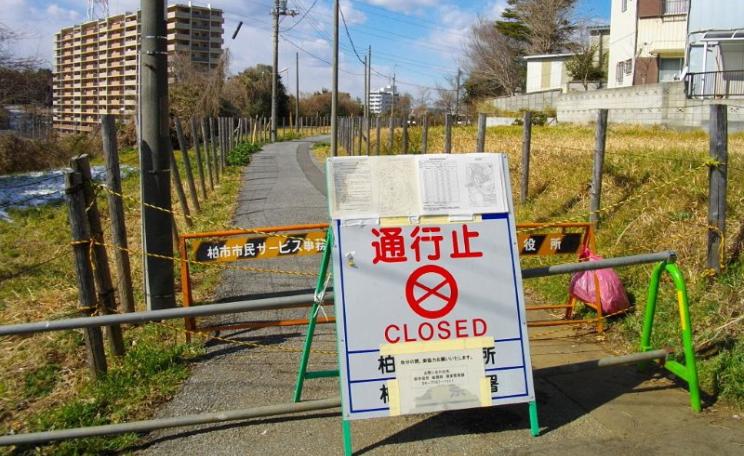
A Japanese court has found the government and Tepco culpable for the Fukushima nuclear disaster for failing to act on clear warnings of the dangers of seismic shocks, writes Shaun Burnie. The ruling is sending a shockwave through Japan's 'nuclear village' and may end all prospects of any mass restart of reactors.
Post Brexit, get ready for a massive attack on our liberty, especially on the right to protest, writes Paul Mobbs. With the UK likely to secede from the European Convention on Human Rights, prepare for a new empowerment of police to act with impunity against peaceful activists. We must be ready to stand up, with honour and dignity, for our ancient British right to dissent.
Britain's long-suffering nuclear bomb test veterans have once again had justice denied to them, writes Chris Busby, by a shocking piece of judicial chicanery in London's High Court in which the judge whimsically excluded all the scientific evidence that did not suit the Ministry of Defence. But the veterans' fight for justice and scientific truth continues, facing its next test in the Court of Appeal.
The government's 'misclassification' of an eight-lane M25 road bridge over the river Thames East of London as a 'rural road' meant they did not have to report the illegal levels of pollution found there, writes Keith Taylor - getting off the UK off the hook for a 17th breach of EU air quality standards. What an unfortunate error!
The UK government hates to be held accountable in court when it breaks environmental laws like those on air quality. So it has created new rules - coming into force today - that expose environmental litigants to unlimited financial liabilities. Now three leading NGOs have done to the High Court to argue that the rules themselves are in breach the UK's international obligations.
A direct action protest by Rising Up! today blocked access to three Heathrow terminals to press their demand for no third runway at the UK's biggest airport. The activists included both climate campaigners and local people fearful of increased pollution, loss of homes and green space and entire villages destroyed.
Since February 18, 2005 roughly 200,000 illegal hunting events undertaken by registered hunts may have taken place in the UK, writes Jordi Casamitjana. By engaging in fictitious 'trail hunting', they can chase foxes as before, and when they are killed, well, it was all a shocking 'accident'. It's high time to strengthen the law to ensure the spirit in which it was passed is fulfilled.
Letters from an EPA toxicologist to the EPA official in charge of assessing whether glyphosate, the active ingredient of Monsanto's Roundup herbicide, causes cancer, reveal accusations of 'staff intimidation' and 'political conniving games with the science' to favour pesticide corporations, writes Carey Gillam. Could this be a game-changer for cancer-suffering plaintiffs?
The impending US-UK trade deal threatens the irreversible loss of public protections on health, safety, labour and environment in both countries, writes Stephen Devlin. Last week Trump signed an executive order forcing systemic corporate deregulation - and the UK's 'pro-business' government is all too keen to go along with it.
Reeling from California's decision to ban glyphosate, fearful of 're-evaluation' by EU and US regulators, and facing ruinous cancer claims in federal courts, the US chemical industry are fighting back, writes Carey Gillam. Their key argument: don't trust independent doctors and scientists - trust us! And as they just told a California court, profit must come before people.
Newly published letters show that the UK Government may ignore the Committee on Climate Change, its official advisor on climate, and allow emissions from aviation to soar at an expanded Heathrow airport, writes Damian Kahya. Instead it would rely on buying widely condemned 'carbon offsets'.
The UK's abject failure to implement national and EU laws on energy efficiency in buildings is a disgrace, writes Andrew Warren, and one that is costing us dear in higher fuel bills now and for long into the future, while adding to air pollution and climate change.
A coalition of farmer and public interest groups are suing the US Environmental Protection Agency for unlawfully approving the use of Monsanto's highly toxic herbicide dicamba on its dicamba-resistant GMO soybeans and cotton, without consulting wildlife and fisheries agencies.
A bill to quadruple the UK's aid funding to a profit-driven 'private equity' company owned by the government comes before MPs today for its third reading, writes Global Justice Now. Trouble is the investments do little or nothing for the poor, and instead entrench corporate power in health, education and infrastructure. Parliament should seize this last chance to reject the new law.
Days into the 2017 pollution limits on the Brixton Road in Lambeth, South London, has already breached EU pollution limits for NO2 for the entire year. Meanwhile UK sales of diesel cars - one of the main causes of NO2 pollution - reached record levels in 2016, reflecting the government's failure to tackle the problem in spite of numerous court orders.
China's domestic ivory trade ban, which comes into force this year, is a major cause for optimism, writes Aron White. There are still loopholes, such as a partial exemption for 'cultural relics', that need clarifying and closing. Yet the new law sends a strong and timely signal that the global ivory market is progressively shutting up shop.
Will the UK keep Theresa May's promise to 'leave the environment in a better state than it found it' in the Brexit negotitions? Or is the government bent on the 'bonfire of red tape', including environmental protections, demanded by right-wing former and serving ministers? Viviane Gravey sets out four 'green lines' by which to judge the Brexiteers' true colours.