Two key wildlife laws that underpin nature conservation across the EU will be retained intact, the EU Commission announced today after an 18 month review that generated record public engagement due to fears that they would be weakened. Now campaigners are determined to ensure the UK retains the laws post-Brexit.
Magnox has applied to dissolve spent nuclear fuel canisters and release the liquid into the sea near Bradwell nuclear power station in Essex, writes Chris Busby. This will wash radioactivity onto mudflats in a populated area already suffering from excess cancers, however the publicly available documents ignore this key fact. We must make sure this dangerous application is refused.
The captain of a Sea Shepherd speedboat who was attempting to guide a pod of over 200 Atlantic white-sided dolphins from slaughter on a Faroe Islands 'killing beach' has been convicted by a Danish court on animal cruelty charges.
The Scottish government has announced that its wild beaver populations will be given the full protection of both UK and EU law. The decision has been welcomed by campaigners who point out all the benefits of beavers to biodiversity, water management and flood control. Now, they say, England and Wales should follow suit.
The European Parliament just voted against referring CETA, the EU's toxic trade deal with Canada, for legal scrutiny by the European Court of Justice, write Kevin Smith & Jean Blaylock. But this astonishing decision comes with an important silver lining: 258 MEPs voted in favour, building a platform from which to defeat CETA altogether in the main vote in February.
Israeli military forces have resumed their harassment of Palestinian pastoralists in the occupied Jordan Valley, part of the West Bank, holding live-fire tank and infantry maneuvers on pastures and cropland close to local communities, accompanied by the forced expulsion of both people and livestock.
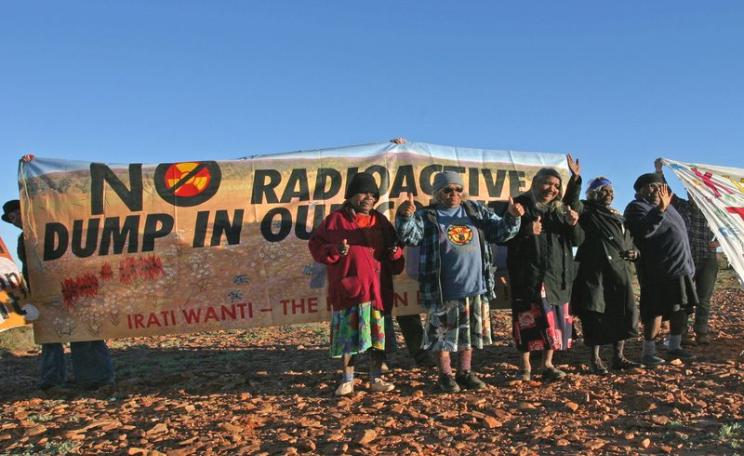
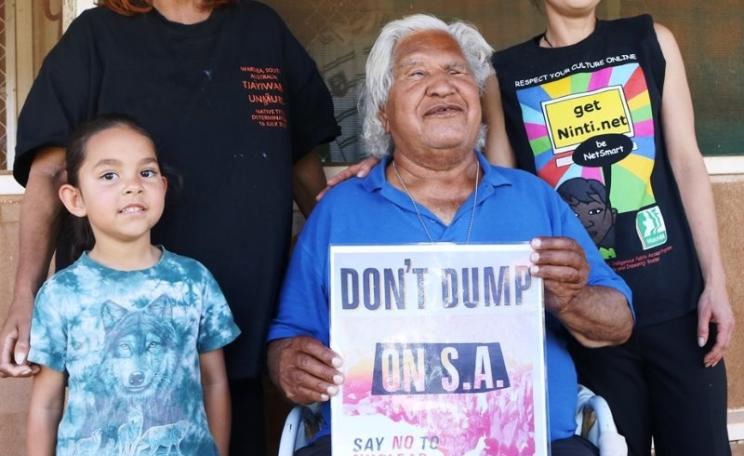
A 350-member Citizens' Jury convened to decide on whether a massive nuclear waste dump would benefit South Australia just gave the plans a big 'No!', writes Ian Lowe. SA Premier Weatherill must drop his attempt to reverse that decision with a referendum, and accept the jury's well informed, democratic verdict.
This summer families of atom bomb test veterans who have died of cancer took the UK government to the High Court for its failure to compensate them, writes Chris Busby. Also on trial was the 'official' radiation risk model, which understates the true health hazards of internal exposures by a factor of 1,000. But 17 weeks after the case, litigants and veterans are still awaiting judgment.
An officially convened 350-strong Citizens' Jury has decisively rejected South Australia's plans to import over half a million tonnes of high and intermediate level nuclear waste for long term storage, writes Jim Green. This has dealt a powerful blow against the project from which it is unlikely to ever recover, and represents a major victory for campaigners, indigenous Australians and economic sanity.
The intimate connection between landscape and religion is at the center of Native American societies, writes Rosalyn R. LaPier, and a key reason why thousands of Native Americans and Indigenous peoples from around the world have traveled to the windswept prairies of North Dakota. There is no excuse for the ignorance and disrespect of corporations, and government.
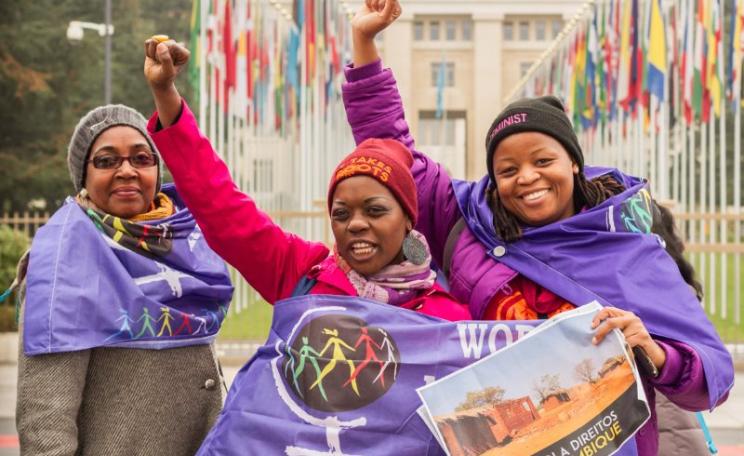
People power was at the forefront of UN talks on an global treaty for transnational corporations and human rights last week in Geneva, writes Amelia Collins. The fact that so many countries - led by South Africa and Ecuador - voiced their unequivocal support for legally binding rules, sets exactly the right tone for an ambitious and far-reaching negotiation.
The organizers of tomorrow's International Monsanto Tribunal describe it as a 'moral trial', while the company dismisses it as a 'mock trial' and 'stunt'. The truth, writes Pete Dolack, is that it's about much more than this one company. On trial is the entire neoliberal system of 'free market' finance and monopoly capitalism.
The Conservation Law Foundation has just filed the first lawsuit against ExxonMobil for violations under the Clean Water Act and other laws, committed in its deliberate, reckless and deceitful cover-up of it's true knowledge of the dangers of climate change.
The Trade in Services Agreement is a multilateral deal like TPP, TTIP and CETA, writes Zachary Davies Boren. But while the 50-nation negotiations are even more secretive, its impacts could be even greater: undermining national sovereignty; allowing only corporate regulation deemed 'necessary' by a panel of WTO lawyers; and allowing no rollback on trade liberalisation.
The International Criminal Court in The Hague is to broaden its focus to prosecute governments and individuals for environmental crimes, write John Vidal & Owen Bowcott. Examples include illegal deforestation, theft of resources, and expulsion of populations from their land.
With the conference of the CITES convention limiting international trade in endangered species taking place in South Africa this weekend, Chris Newman & Zhaomin Zhou highlight China's problem of out-of-date species names in its national laws. If they are not updated, it's only a matter of time before illegal wildlife traders escape conviction under under this legal loophole.
The Thai government was right to evict an indigenous community from the Kaeng Krachan National Park at gunpoint and burn down homes, a Bangkok court has ruled - even though one resident had lived there for 100 years and the Park was only created in 1981.
Gigantic global corporations are seizing ever more power, writes Aisha Dodwell, as they reshape the world to serve their quest for profit: corrupting politicians, subverting governments, and breaking international law on labour, environment and human rights with impunity. We need a new UN Treaty to force corporations to act within international law - wherever they may be.
The EU's food and farming safety regulator is trying to create a 'back door' system to licence the use of herbicides that have been banned for their toxic impacts on people and wildlife - under a clearly inapplicable 'plant health' exemption.
Judicial review is often the only way to challenge unlawful government acts and policies on the environment, writes Gillian Lobo. But proposals to double cost caps, or even remove them altogether, threaten the ability of both individuals and NGOs to hold government to account. Theresa May's new administration must urgently rethink!
This autumn the Monsanto Tribunal will assemble experts from around the world to set out the evidence against the global mega-corporation, which will stand accused of monstrous 'crimes' against people and the environment. The Tribunal's verdict will not be legally binding - this time. But on a future occasion, it may be.
Internal Glasgow University emails show that it terminated geophysics professor David Smythe's email account and access to scientific papers because his concerns about the impacts of fracking were upsetting its 'industrial research partners', writes Kyla Mandel - not as part of a 'routine review' as previously stated.
Brazil's new neoliberal government is intent on building a massive new dam deep in the Amazon rainforest on the on the Tapajós river, writes Helle Abelvik-Lawson, obliterating the indigenous territory of the Munduruku people in defiance of their constitutional rights.
International judges today condemned China's great 'water grab' of the South China Sea - not least for its destruction of over 100 sq.km of pristine coral reefs, dredged and ground up to build artificial islands, and the ransacking of their wildlife, from endangered sea turtles to giant clams.