Global nuclear power capacity grew slightly in 2016, writes Jim Green, but it was more a dead cat bounce than the promised 'nuclear renaissance'. The collapse of Toshiba, the direct result of its failing nuclear ventures, is indicative of the crisis faced by nuclear contractors and utilities worldwide. Another sign of the industry's poor outlook: no major commodity had a worse 2016 than uranium.
In its second consultation for the EDF's planned Sizewell C nuclear power station there's a strange omission, writes Peter Lux: that the plant would use 1,600 m3 of mains water a day, adding to stresses on important local wetlands like RSPB's Minsmere reserve. The omission is not just strange - it's also illegal and could make the entire exercise invalid.
Speaking on the Andrew Marr show last weekend, Jeremy Corbyn gave no clear support to the massive Moorside nuclear development in Cumbria, writes Marianne Birkby. But to win the impending Copeland by-election, he and the Labour Party must go further - and campaign against the deeply unpopular project.
The nuclear industry faces an uncertain future as the reactor building boom is struck by unexpected costs, serious technical problems, and long, expensive delays, writes Paul Brown. Meanwhile renewables like wind and solar are offering investors an enviable combination of falling cost, low risk, fast build times, predictable returns and minimal long term liabilities.
Alexey V Yablokov (1933-2017) was a scientific giant of the post-Chernobyl age, writes Chris Busby. It was he who brought together the work of dissident Soviet scientists and revealed to the world, in English language, the true health impacts of the Chernobyl nuclear catastrophe. His hard work and dedication underlies the continuing opposition to the nuclear industry today.
A legacy of lies and covered-up accidents has left nuclear energy with a serious credibility gap, writes Paul Brown. But poor safety is only the beginning of the industry's problems. With 'new improved' reactor designs all running late and way over budget, any nuclear revival can only be sustained at massive, unaffordable taxpayer cost.
The Lifetime Study of Japanese A-bomb survivors is a monumental fraud which deliberately excludes controls for being 'too healthy', writes Chris Busby. Put them back in, and you find that low levels of radiation cause over 100 times more cancer than they are 'meant' to, creating a silent global massacre of the innocent. Under the Euratom treaty, the entire nuclear industry must now be 'rejustified'.
While the government is cutting vital public expenditure across the board there's one industry for which no costs are too great, writes Martin Forwood. The price of an 'evaporator' at the Sellafield nuclear complex is escalating towards £1 billion, while billions more of taxpayer finance are being lined up to finance cooling systems, power lines and transport links for the adjacent Moorside new-build nuclear power plant.
Nuclear giant EDF could be heading towards bankruptcy, writes Paul Brown, as it faces a perfect storm of under-estimated costs for decommissioning, waste disposal and Hinkley C. Meanwhile income from power sales is lagging behind costs, and 17 of its reactors are off-line for safety tests. Yet French and UK governments are turning a blind eye to the looming financial crisis.
Magnox has applied to dissolve spent nuclear fuel canisters and release the liquid into the sea near Bradwell nuclear power station in Essex, writes Chris Busby. This will wash radioactivity onto mudflats in a populated area already suffering from excess cancers, however the publicly available documents ignore this key fact. We must make sure this dangerous application is refused.
The International Energy Agency's latest World Energy Outlook is calling for increased investment in new oil and gas, writes Oliver Tickell, while minimising the fast-growing and ever lower-cost contribution to world energy supply of renewables like wind and solar.
Article 6 of the Euratom Treaty provides for nuclear industry practices to be rejustified in the light of new scientific evidence of harm to health, writes Chris Busby. We now have that evidence, in particular that radiation exposure even at very low levels causes severe and heritable genetic damage to people and entire families. Now, we must use the law to protect our health from radiation!
Three new reactors are planned for the Moorside site next to Europe's biggest nuclear complex at Sellafield, writes Peter Roche, with a combined capacity of 3.8GW. But a new report for Radiation Free Lakeland shows that the chosen AP1000 reactor design, for all its claimed 'advanced passive' safety features, is not fit for purpose - and should be rejected as unsafe by UK regulators.
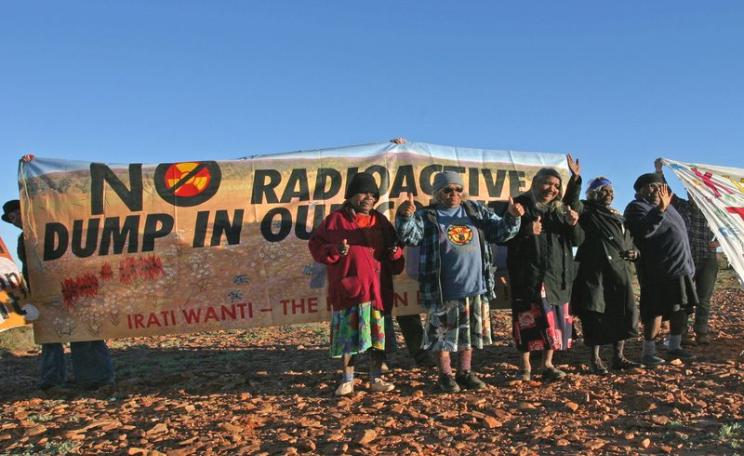
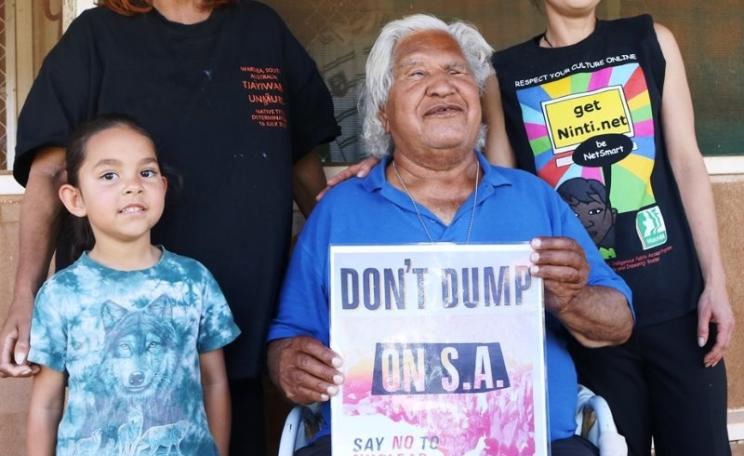
A 350-member Citizens' Jury convened to decide on whether a massive nuclear waste dump would benefit South Australia just gave the plans a big 'No!', writes Ian Lowe. SA Premier Weatherill must drop his attempt to reverse that decision with a referendum, and accept the jury's well informed, democratic verdict.
The long term problems of what to do with nuclear waste remain entirely unsolved, writes Andrew Blowers. Yet governments and the nuclear industry continue to peddle their untenable 'bury and forget' policy of deep geological disposal, which only unloads the toxic legacy of modern day nuclear power and weapons onto uncountable future generations.
This summer families of atom bomb test veterans who have died of cancer took the UK government to the High Court for its failure to compensate them, writes Chris Busby. Also on trial was the 'official' radiation risk model, which understates the true health hazards of internal exposures by a factor of 1,000. But 17 weeks after the case, litigants and veterans are still awaiting judgment.
An officially convened 350-strong Citizens' Jury has decisively rejected South Australia's plans to import over half a million tonnes of high and intermediate level nuclear waste for long term storage, writes Jim Green. This has dealt a powerful blow against the project from which it is unlikely to ever recover, and represents a major victory for campaigners, indigenous Australians and economic sanity.
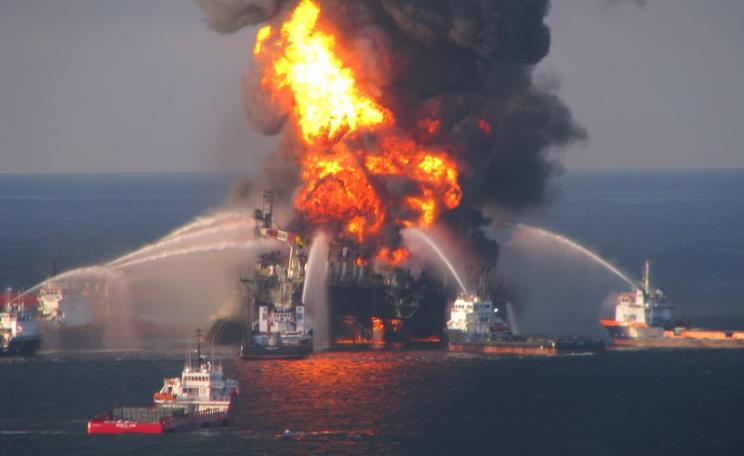
We must coldly examine how inherently dangerous systems work and how they fail, writes Earl Boebert, and then apply those insights to reducing the risk of failure through systems design, regulation, and education. That examination must apply the most modern and effective analytic tools. To do otherwise is to almost guarantee a repeat catastrophe.
As the nuclear juggernaut drives the destruction of the Cumbria coast at Sellafield with nuclear waste dumps, boreholes, dredged-out rivers and a massive new nuclear power station, Marianne Birkby recalls ancient legends of the Woodwose, the Green Man, and the Beast of Beckermet. Can these forces of untamed nature be called upon to combat the growing nuclear menace?
Last week the UN General Assembly's Disarmament and Security Committee voted for negotiations to begin next year on a new international treaty to prohibit nuclear weapons, writes Rebecca Johnson, bypassing the stalled Non Proliferation Treaty. One immediate consequence is to make the UK's plans to replace its Trident nuclear missile system 'completely untenable'.
'Fast breeder' reactors are promoted by nuclear enthusiasts as the clean, green energy technology of the future, writes Jim Green. But all the evidence tells us they are a catastrophic failure: complex, expensive, unreliable and accident-prone. Is Japan's decision to abandon its Monju reactor the latest nail in the coffin of a dead technology? Or the final stake through its rotten heart?
A new study shows that the cost of 'integrating' the variable power output of large scale solar PV is surprisingly affordable, writes Oliver Tickell, at just a few pence per unit. Costs will fall further as more wind power, batteries and ever-cheaper solar drive the transition to a 100% renewable power system.
A new report finds that 28 nuclear reactors, 18 of them EDF plants in France and one at Sizewell in the UK, are at risk of failure 'including core meltdown' due to flaws in safety-critical components in reactor vessels and steam generators, writes Oliver Tickell. The news comes as EDF credit is downgraded due to a growing cash flow crisis and its decision to press on with Hinkley C.
With its choice of Hinkley Point C - a £100 billion nuclear boondoggle - its enthusiastic support for expensive and environmentally harmful fracking, and its relentless attack on renewable energy, the UK government's energy policy is both morally and economically bankrupt, write Peter Strachan & Alex Russell. It must urgently reconsider this folly and embrace the renewable energy transition.