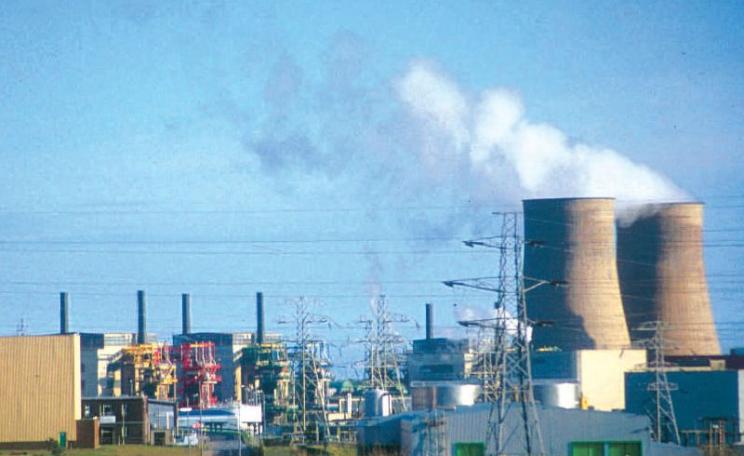
Australian mining companies have a poor track record operating in Africa. Australian uranium company Paladin Energy has now put two of its mines into 'care-and-maintenance' and bankruptcy looms. But who cleans up the company's mess in Namibia and Malawi, asks JIM GREEN
The building of the proposed Chutka nuclear plant in the tribal-dominated Mandla district in central India will mean the local population will be displaced - for the second time. It will also contribute to global greenhouse gas emissions. Faced with injustice and threats to their safety and livelihoods, villagers have started a two-month long campaign. KUMAR SUNDARAM reports.
The government is due to announce a £250 million support package for 'small modular reactors' his week, just as the price of wind and solar power contracts fall 10% below UK wholesale prices. OLIVER TICKELL argues that the Britain's 'civilian' nuclear power expenditure is actually a camouflaged subsidy to the UK's Trident nuclear missile system.
Narendra Modi, Prime Minister of India, has been inconsistent at best about climate change. Now the country has massive nuclear expansion plans, which he claims is a solution. The apparent desire to appease energy companies and the violent oppression of nuclear opponents are a cause for serious concern. KUMAR SUNDARAM investigates
A collapse in the price of uranium has not yet stopped Australian mining company GME from trying to press ahead with a massive open-pit uranium mine on an Arctic mountain in southern Greenland, writes Bill Williams - just returned from the small coastal town of Narsaq where local people and Inuit campaigners are driving the growing resistance to the ruinous project.
Theresa May's Tory government pushes forward with its nuclear white elephants. But one Cumbria couple persist in exposing the dangers of new nukes and old. Now Martin Forwood and Janine Allis-Smith of Cumbrians Opposed to a Radioactive Environment have won the 2017 Nuclear-Free Future Award, reports LINDA PENTZ GUNTER
Nuclear power is suffering one of its worst ever years, writes JIM GREEN. Even nuclear enthusiasts agree that the industry is in crisis. The bankruptcy filing by US nuclear giant Westinghouse has sent a cold chill through the industry which elsewhere, is suffering from crippling economic problems, successful legal challenges, and public opposition
After years of pro-nuclear bombast from the Conservative Party, its 2017 manifesto hasn't got a single word to say about nuclear power, write Oliver Tickell & Ian Fairlie. Instead it announces a renewed focus on cutting energy costs, and a big boost for increasingly low-cost wind power; while both Labour and Libdems offer only weak, highly qualified support for new nuclear build. And so the great British 'nuclear renaissance' reaches its timely end.
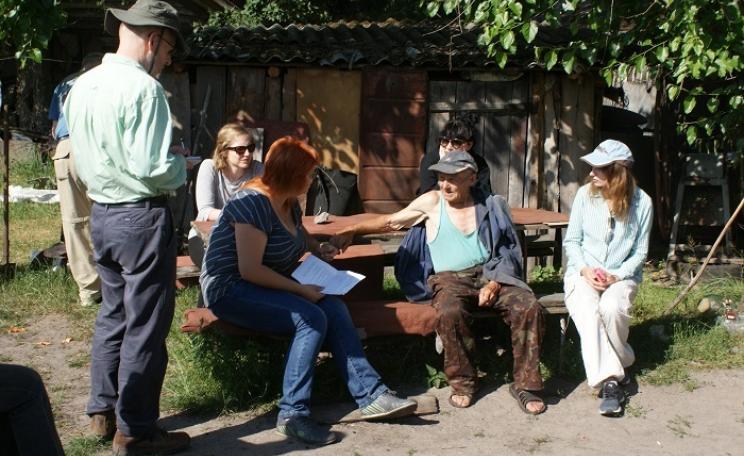
The world remembers Chernobyl every April, especially on big anniversaries, but for some people the disaster and its aftermath remain a part of their everyday lives, write David Moon & Anna Olenenko. In this special interview for the 31st anniversary of the catastrophe, one of the last returnees explains what it was like to leave after the disaster, and to come back to an environment transformed in surprising and unwelcome ways.
Nuclear power was originally sold on a lie, writes Dave Elliott. While we were being told it would make electricity 'too cheap to meter', insiders knew it cost at least 50% more than conventional generation. Since then nuclear costs have only risen, while renewable energy prices are on a steep decline. And now the nuclear behemoths are crumbling ... not a moment too soon.
News that one of the world's biggest nuclear power constructors, Westinghouse, has filed for bankruptcy in with debts of over $10 billion has put the entire sector on notice and issued a dire warning to nuclear investors everywhere, writes Jim Green. Among the likely casualties: the UK's Moorside nuclear complex in Cumbria.
A Japanese court has found the government and Tepco culpable for the Fukushima nuclear disaster for failing to act on clear warnings of the dangers of seismic shocks, writes Shaun Burnie. The ruling is sending a shockwave through Japan's 'nuclear village' and may end all prospects of any mass restart of reactors.
The discovery of a tiny but deadly radioactive 'hot particle' in mud from the Esk estuary near Sellafield has highlighted the dangers the nuclear site poses to residents and visitors, writes Chris Busby. Independent measures of radiation show far higher levels that those of regulators, similar to readings in the Chernobyl and Fukushima exclusion zones. Local villages should be evacuated.
Soon EDF will have to start the biggest, most complex and costliest nuclear decommissioning and radioactive waste management programme on earth, writes Paul Dorfman. But whereas Germany has set aside €38 billion to decommission 17 nuclear reactors, France has set aside only €23 billion to decommission its 58 reactors. When the real costs come in, they could easily bankrupt the company.
With the sixth anniversary of the Fukushima disaster falling tomorrow, nuclear lobbyists are arguing over solutions to the existential crisis facing nuclear power, writes Jim Green. Some favour a multinational consolidation of large conventional reactor designs, while others back technological innovation and 'small modular reactors'. But in truth, both approaches are doomed to failure.
The 2011 Fukushima catastrophe is an ongoing disaster whose end only gets more remote as time passes. The government is desperate to get evacuees back into their homes for the 2020 Tokyo Olympics, but the problems on the ground, and in the breached reactor vessels, are only getting more serious and costly, as unbelievable volumes of radiation contaminate land, air and ocean.
Britain's long-suffering nuclear bomb test veterans have once again had justice denied to them, writes Chris Busby, by a shocking piece of judicial chicanery in London's High Court in which the judge whimsically excluded all the scientific evidence that did not suit the Ministry of Defence. But the veterans' fight for justice and scientific truth continues, facing its next test in the Court of Appeal.
With the world's leading nuclear corporations facing bankruptcy due to ever escalating costs, 'unconstructable' reactor designs and financing risks, there's an easy way to finance the UK's new nuclear power stations, writes David Toke: pin the cost onto taxpayers. As for schools, hospitals, pensions, housing, social care and other public services, who needs 'em?
The UK's inability to import radio-isotopes for cancer therapy is just the latest outcome of the UK's decision to leave EURATOM to hit the headlines, writes Pete Roche. It may also put a brake on the UK's plans to build new nuclear plants, and import and export nuclear fuel and wastes. The UK's exit from the treaty, as a strongly pro-nuclear state, could also mark an EU-wide anti-nuclear swing.
All but one of the candidates in next week's Copeland by-election are backing a massive new nuclear power station in the constituency that would cost us tens of billions of pounds. Only the Green Party's Jack Lenox is resisting the spin, hypocrisy and outright lies that his rivals have swallowed whole. Here he explains why this risky, unaffordable white elephant must be scrapped.
The main company due to build UK's 'flagship' nuclear power project at Moorside in Cumbria is on the ropes, writes Doug Parr, thanks to its multi-billion dollar nuclear losses on in the US. The obvious solution, (almost) all our politicians insist, is to ignore cheaper, faster, cleaner renewables, and make the taxpayer pick up the cost of yet another nuclear white elephant.
The election of President Trump is driving the planet towards oblivion - according to the elite scientific body behind the Doomsday Clock, writes Chris Busby. But isn't Trump's commitment to reduce East-West antagonism and ally with Russia's President Putin against terrorism reducing the risk of nuclear war? So far, Trump is sticking to his promises. Let this one be no exception!