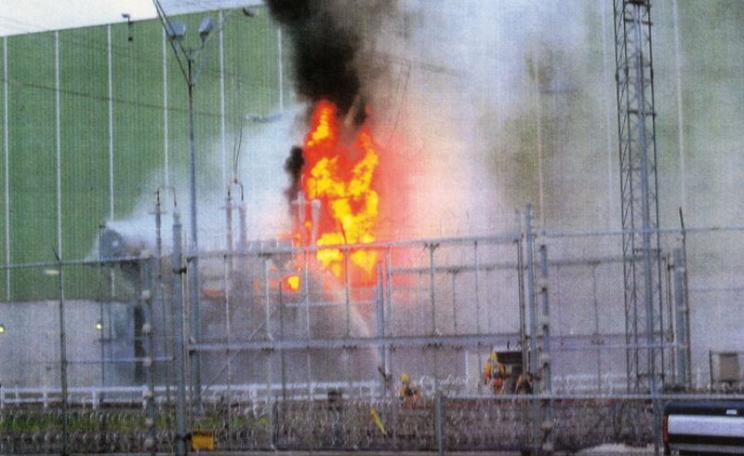
The clean-up after the February 2014 explosion at the world's only deep underground repository for nuclear waste in New Mexico, USA, is massively over budget, writes Jim Green - and full operations won't resume until at least 2021. The fundamental cause of the problems: high level radioactive waste, poor regulation, rigid deadlines and corporate profit make a dangerous mix.
The French and the Chinese may be celebrating the UK's decision to press ahead with the Hinkley C 'nuclear white elephant', writes Oliver Tickell. But the deal is a disaster for the UK, committing us to overpriced power for decades to come, and to a dirty, dangerous, insecure dead end technology. Just one silver lining: major economic, legal and technical hurdles mean it still may never be built.
Theresa May's first big decision as PM was to duck out of a signing ceremony and review the Hinkley C nuclear project. But she will soon have to reach her decision. In this open letter Scientists for Global Responsibility set out six compelling reasons for her to let the whole monstrous white elephant go.
Last night's BBC Panorama programme did a good job at lifting the lid on Britain's ongoing nuclear disaster that is Sellafield, writes Ian Fairlie. But it failed to expose the full scandal of the UK's 'reprocessing' of spent fuel into 140 tonnes of plutonium, enough to build 20,000 nuclear bombs - while leaving £100s of billions of maintenance and cleanup costs to future generations.
Four of Britain's major unions are big supporters of nuclear power, writes Ian Fairlie - all because of the jobs. Now Labour's shadow energy minister has joined them in backing Hinkley C - even though renewable energy is a far better job-creator than nuclear, and already employs three times more people.
New York state recently set a terrible example by approving a $7.6 billion bailout of failing nuclear power plants, writes PETER BRADFORD. But other states aren't following. including California and Nebraska, where a host of highly competitive clean energy technologies are filling in the power shortfall left by nuclear closures, at much lower cost. It's time to let old nuclear reactors die.
As we remember the bombing of Hiroshima and Nagasaki this month 71 years ago, we have largely forgotten the racist propaganda that made it possible, writes LINDA PENZ GUNTER. We have likewise sanitised history to exclude the voices of African Americans who loudly protested the use of nuclear weapons, connecting them to American colonialism abroad and racism at home.
Ten advisers and civil servants working in DECC, the former UK energy department, were seconded from EDF or had other links to the company, writes Joe Sandler Clarke. This may help to explain the 'preferential treatment' EDF has received over the 3.2GW nuclear power station it wants to build at Hinkley Point in Somerset.
For all Japan's talk of 43 'operable' nuclear reactors, only two are actually running, writes Jim Green, as renewables and a 12% fall in demand eat into the power market. And while Japan's 'nuclear village' defends safety standards, the IAEA, tasked with promoting nuclear power worldwide, has expressed deep concerns over the country's weak and 'fragmented' safety regulation.
The government's surprise delay in signing the contract with EDF to build the Hinkley C nuclear power station has opened up a the space for a forward-looking UK energy policy, writes Jonathon Porritt - one that moves us into the world of low cost renewables, and smart new technologies vital to the global clean energy transition. But is Business & Energy Greg Clark for real? Don't rule it out!
New York has approved a massive $7.6 billion subsidy to keep four ageing upstate plants open on the false promise that they provide 'clean and renewable energy', writes Karl Grossman. Campaigners for genuine clean energy fear that other pro-nuclear states may follow NY Governor Cuomo's dubious lead.
The NRC routinely fails to enforce its own safety codes at nuclear power plants, writes Linda Pentz Gunter - putting all of us at risk from accidents. It's the US's most extreme example of regulatory capture, rivalling Japan's 'nuclear village' of crony agencies and feeble regulation that led to the Fukushima disaster. How long can it be before the US experiences another nuclear catastrophe?
French energy giant EDF will today give the formal go-ahead for the Hinkley C nuclear power station in Somerset, writes Chris Goodall. But that's no reason for the UK to sign up to a disastrous deal that will cost us over £1 billion per year for 35 years - money that should be used to support the green technologies of the future.
Thanks to an increasingly aggressive US foreign policy pursued over decades, NATO nuclear missiles and armed forces are poised on Russia's border, writes Conn Hallinan - forcing it to abandon its 'no first use of nuclear weapons' pledge in view of the massively asymmetrical threat it faces. The world must step back from the brink of nuclear annihilation.
When Theresa May proclaims in Parliament that we need the £200 billion Trident nuclear missile system to see off the North Korean nuclear threat, writes David Lowry, just bear this in mind. It is a threat that the UK, global nuclear proliferator in chief, created in the first place, providing both the reactor technology and vital centrifuge materials to make North Korea's nuclear dream come true.
EDF's 'final investment decision' on the Hinkley C nuclear power station next week will be pure theatre, writes David Toke. The truth is that no concrete is to be poured until 2019 at the earliest. Meanwhile post-Brexit UK is running out of money to pay for it, and EDF is under investigation by the Financial Markets Authority for concealing information on Hinkley from investors.
The cost of offshore wind power in the North Sea is 30% lower than that of new nuclear, writes Kieran Cooke - helped along by low oil and steel prices, reduced maintenance and mass production. By 2030 the sector is expected to supply 7% of Europe's electricity.
Australia's nuclear industry has a shameful history of 'radioactive racism' that dates from the British bomb tests in the 1950s, writes Jim Green. The same attitudes persist today with plans to dump over half a million tonnes of high and intermediate level nuclear waste on Aboriginal land, and open new uranium mines. But now Aboriginal peoples and traditional land owners are fighting back!
Following the vote to leave the EU, the UK's energy and climate change policy faces major challenges, writes Paul Brown, with new nuclear power and a third London runway at Heathrow runway looking like the first casualties.
The economic impacts of the Brexit vote will very soon make themselves felt to British consumers, writes Chris Goodall - kicking off with higher fuel bills and pump prices. The good news is that nuclear power is now looking increasingly unaffordable. But renewables and green energy research are also likely to suffer, especially if under a right-wing Brexit government.
Twin nuclear reactors at Taishan in China have been sealed into their concrete domes despite fears that the reactor vessels have serious metallurgical defects. No safety test data has been released by the two companies in charge, EDF and CGN, to show that the reactors will not crack in operation, releasing radioactivity.
President Obama should overcome political constraints in Hiroshima this week to say 'sorry' for the nuclear bombs, writes Linda Pentz Gunter. Even more important, he must change his stance on nuclear weapons - abandoning the US's $1 trillion WMD modernization program and lifting the threat of world-destroying nuclear conflict.
Another week, another series of disasters for EDF and it's Hinkley C nuclear power project, writes Oliver Tickell, with the company's credit rating downgraded partly due to its exposure to the project, and its Chinese partner CGN ruling out a takeover of the site. How much longer can the tragicomedy continue before the curtain falls?
With five reactors closed in the last three years, the US nuclear industry is in shutdown mode, writes Linda Pentz Gunter - and that means big spending on decommissioning. But now the nuclear regulator is set to exempt owners from safety and emergency costs at their closed plants - allowing them to walk away from the costs and liabilities, and palm them onto taxpayers.