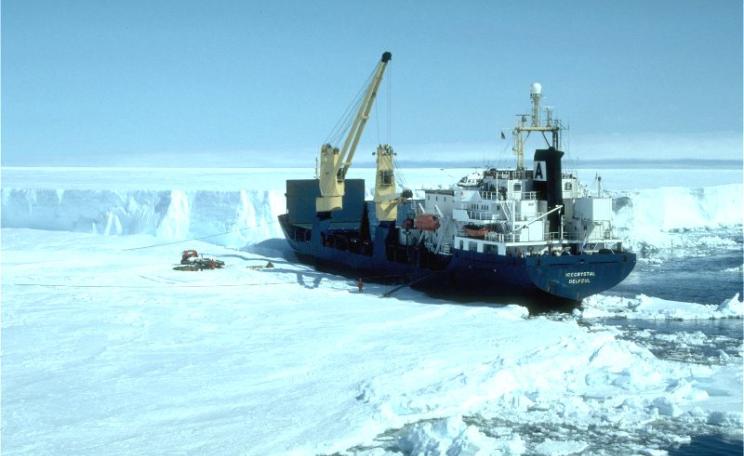
Shell's Arctic drilling expedition is literally on the rocks after its icebreaker MSV Fennica suffering a metre-long gash to its hull below the waterline, writes Zachary Davies Boren.
Faced with the double crisis of global warming and the decimation of marine wildlife, what does the Obama administration do? Open up the US's Atlantic and Arctic Ocean seafronts to oil and gas drilling, write Ralph Nader & David Helvarg. But this assault on our climate and cetaceans can be stopped, as a 'Sea Party Rebellion' prepares to fight it all the way in forthcoming Presidential elections.
Following premature cutbacks to onshore wind farms the UK's energy security will increasingly depend on large scale offshore wind power, write Ian Broadbent & Peter Strachan. But while energy secretary Amber Rudd talked the sector up in her speech yesterday, she revealed feeble ambition, and said nothing to overcome investors' fears of being left out in the cold.
Three scientific expeditions into the Atlantic ocean will take place this summer, writes outdoor philosopher Kate Rawles. But as well as gathering data about plastic pollution and over-fishing, they will give participants the chance to think deeply about our society, its values, the often false narratives it tells; and our place, as humans, in the natural world.
Rising temperatures are now affecting countries' ability to wage war, writes Richard Galustian, with Britain's new Type 45 destroyers left without power as warm Gulf and Mediterranean seas close down their engines. Will this, finally, force our politicians to understand that climate change is real and dangerous?
A project to mine 225,000 acres of seabed in Baja California's San Ignacio lagoon threatens the myriad sea life of the area, writes Haydée Rodríguez: not just Gray whales but Blues, Humpbacks and Loggerhead turtles, from noise, disturbance and radioactive releases.
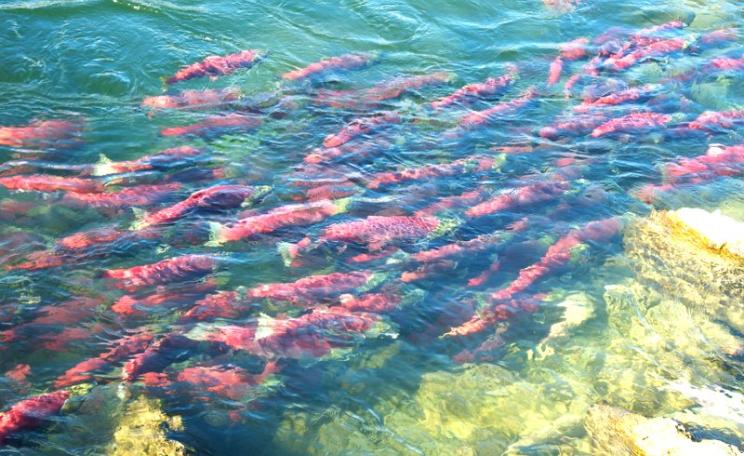
Does the Canadian Government actually want to wipe out its wild salmon? To ordinary, sane people, the idea is completely mad, writes Jeff Matthews. But for resource extraction industries, salmon farmers and right wing neoliberal politicians, it could make perfect sense.
Australia's government can breathe a sigh of relief as UNESCO keeps the Great Barrier Reef off its 'World Heritage in danger' list, writes Emily Lindsay Brown. But in return, it has committed to protect the reef from farm run-off and dredgings, and to implement its 'Reef 2050' sustainability plan. If Australia fails, the Reef could be officially 'in danger' as soon as 2020.
To keep the world's coral reefs alive we may have to cool tropical seas by blocking the sun's rays above them, writes Tim Radford. Even if the world reduces carbon emissions, warming already 'in the pipeline' could kill 90% of the world's coral by 2050 unless we act.
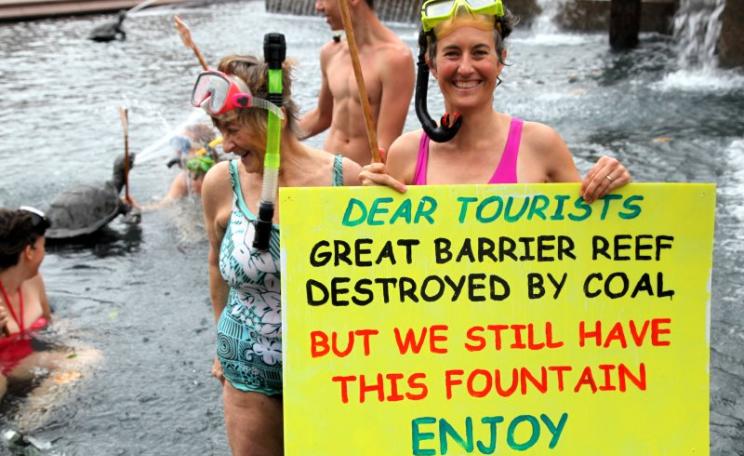
As part of a global week of action campaigners from Divest London have gathered to ‘Raise the Heat' on the Commonwealth Bank of Australia, writes Hal Rhoades - protesting its plan to invest in a ‘carbon bomb' coal project that endangers global climate and threatens to finish off the Great Barrier Reef.
A dramatic shift has taken place in the glaciers of the southern Antarctic peninsula, writes Bert Wouters. Six years ago these previously stable bodies suddenly stated shedding 60 cubic kilometres of ice per year into the ocean. A stark warning of further surprises to come?
Over the Great Barrier Reef's coral has already been lost, writes Ove Hoegh-Guldberg, and UNESCO is expected to add the site to its 'World Heritage in danger' list. The reef's survival will depend on the world's ability to control carbon emissions. So why is Australia planning to open vast new coal mines in the Galilee Basin?
Some things are beyond measure and beyond price, writes Charles Eisenstein. No amount of money is enough to compensate for the loss of the sacred or the essential - and to pretend that it is, is to capitulate to the very mentality that is driving the destruction of the biosphere.
A 'summer of protest' is brewing as campaigners vow to protect seals from shooting by salmon farmers in Scotland and managers of wild salmon fisheries, writes Dominic Dyer. The RSPCA's 'Freedom Food' system is driving animal welfare advances on salmon farms - now the model must be extended to wild salmon.
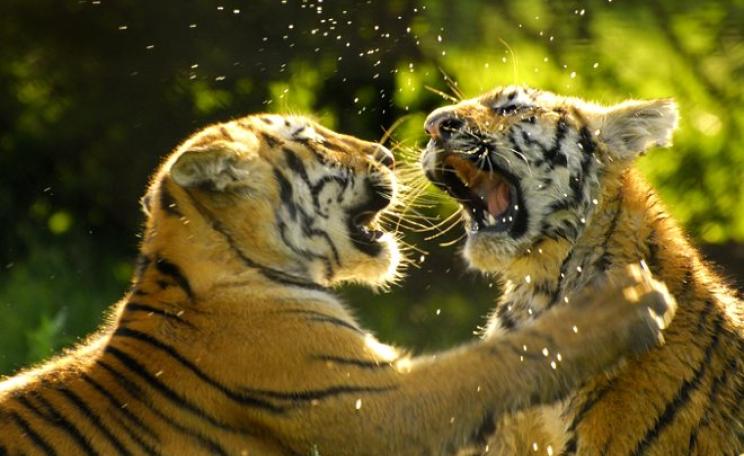
The presence of the tigers is the world's greatest mangrove forest vital to its survival, writes Joydip Kundu. It's the fear of the tiger that deters people from entering the forest to cut its trees and hunt its wildlife - and so these majestic predators protect its fisheries, and guard millions of people in south Bengal from the rising seas.
The dispersant used in the Deepwater Horizon clean-up appears to be more toxic to corals than crude oil, writes Danielle M DeLeo. It also increases the concentration of oil in seawater, leading to higher, more toxic exposures of oil components when they come into contact with corals and other marine organisms.
The more EU politicians try to look in control of the Mediterranean refugee emergency, the more it's obvious they aren't, writes Assaad W. Razzouk. A key driver of the crisis is climate change, which is causing drought across North Africa. Europe must now tackle the root causes of the crisis, and admit its own culpability in precipitating it.
As if melting ice in Polar bears' Arctic habitat was not enough, Norwegian scientists have found that organic pollutants such as pesticide residues are disrupting their thyroid and endocrine systems, adding a further threat to the species' survival.
The strongly protected marine reserve in Lamlash Bay, Arran, has been a huge success, write Bryce Stewart & Leigh Howarth, with abandant life returning to the once denuded waters. The government's refusal to expand such protections represents a huge wasted opportunity for both fishing and the marine environment.
A coveted award has put the campaign to protect and recover marine life in the Firth of Clyde, Scotland, into the international limelight. Goldman Prize winner Howard Wood explains how Arran Islanders' efforts to keep scallop dredgers out of Lamlash Bay has brought life, and fish, back to the sea.
Japan's latest plans for 'scientific whaling' in the Southern Ocean have fallen at the first hurdle, writes Tony Press. The IWC's expert panel says Japan's proposal contains 'insufficient information' on which to judge its validity, in particular the need for the 'lethal sampling' of over 3,996 Minke whales that is central to the research plan.
Wave power has a huge part to play in supplying the US with clean, renewable electricity, writes Shalinee Kishore. But to achieve its full potential, we must harness not just the energy of waves, but their predictability - and so so ensure the smooth integration of wave power into the electricity grid.
There's strong public support for protecting marine wildlife, writes Horatio Morpurgo - so why aren't politicians championing the cause? Labour and Tories alike fear to challenge the big fishing companies that have come to believe they own Britain's offshore waters and seabed. Now it's up to use to prove they're wrong.
Oxygen levels in our oceans are falling, writes Lee Bryant, producing growing 'dead zones' where only the hardiest organisms can survive. The causes are simple: pollution with nutrient-rich wastes, and global warming. But the only solution is to stop it happening - or wait for 1,000 years.