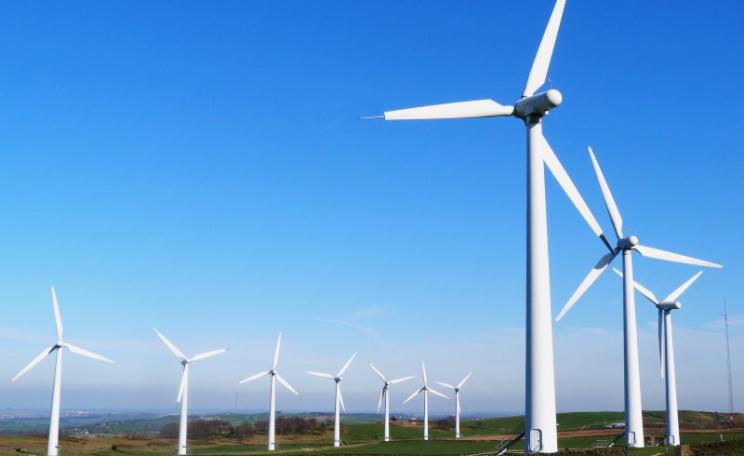
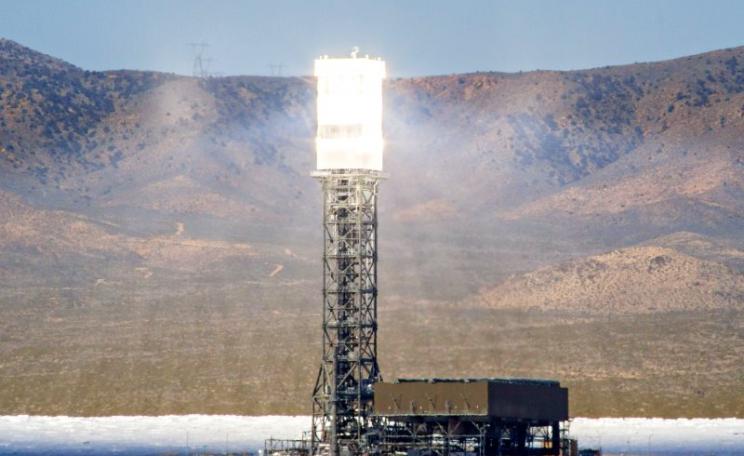
Critics of renewable energy sources like wind and solar claim that they are inefficient, unreliable and need to be backed up by coal and gas, writes David Elliott. But we have the technology to match green power supply and demand at affordable cost without fossil fuels - by deploying the 'smart grid', using 'green gas' made from surplus power, and raising energy efficiency.
We all know that coal and steam vanquished over water power in Britain's - and the world's - industrial revolution, writes Irma Allen. But as Andreas Malm sets out in his fascinating new book, the deciding factors in that victory were the unconstrained mastery over people and nature that coal provided mill owners. And so the model was set for the fossil age that may only now be coming to an end.
The Chernobyl sarcophagus which has long contained the fissured reactor core is at risk of collapse, writes Claire Corkhill. The solution: build a pair of tracked arches 260m wide and 100m high, and slide them over the site to enclose it for a century to come: so creating a sealed space for robots and remotely operated machinery to deconstruct the reactor and sarcophagus piece by radioactive piece.
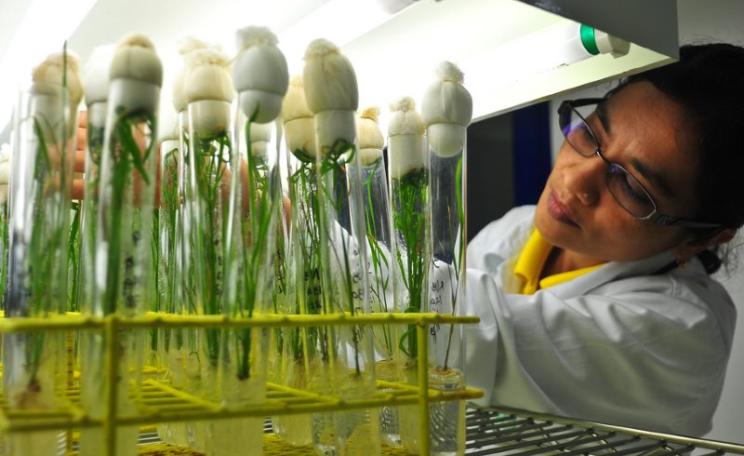
The very term 'genetic engineering' implies high precision in the alterations made to genes and deep understanding of their consequences, writes Jonathan Latham. In fact, we have never had either. And even with the arrival of CRISPR and other 'gene editing' systems, that remains the case: technologists are thrashing about in a perilous sea of unfathomable complexities and unknowable outcomes.
The EU Commission has caved in to US pressure in TTIP trade talks by deciding to consider organisms modified by new 'gene editing' techniques as non-GM - in violation of the EU's own laws. The move could make the 'new GMOs' exempt from labeling and from health and environmental testing.
Consumer environmentalism aligns conservation with modern consumer culture, writes Paul Jepson, offering NGOs the means to reach new people and generate new funding streams. But it risks ever more shallow public engagement and digital activism where masses of people back 'solutions' that only make themselves feel good.
Don't believe the spurious claims of nuclear shills constantly doing down renewables, writes Mark Diesendorf. Clean, safe renewable energy technologies have the potential to supply 100% of the world's electricity needs - but the first hurdle is to refute the deliberately misleading myths designed to promote the politically powerful but ultimately doomed nuclear industry.
GMOs have been in our diets for about 20 years, writes Rupert Read. Proof that they are safe? No way - it took much, much longer to discover the dangers of cigarettes and transfats, dangers that are far more visible than those of GMOs. On the scale of nature and ecology, 20 years is a pitifully short time. To sustain our human future, we have to think long term.
The nuclear industry is forever reinventing itself with one brilliant 'new' idea after another, Amory Lovins wrote in this classic 2009 essay. But whether it's touting the wonders of future SMRs, IFRs or LFTRs, the reality never changes: the reactors they are building right now are over time, over budget and beset by serious, entirely unforeseen technical problems.
Koide Hiroaki has spent his entire career as a nuclear engineer, and has become a central figure in Japan's movement for the abolition of nuclear power plants. He met with Katsuya Hirano and Hirotaka Kasai to discuss the catastrophic nuclear meltdowns at Fukushima Daaichi in March 2011, and the crimes and cover-ups committed both before and after the event.
Improved technology and falling costs are moving electric car sales into the fast lane as manufacturers seek achieve significant economies of scale, writes Kieran Cooke. And now China is leading the EV charge with its plans for 5 million plug-in vehicles by 2020.
An occupation of EDF's site office for Hinkley C turned into a celebration today as the EDF Board postponed its 'final investment decision' for the tenth time. With strong opposition among French unions and the project afflicted by severe technical and financial problems, it's not just Hinkley that's going down, but the UK's entire nuclear programme.
Advanced new catalysts are poised to stimulate a clean energy revolution, writes Tim Radford. An organic replacement for the precious metal platinum would allow surplus electricity to be cheaply converted into hydrogen fuel, then burnt in low cost fuel cells to propel 'green' vehicles and generate power on demand.
In Brazil's microcephaly epidemic, one vital question remains unanswered: how did the Zika virus suddenly learn how to disrupt the development of human embryos? The answer may lie in a sequence of 'jumping DNA' used to engineer the virus's mosquito vector - and released into the wild four years ago in the precise area of Brazil where the microcephaly crisis is most acute.
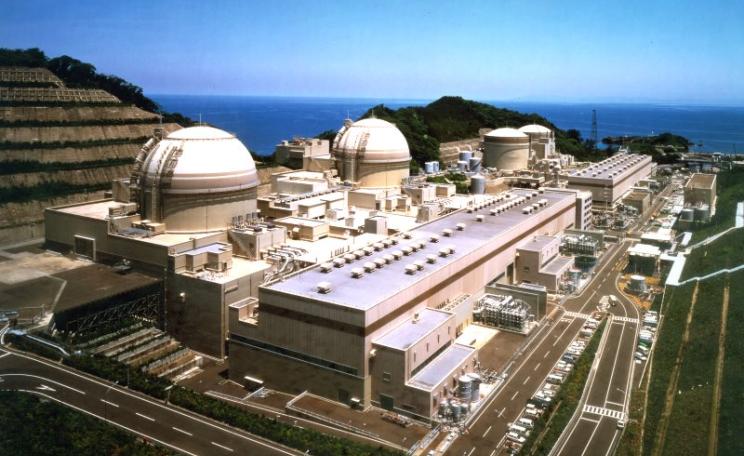
Despite the endless rhetoric about a 'nuclear renaissance', there are fewer power reactors today than there were a decade ago, writes Jim Green. The one country with a really big nuclear build program is China, but no one expects it to meet its targets. And with over 200 reactor shut-downs due by 2040, the industry will have to run very hard indeed just to stay put.
The EU is considering the exclusion of gene-edited plants and animals from GM regulations, write Janet Cotter & Ricarda Steinbrecher. However gene-edited organisms clearly fall within the definition of GMOs in both European and international law. They also present real risks to the environment and human health - and must be regulated like any other GMOs.
GMO promoters enthuse about how GM crops will be able to help the poor and hungry, far in the future, writes Claire Robinson. But they are silent about the currently-planted GM crops - 99% of them herbicide-tolerant or insecticidal. Could it be because opponents of the technology are being proved right at every turn?
ITER, the elusive and multi-million dollar fusion fantasy, was yet another nuclear chimera introduced at the Paris COP21 climate talks as a 'solution' to our climate crisis, writes Linda Pentz Gunter. But the idea is pure fantasy: long before it can be made to work, if it ever can, it will have been made obsolete by harnessing the power of our giant fusion reactor in the sky: the Sun.
As world leaders convene in Paris for the COP21 climate summit, the major task before them is to replace fossil energy generation with renewables, writes Paul N Edwards - and with the right incentives, it could happen fast. For developing countries it's different: they could skip over fossil fuels much as they have gone straight for mobile telephony. But will they seize the opportunity?
Sooner than it takes to build a nuclear power station, lithium-air batteries could be helping wind and solar to make coal, oil and nuclear obsolete, say Cambridge scientists. Five times lighter and five times cheaper than current lithium batteries, Li-air would open the way to our 100% renewable future.
NASA scientist James Hansen is heading to COP21 in Paris to berate climate campaigners for failing to support 'safe and environmentally-friendly nuclear power', writes Jim Green. But they would gladly support nuclear power if only it really was safe and environment friendly. In fact, it's a very dangerous and hugely expensive distraction from the real climate solutions.
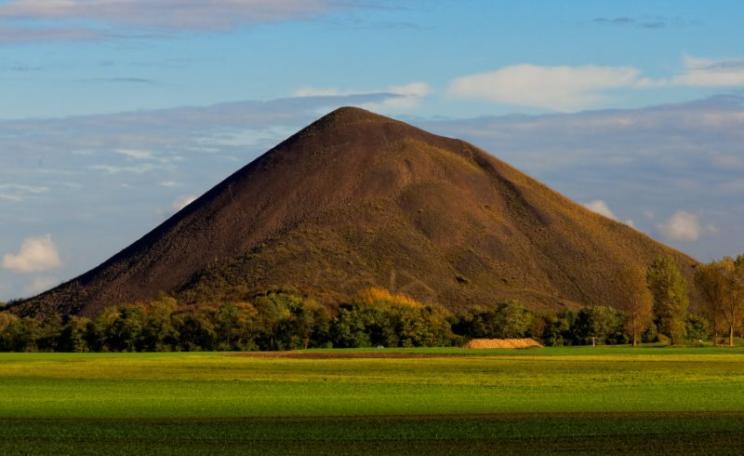
The world produces over a billion tonnes a year of dangerously caustic wastes, write Helena Gomes, Mike Rogerson & Will Mayes. They are currently being dumped, although they could be used to sequester a gigatonne of CO2 from the atmosphere - while also yielding minerals essential for key renewable energy technologies.
The recently announced Snoopers Charter 2.0 gives the state enormous powers to delve into our lives, writes Paul Mobbs. And all the more so when combined with other data to which the government has access - by simply buying it from commercial providers. If you don't like the idea, it's time to get your systems secure and shrink your digital data trail.
Floating wind turbines offer huge falls in the cost of offshore wind power, writes Paul Brown, and could be generating power in UK waters at well under the cost of new nuclear by 2020, provided adequate support.