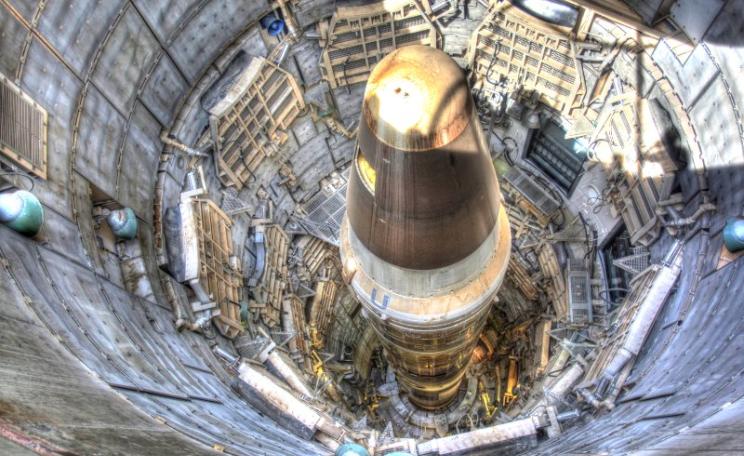
The US's development of its new 'smart' nuclear bomb, the B61-12, is an outright violation of the Non Proliferation Treaty, writes Xanthe Hall. Yet five other 'non-nuclear' NATO nations - Germany, Holland, Belgium, Italy and Turkey - are set to accept it onto their territories, so their own aircraft can use it in nuclear attacks.
This week's Labour conference sent the party and its new leader, Jeremy Corbyn, soaring in popularity. So better get the knife in quick, writes Oliver Tickell. His refusal to commit mass murder in a nuclear attack gave his enemies just the cue they needed - including those who should be his loyal allies. We must not let them succeed.
Professor 'Jim' Al'Khalili's 'Inside Sellafield' programme was a tour de force of pro-nuclear propaganda, writes David Lowry - understating the severity of accidents, concealing the role of the UK's nuclear power stations in breeding military plutonium, and giving false reassurance over the unsolved problems of high level nuclear waste.
A legal judgment in Australia has fatally damaged the 'official' ICRP model of health damage by nuclear radiation, writes Chris Busby - reflecting the fact that cancer originates through the mutation of individual cells, not whole organs or organisms. The ruling is good news for Britain's bomb test veterans whose day in court is coming up; and for all who suffer radiation induced cancers.
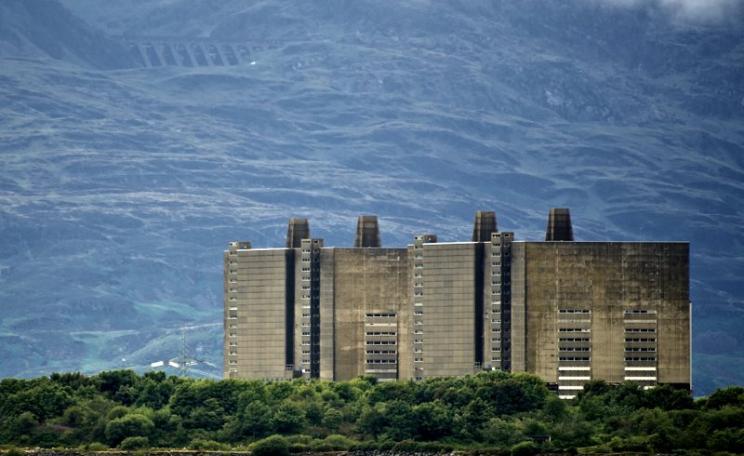
A study of cancer incidence downwind of the Trawsfynydd nuclear plant in Wales shows a doubling of risk, writes Chris Busby, mainly from breast cancer. People eating fish caught in Trawsfynydd Lake are also at elevated risk. It's yet more proof that the nuclear industry's favourite risk model is wrong, understating the actual dangers of internal radiation - ingested or inhaled - by a factor of 1,000 to 10,000.
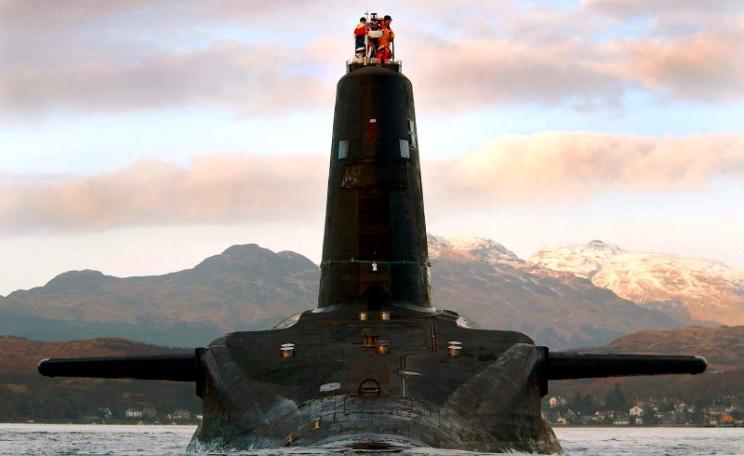
The serious failings revealed by William McNeilly on the UK's nuclear-armed submarines are indicators of a deeper malaise, writes Paul Ingram. With no realistic threat requiring a nuclear response, the whole exercise lacks meaning and purpose, so no wonder standards slip. But as they do so, they endanger us all.
Important developments are unfolding at the Nuclear Non-Proliferation Treaty negotiations in New York this week, writes David Lowry. These include the surprisingly large scale of the US's warhead scrapping, and a grassroots rebellion against the nuclear states led by South Africa. But the UK and its media remain aloof from it all - intent on renewing Trident no matter what.
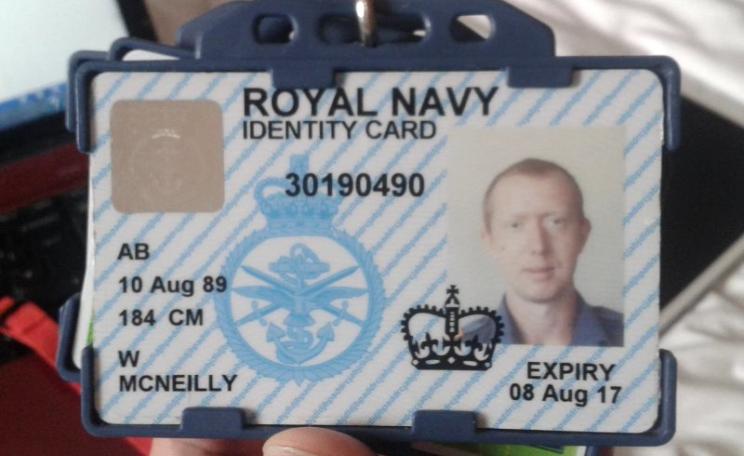
The UK's Trident nuclear missile system and the nuclear submarines on which it depends represent a massive danger to the UK due to faulty equipment, gross security lapses and ignorance of operating procedures, writes William McNeilly. This leaves the system open to accidents and terrorist attack, and apparently unable to even fire missiles should the need arise.
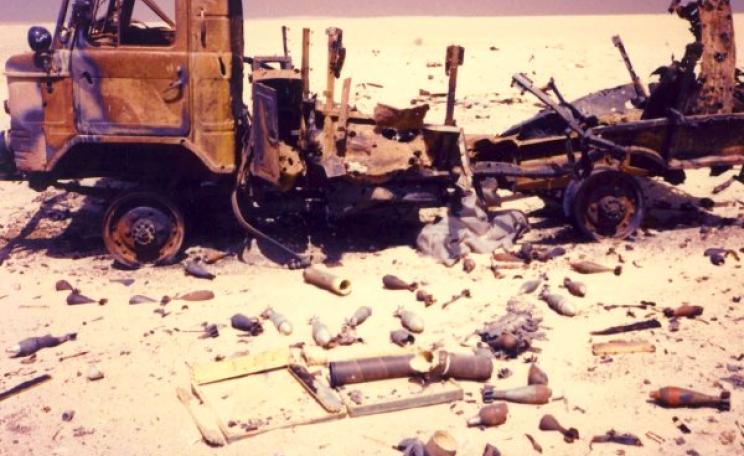
Iraq is working hard to remediate the environmental impacts of two Gulf wars and Saddam Hussein's chemical weapons programme, writes Wim Zwijnenburg. But it now faces new hazards deliberately caused by Islamic State - and is in desperate need of international support.
There's a growing chance that the UK's 2015 General Election could bring about the end of its Trident nuclear 'deterrent', writes Jonathan Woodrow Martin, as its renewal looks likely to be central question in the formation of a Labour-SNP coalition government.
The drums of war are beating on the BBC and other mass media, writes Oliver Tickell - naked propaganda about fictitious 'Russian aggression' intended to soften us up for a war that could wipe out life on Earth. We must refuse to fall for the endlessly repeated lies, and tell our politicians that our highest priority of all is peace.
Campaigners against nuclear weapons on a 'Wrap up Trident' demo at the Ministry of Defence in London today have a new spring in their step, writes Paul Ingram. Thanks to the new electoral geometry of the 2015 general election, they could finally get to close down Britain's £100 billion nuclear weapons programme - and not a moment too soon!
Austria's pledge to strive for the elimination of nuclear WMD kindled fresh energy and hope at this month's Vienna Conference on Nuclear Weapons, writes Rebecca Johnson. Now we must maintain the momentum towards global nuclear disarmament at the May 2015 meeting of the Non-Proliferation Treaty.
Korea's Jeju Island has been dedicated to peace ever since over 30,000 people were massacred there in 1948, writes Mica Cloughley. But now the US's 'pivot to Asia' demands a new naval base rejected by 94% of voters, and mobile phone giant Samsung is leading the construction project. Islanders are fighting every inch of the way.
Nuclear energy is essential to preserve the world's biodiversity, according to 69 conservation scientists. But there's a mysterious omission in their analysis, writes Jim Green: nuclear weapons proliferation. And after a major exchange of nuclear bombs, and the 'nuclear winter' that would follow, exactly how much biodiversity would survive?
Last February's explosion at the WIPP dump for long-lived intermediate-level nuclear waste from the US's nuclear weapons program remains unexplained, writes Jim Green. But with the site's history of ignored warnings, 'missing' safety culture, lack of supervision and dubious contractor appointments, it surely came as no surprise - and further accidents appear inevitable.
Last week Parliament had its first ever chance to debate a shadowy treaty dating back to 1958, under which the UK exported to the USA enough plutonium for over 1,000 nuclear warheads, writes David Lowry. But the core question remains unanswered - how can the treaty be reconciled with our sovereign obligations to prevent nuclear weapons proliferation?
Only four countries opposed a UN Resolution on 'depleted uranium' munitions: the USA, UK, France and Israel, all nuclear WMD states whose use of DU leaves battle fields contaminated with toxic, radioactive residues for millennia into the future. The overwhelming support for the Resolution puts the WMD states on notice - DU munitions are no longer acceptable.
December's meeting of the Chemical Weapons Convention offers the opportunity to control very dangerous and often fatal chemical agents deemed 'incapacitating', write Michael Crowley & Malcolm Dando. Currently a legal gray area, it's essential to bring the development and use of these substances before a full blown arms race breaks out.
Papers reluctantly released by the UK Government in the bomb test veterans' legal case for compensation reveal what it has long denied, writes Chris Busby - that bomb fallout is rich in uranium, and that most of its radioactivity is concentrated in the 'forgotten' but highly active isotope U-234, explaining much of the substantial, long term damage to veterans' health.
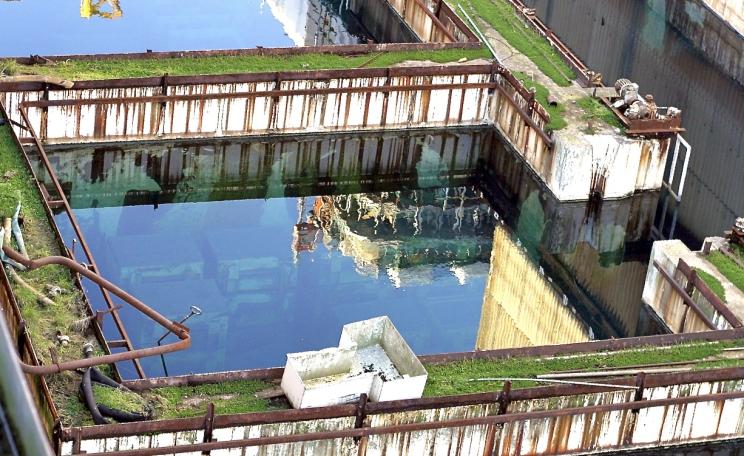
Dilapidated nuclear waste storage ponds abandoned 40 years ago containing hundreds of tonnes of fuel rods pose an immediate danger to public safety, photographs sent to The Ecologist reveal. The fuel and sludge in the ponds could spontaneously ignite if exposed to air, spreading intense radiation over a wide area.
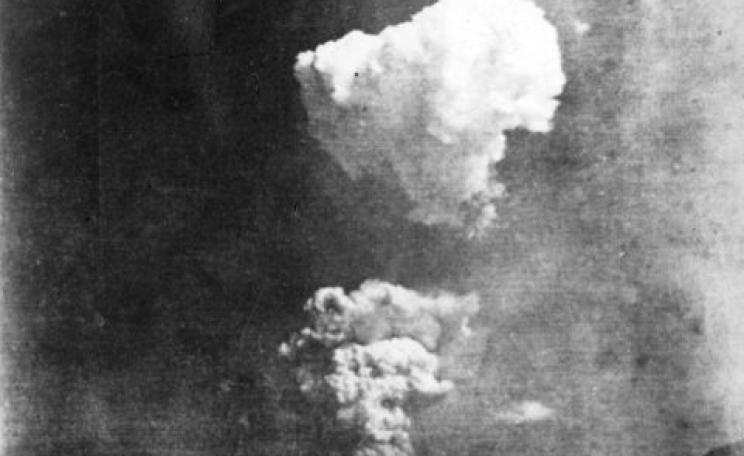
The world has been the victim of a monstrous scientific error that has understated the dangers of radiation, writes Chris Busby. Following the Hiroshima nuclear bomb, investigators used 'controls' who had been exposed to high levels of 'black rain' fallout to understate the health impacts of radiation. This bogus science still underlies risk models today.