I’m worried about human survival now and when I talk about human survival, I don’t mean about future generations.
Biodiversity loss, climate shocks and geopolitical conflicts are fracturing the world food system, experts have warned.
Chronic pressures facing the complex global network are putting the world economy, society as a whole and even human survival at risk, according to a report led by Anglia Ruskin University (ARU) and the Institute and Faculty of Actuaries (IFoA).
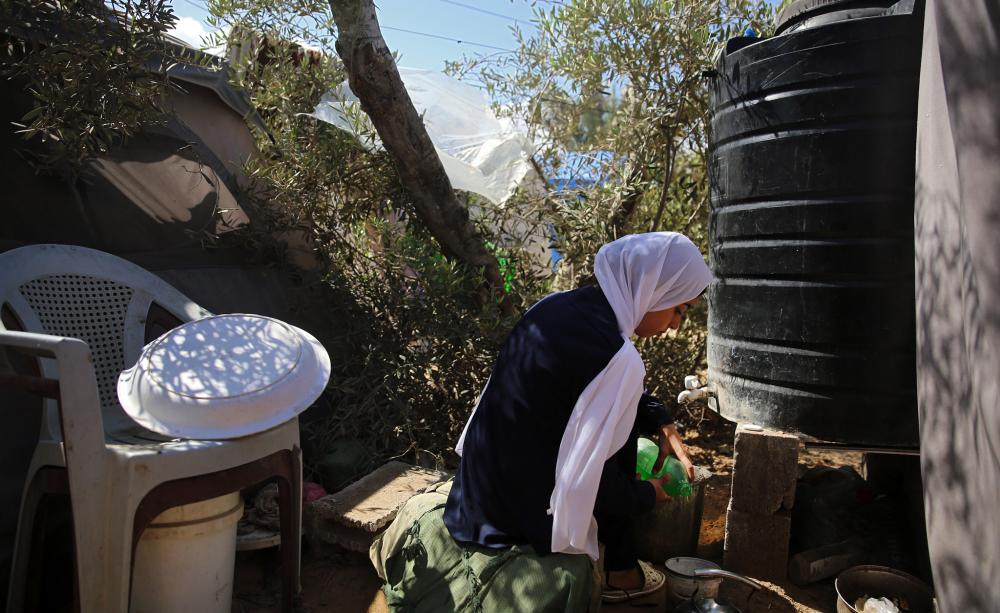
The researchers warned that soil degradation and water scarcity have already led to lower crop yields, higher prices and reduced availability in recent years.
Disrupting
These are now being compounded by geopolitical volatility, with the US-Israeli war on Iran further exposing the fragility of food security as supply chain disruptions continue to drive up costs, they said.
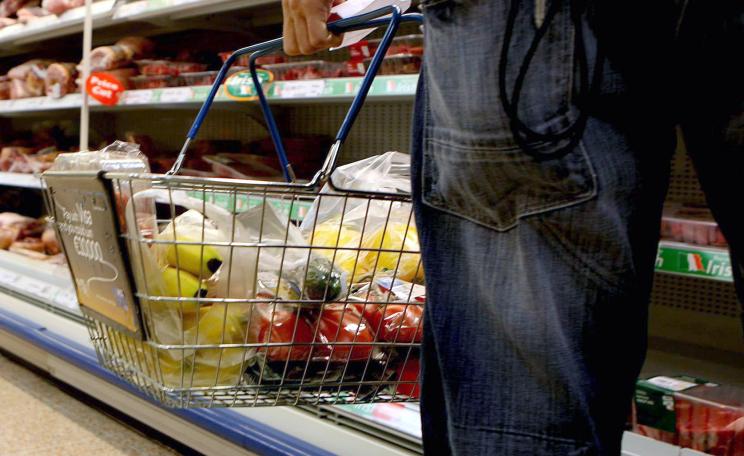
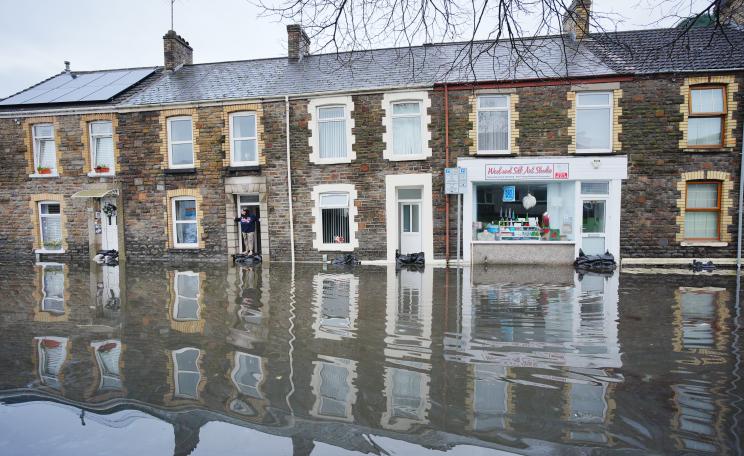
For Britain, recent years have seen farmers lose billions to droughts and floods and households have been hit with soaring food price inflation.
Civil unrest in Britain as a result of a food system crisis could be possible within the next 10 to 50 years, the researchers said, citing other studies.
Beyond this, the report found that long-term food security is also under threat as key ecosystems approach irreversible tipping points.
Large-scale deforestation, particularly in the Amazon rainforest, is increasingly disrupting the rainfall and carbon cycles that are essential for stable crop yields.
Risks
The decline in pollinators, which underpin around three quarters of global crop production, will continue to hit food production.
And overfishing, pollution and climate change are pushing marine ecosystems past critical thresholds, which could lead to a collapse in fish populations.
It comes after a recent British Government report, which was put together by the intelligence officials, found biodiversity loss and ecosystem collapse is a realistic possibility that could trigger a global competition for food, mass migration to the UK and nuclear war in Asia.
Aled Jones, lead author and director of the Global Sustainability Institute at ARU, said: “Our current economy is set up to deliver efficiency, profit and thereby a just-in-time system that both drives this threat and provides little to no resilience against it.
“We need radical new policy and direction to tackle these emerging risks,” he added.
Survival
He argues that actuaries, who analyse the risk of future events and their financial consequences, want to contribute their unique expertise to shape the response to the crisis.
Currently, financial risks around food systems, zoonotic diseases – those transferred from animals to humans – heat or pollution-related health crises and even cyber attacks on retailers are “not being managed well,” he said.
Hugh Montgomery, chair of intensive care medicine at University College London, said the world is “certain to get these impacts unless we take absolutely radical action now”.
I’m worried about human survival now and when I talk about human survival, I don’t mean about future generations.
But on the health risks, Mr Montgomery said: “The health impacts are really not ones that worry me.
“I’m worried about human survival now and when I talk about human survival, I don’t mean about future generations,” he added.
Fragility
He also argued that humanity is currently driving a “mass extinction event” while the impact on society and the economy will be “completely catastrophic” leading to mass migration, conflicts and nature collapse.
The researchers say governments, regulators and the financial sector must act urgently to integrate nature into decision-making to safeguard the world’s food systems.
This includes investing in measures to sustainable land use, protect pollinators and strengthen supply-chain resilience, with the report arguing that prevention will be cheaper than a crisis response to acute shocks.
Policymakers and regulators must recognise nature as the critical foundation of society and the economy, using integrated climate-nature scenarios to understand the interconnection between biodiversity and climate, the paper added.
Meanwhile, actuaries and the financial sector should acknowledge food system fragility as a systemic financial risk, with impacts far greater than the contribution of agriculture to gross domestic product (GDP).
Safeguarded
Sandy Trust, lead author of the report, said events in the Gulf region “pose a significantly greater risk to global food security” than the energy crisis sparked by Russia’s invasion of Ukraine in 2022.
“We must incorporate biodiversity and climate change into financial decision making, to align our financial portfolios with planetary boundaries.”
A Labour government spokesperson said: “The UK has a resilient food system. Our land use framework gives long-term clarity to strengthen our high degree of food security and national resilience to extreme weather.
“This government is also investing billions in the development of new technology to increase yields, develop climate-resilient crops as part of our commitment to maintain food production levels and help farmers produce more food.
“Alongside this, we are increasing our water supply by building new reservoirs for the first time in 30 years, ensuring our food and water security is safeguarded for the future.”
This Author
Rebecca Speare-Cole is the sustainability reporter at Press Association.