Transparency, consumer choice, organic production and trade are inseparable from questions about governance.
The government acted unlawfully when introducing England's new ‘light-touch’ gene-editing regulations, a High Court judgment has found.
The decision casts further doubt over a policy that has already generated controversy over consumer choice, environmental impacts and the future of farming.
This article was supported by a grant from the investigative agency AGtivist, which had no editorial control over the reporting of the story.
The legal claim was brought by advocacy group Beyond GM alongside two organic farmers and an ethical consumer.
Organic
They argued that ministers had failed to properly investigate the consequences of removing longstanding safeguards relating to transparency, traceability, labelling and regulatory oversight for gene-edited crops and foods.
In its judgment, the High Court found that the Defra farming minister responsible for introducing the regulations had been repeatedly misadvised by officials about the scope of his legal powers. As a result, the minister proceeded on the basis of an incorrect understanding of the options available.
The court concluded that decisions taken on that basis were irrational and unlawful. Had the minister not been given “erroneous” information, the court added, he might reasonably have considered a materially different range of options, including stronger measures relating to transparency and labelling.
The court recognised that the absence of mandatory labelling and traceability places additional significant burdens on organic and non-organic supply chains, making it more difficult and costly for farmers, food businesses and consumers that seek to avoid genetically modified products, as well as for all exporters of agricultural products that seek to export to the EU.
This is particularly significant for organic producers, who remain legally obliged to exclude genetically modified organisms from their production systems.
Transparency
The judgment could have far-reaching implications for any realignment between Britain and the EU.
If the government can achieve its proposed ‘carve out’ of the precision breeding regulations, British farming and food businesses will suffer because proposed new EU rules on gene editing are still more stringent in several areas than those that apply in England. If the carve out is not possible, the British regime will have to be revised to align with the EU rules.
The court also recognised – importantly and for the first time in case law – that organic farming is not merely a technical standard or certification scheme, but a distinct and fundamental set of values which the Regulations make much more difficult to maintain.
Transparency, consumer choice, organic production and trade are inseparable from questions about governance.
Pat Thomas, the director of Beyond GM, was the lead claimant. She said: “Public debate around gene editing has often centred on what kind of food system society wants. The court's findings add another dimension to that discussion.
"They suggest that questions about transparency, consumer choice, organic production and trade are inseparable from questions about governance: who makes decisions, on what basis and with what degree of public accountability.”
Robust
The judgment found that the government prioritised commercial interests over concerns raised about the impact on the organic sector, consumers, and trade within Britain and EU.
It also highlighted the Food Standards Agency’s role as an independent regulator. The court noted that the Food Standards Agency retains powers to seek information and conduct fuller assessments where necessary even where regulations restrict Defra’s ability to apply any test to PBOs that would not apply to ordinary food.
Thomas, a former editor of The Ecologist, added: “We do not consider that the FSA has, thus far, exercised its independence from government and we look forward to further robust discussion with the Agency on this.”
The claimants believe the judgment raises serious questions about government and industry's repeated characterisation of the regulations as inevitable, settled and groundbreaking.
Livestock
The ruling exposes a different reality: that the framework underpinning them was rushed and is substantially incomplete.
Key questions remain unresolved, including future seed-labelling requirements, coexistence measures, trade implications and the relationship between England's regulatory framework and emerging EU rules on gene editing.
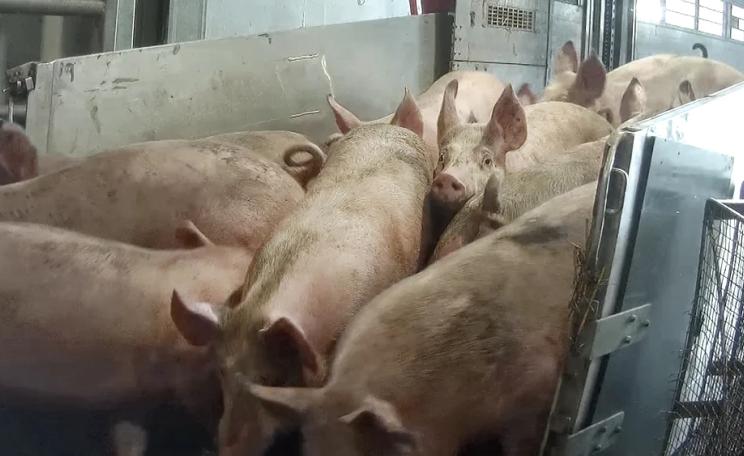
Recent articles in The Ecologist have examined concerns about the future direction of government policies for unlabelled gene-edited foods and plans to commercialise gene-edited farm animals.
It is thought that the judgment may have some influence on the shape of pending draft regulations for gene edited livestock. The court has not yet determined what changes may be required to the regulations as a result of the judgment. Further proceedings are expected in due course.
Technologies
The ruling has already prompted renewed calls for greater public involvement in decisions about genetic technologies.
Beyond GM has urged supporters to write to their MPs and ask them to put pressure on the secretary of state to ensure that transparency, traceability, informed choice and accountability are put back at the heart of the food system.
Whatever the eventual outcome, the significance of the case extends beyond the regulation of gene-edited crops and animals.
What began as a dispute about the future of food and farming has evolved into a broader debate about how governments make decisions about new technologies and whether the public is given a meaningful role in shaping those choices.
This Author
Ayms Mason is a sustainable food and agriculture specialist, and researcher and writer at Beyond GM. This article was supported by a grant from the investigative agency AGtivist, which had no editorial control over the reporting of the story.