Because of our imperial and colonial history, elements of the British constitution still provide large portions of the wiring of our global economic and legal system.
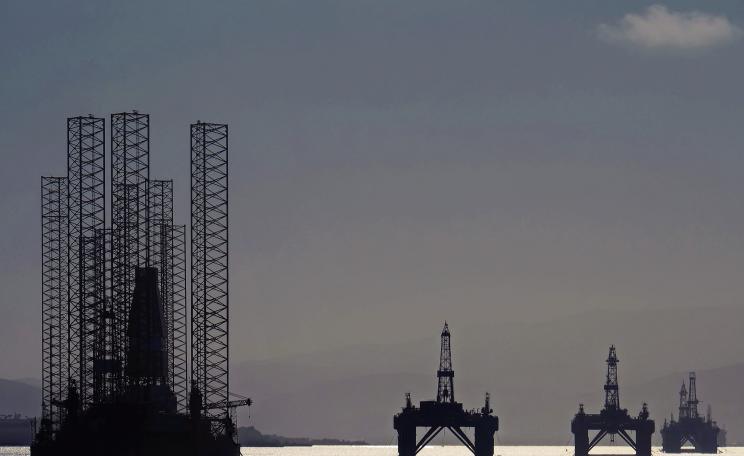
The peculiarities of the British legal system have created the perfect ecosystem for the international oil industry to elude responsibility for many of the existential harms it creates.
This fact is among the chief reasons companies like Shell and BP are now headquartered in London.
READ THE SPECIAL ISSUE NOW (PFD)
While the network of tax havens under the British Crown allows the same companies to avoid contributing financially to society, the complexities and vagaries of British law allows them to operate with near impunity.
Certainty
The Netherlands’ affiliate of Friends of the Earth, Milieudefensie, along with 17,379 private individuals, took Shell to the district court in The Hague in 2021.
The organisation argued that the oil giant’s vast global climate impact meant it was failing to maintain the legally requisite “standard of care” to the residents of the city that hosted its global HQ - and, indeed, of planet Earth.
Shell should be forced to slash its global climate-changing emissions by 45 per cent by 2030, they argued. And, in that district court, Milieudefensie won.
Ben van Beurden, the chief executive of Shell at that time, told the Cleaning Up podcast in 2025 that the ruling “wasn’t the only reason we left the Netherlands”. But, he continued, “it was a massive contributing factor.”
Shell managed to overturn many - though not all - of the court’s findings on appeal. Milieudefensie is now re-appealing at the country’s supreme court. Despite this, “we thought we had lost legal certainty in the Netherlands,” said van Beurden.
Propping-up
This was one of the two main reasons the oil giant ceased being ‘Anglo-Dutch’ and moved its HQ to London in 2022, he confirmed.
There’s a simple way to look at this. One of the world’s biggest polluters was finally facing a degree of legal accountability. It fled offshore, to a rogue jurisdiction, from which it could continue to drive the climate crisis. That rogue jurisdiction is England and Wales.
The decision to make this move was soon vindicated. When the environmental group ClientEarth tried to sue Shell’s board of directors in Britain over the company’s climate failures in 2023, their case was dismissed by the English courts before it even went to trial.
In the previous essay in this series on the relationship between the oil industry and the British state, I looked at the other reason Shell moved to the UK: the Dutch government’s decision to maintain a tax on dividends, and Britain’s wider role in oil industry tax avoidance.
Because of our imperial and colonial history, elements of the British constitution still provide large portions of the wiring of our global economic and legal system.
Before that, I examined how British trade deals work to protect more emissions than the equivalent agreements for any other country; and how British military strategy is centred on propping up the oil industry.
Carbon
In the most recent essay, on tax, I showed that many of the companies that make up the global fossil fuel industry - from those that own tankers and rigs to specialist insurance providers - like to register themselves in British Overseas Territories, Crown Dependencies, and Commonwealth countries, which ultimately come under the umbrella of the Judicial Committee of the UK’s privy council.
Low or no tax, lack of regulation, and minimal transparency are important reasons these companies choose to register themselves in these places.
But the fact that these jurisdictions have British or British-style legal systems is also a crucial factor.
Similarly, English contract law is widely used by companies all over the world, even when they are operating outside British jurisdictions, meaning it is an important structure underpinning the whole carbon economy.
In this essay, I’m going to ask, why? Why does the oil industry love an English courtroom?
Reinterpret
Over the last few months, I’ve asked a lot of people this question, including leading barristers and a Dutch law professor, an ex-civil servant and a number of activists and NGOs with legal experience. I read through multiple academic papers, and combed through various data sets. Each of the people I spoke to gave somewhat different answers to my questions.
Some talked about important details of how our system works, others flagged the much broader structure of the whole of English and Welsh law. But I suspect that, like the apocryphal blind men touching various parts of an elephant, they were all grasping different appendages of the same beast.
Ultimately, the picture they collectively painted was of a legal system that was systemically rigged in the interests of the powerful and big polluters.
To think about this, let’s start by going back to that ruling in the Hague. The complaint made by van Beurden about the case brought by Milieudefensie was, at its core, an objection to how Dutch law allows judges to reinterpret the exact meaning of certain clauses over time.
Combating
In the Netherlands, legislation will often be intentionally written to include broad terms like ‘reasonableness’, ‘fairness’ or ‘standard of care’. These are known as open norms.
Judges can then redefine what these mean as time goes by. This practice is common across jurisdictions in continental Europe, and allows the law to keep up with shifting social values or scientific understandings.
In the Shell case, the clauses were one of the mechanisms by which international agreements were read into Dutch law. Specifically, the Paris Agreement, an international treaty, was allowed to be taken into account when the court considered what ‘standard of care’ meant in this case.
Similarly, Dutch law allows for what theorists call the horizontal application of human rights law, so called because cases are between two private actors - in this case, Shell and Milieudefensie - rather than only between the state and a private actor or actors.
The initial ruling said: “[T]o combat the danger posed by climate change, everyone has a responsibility. To fulfil that responsibility, the focus does not lie exclusively on states. Especially companies whose products have contributed to the creation of the climate problem and have it in their power to contribute to combating it are obliged to do so vis-à-vis other inhabitants of the earth, even when (public law) rules do not necessarily compel them to do so.”
Democracy
André Nollkaemper, professor of International Law and Sustainability at the University of Amsterdam, has followed the case closely. He said: “The one specific issue relating to the Shell judgments in the lower court and the court of appeal is that both courts have taken a quite progressive reading of the responsibilities of corporations in relation to climate change, and the specific issue is the way that human rights law is applied horizontally against corporations.
“Moreover, human rights law can be used as a vehicle to translate the Paris Agreement into domestic cases. It’s not so easy to get these types of judgment in UK law.”
Indeed, van Beurden has said publicly: “It had a legal theory that brought the verdict… an open norm principle, that is unique for continental Europe, and even more so in the Netherlands, that in the end, if you looked at it, you thought, on this principle, we can be convicted of anything - because it essentially comes down to, simplistically speaking, that, in the end, a judge can rule anything that they think is in line with public opinion. If public opinion is against you, you can expect any verdict.”
The expression of ‘public opinion’ that van Beurden appears to be referring to is the Paris Agreement. While he said he is confident that Shell will win when the case comes to the Dutch supreme court, he has also complained that “you can do without this nonsense.” He added: “Many companies will stay clear of certain jurisdictions.”
The former boss of Shell, then, is objecting here to the fact that Dutch law is relatively responsive to democracy. When elected governments sign things like the Paris Agreement, courts are expected to take that into account.
Enforceable
The English legal system does not have the same open norms. And van Beurden is confirming that Shell moved to the UK in part because the legal process is not influenced by such irksome matters as democracy and a growing scientific consensus about what we need to do for our civilisation to survive - instead, law is, on the whole, shaped by precedents set by judges long ago.It’s not just Shell that loves the English legal system.
When I was researching my forthcoming book Abolish Westminster, I went to Gibraltar and interviewed Nigel Feetham, who’s the business minister on the peninsula and a King’s Council barrister. Feetham played a vital role in turning this small British territory on the southern tip of Iberia into a booming offshore financial centre.
He spoke to me in his office high up in a skyscraper, in front of a large window looking across the famous Straits to the Atlas Mountains beyond. He said: “There’s no doubt that Gibraltar’s success as a financial services sector is underpinned by its Britishness.”
Two of the most important features of that ‘Britishness’ he highlighted were the common law system, and the fact that the judicial committee of the privy council is Gibraltar’s highest court. “Our investors take considerable comfort that ultimately the judges that are sitting to adjudicate a matter of appeal are retired English judges, and then it goes to the privy council,” he added.
And businesses don’t always need to locate themselves in a British territory to take advantage of the British courts system. Often companies signing contracts with each other, anywhere in the world, will agree to make them enforceable through English law.
Tankers
The organisation Legal UK was founded by the then lord chief justice and is funded by multiple London law firms “to promote English law as an international platform, as the governing law of choice for international business and as a national asset”.
As they put it, “English law is a platform that supports a significant amount of economic activity in the UK and globally.” This claim is borne out in the statistics. Over 40 per cent of global corporate arbitrations are conducted through English law. Around three quarters of cases in the (London) commercial court are believed to be international in nature, and the Law Society specifically highlights the oil and gas industry as a sector that benefits from this.
The UK is the world’s second-biggest legal services hub. “English law has a significant global role,” the financial sector lobbying group TheCityUK wrote in a recent report.
“It is one of the two legal systems (along with New York law) most widely chosen to govern international contracts and is used for about 40 per cent of the world’s cross-border business and financial transactions.” It added: “It is the law of choice in the international financial markets and for international insurance, shipping and commodity contracts.”
Fossil fuels are the biggest chunk of both the shipping and the commodities markets. With 80 per cent of global maritime deals agreed in English law, and 40 per cent of global maritime trade consisting of coal, oil or gas, most of the world’s oil tankers will be legally covered by contracts enforced in London.
Navigating
Indeed, the UK is a major centre for arbitrating all kinds of contract relating to the offshore oil industry. The oil industry’s main partner in this regard is therefore London’s vast legal services industry.
The Anglo-American firm Norton Rose Fulbright, for example, brags on its website that it has “one of the largest oil and gas legal practices in the world, with offices in every major oil and gas market”. Its European headquarters is on More Street in London, just along from London Bridge station.
Clifford Chance, a global law firm whoseHQ is in Canary Wharf, states that its “global Oil & Gas group is made up of acknowledged legal experts in the oil and gas industry, offering depth of resource, local expertise and commitment to the key oil and gas markets across the globe”.
It goes on: “Whether you are contemplating an upstream investment in Asia Pacific, a downstream project in the Middle East or simply need help navigating your way through the complexity or diversity of handling a deal or dispute in Africa or Europe - we have the team and experience to assist you.”
The firm adds that its expertise in navigating “environmental regulation is widely acknowledged in the oil and gas industry” and that it is ranked as a “tier one” oil and gas firm by global legal directories.
Empire
Slaughter and May, whose global HQ is just down from Old Street station, similarly brags that its “oil and gas practice encompasses a diverse and extensive portfolio, spanning some of the most significant deals and projects within the sector”.
Indeed, digging through the websites of London’s top law firms, I discovered that almost all advertise their role in helping the oil industry suck carbon out of the ground and pump it into the atmosphere.
Usually, companies that work alongside the oil industry bury their work in terms like “the energy industry”, or talk about “the transition”, before they admit in the small print that they help with exploration and extraction. That seems less fashionable among top lawyers, whose websites happily boast of their work on vast drilling projects. None of these legal firms responded to my offer to provide a comment for this essay.
Of course, these firms are working all over the world, but the confluence of legal services companies in London grows, in large part, because of the popularity of English law for global business - including hydrocarbon industries.
What is it about English law that makes it so popular for these sorts of contract? While its outsized role is obviously partly an outgrowth from the empire, there are various reasons businesses continue to choose English law.
Justice
Some of these are genuinely good things. There is a widespread - and essentially accurate - belief that British judges are relatively incorruptable: you’re probably not going to lose a case because another business paid a bribe.
But lots of the factors are less good. English law is broadly set up in a way that tends to allow businesses significant freedom to do what they want - including at times when other jurisdictions might take into account wider, socially important factors.
LegalUK states: “Law, its extent and method are critical to doing business; and English law provides a highly desirable system. It is predictable yet innovative; and also apolitical. The legal environment it creates supports commercial transactions and all aspects of the commercial marketplace.”
By “apolitical”, what they seem to mean is that English law is immune from the niceties of democracy: while parliament is theoretically sovereign, for the most part business deals can generally go ahead unfettered by the public interest.
In English law, contracts between two parties are, for the most part, enforced based on what is written in them and what was intended. Any other concerns - including matters of justice, or whether they are helping drive us all to the brink of climate disaster - are irrelevant. Shell is unlikely to be sued in the UK in the way it was in the Netherlands.
Libertarian
More broadly, the basis of the English legal system - common law - has a habit of bending power back to the powerful.
Daniel Hannan is a former Conservative MEP and now member of the House of Lords. He was one of the most articulate advocates of a Leave vote during the Brexit referendum.
One line of argument he and others among the more intelligent people on his side repeatedly came back to was that the common law system invented in England, and exported across the world through imperialism, is central to what they see as a specifically Anglosphere system of free market capitalism. He described common law in glowing terms in 2015.
He said: “In this beautiful, bizarre, anomalous system, the law is not written down from first principles and then applied to particular cases but rather grows up case by case, each judgment serving as the starting point for the next dispute. In other words, the law in English-speaking societies is not an instrument of state control but a mechanism open to the individual seeking redress.”
Elsewhere, he has associated it with a “libertarian tradition”, and argued that the US, the UK, Australia, Canada, Singapore, Hong Kong and (to some extent) Israel were “common law, Anglophone, market-based societies, with compatible professional credentials”. He implied that Britain should have closer relationships with these countries rather than with continental Europe, which he saw as being over-regulated due to its civil law jurisdictions.
Accountable
There is statistical evidence that Hannan is right on this fact: former British colonies tend to have common law systems, while former French and Spanish colonies generally have civil law regimes. And multiple studies comparing these two groups have also found that common law countries are, on the whole, more unequal.
The likes of Hannan see this as a good thing - a sign of free competition and thriving capitalist economies. It seems to me that one half of Hannan’s argument is fundamentally right - English-style common law does seem to have a tendency to produce unequal societies, in which the wealthy accumulate more wealth and power.
Step away from Hannan’s romanticised description. It is worth thinking about what is really happening here. The primary difference between civil law and common law systems is that, in common law systems, legal rulings from judges can set precedents, which are then binding - in other words, judges effectively make much of the law.
In civil law systems, precedents aren’t binding in the same way, and so judges themselves have less power to shape the law, and legislatures have relatively more influence.
There are two reasons experts often give about why this is likely to lead to regressive decisions and greater inequality in common law jurisdictions. First, judges tend to come from more elite backgrounds than parliamentarians, and, unlike parliamentarians, aren’t democratically accountable. Secondly, outcomes in courts are drastically shaped by who has the money to afford big legal teams.
Trade
One civil servant I spoke to for my book described the process of writing legislation in Britain as passing laws and then watching them being whittled away in court by wealthy interests. Often, he said, you find the very meaning of a law as intended by parliament will be challenged by some vast corporation - often the very sort of company the MPs wanted to regulate.
And the only defence of this intended meaning will be a cash-strapped local council with an already over-stretched and underfunded legal team. Those with more money won’t just win the case, but in doing so will set a new precedent defining what the law means in terms that are much friendlier to big business than the MPs had intended. While he wasn’t specifically referring to big polluters, it’s clear how this problem applies to them too.
Hannan frames common law as belonging to the people rather than to the state. The reality is that most normal people don’t have the resources, or any mechanism, to assert any such influence. And so, unsurprisingly, the power to change or manipulate the system ends up being wielded by the already wealthy and powerful.
Common law is - as Hannan has elegantly articulated - an essentially libertarian system. And, like all libertarian systems, it allows the powerful to ride roughshod over the rest of us.
Because of its various so-called advantages, TheCityUK report argues, English law is “both a national asset and an international public good that supports global business and trade.”
Eccentric
What’s certainly true is that English law underpins a large swathe of the global economy. If you think that the global economic system is working well, then this legal system is indeed an “international public good”.
It is a gift Britain gives to the world, helping ensure the peaceful exchange of goods and services, mediated by contracts people feel they can trust, knowing these agreements will be enforced. If you see that our current global economic system is producing the climate crisis alongside all manner of other ill effects, then this gift to global corporations is clearly a serious problem.
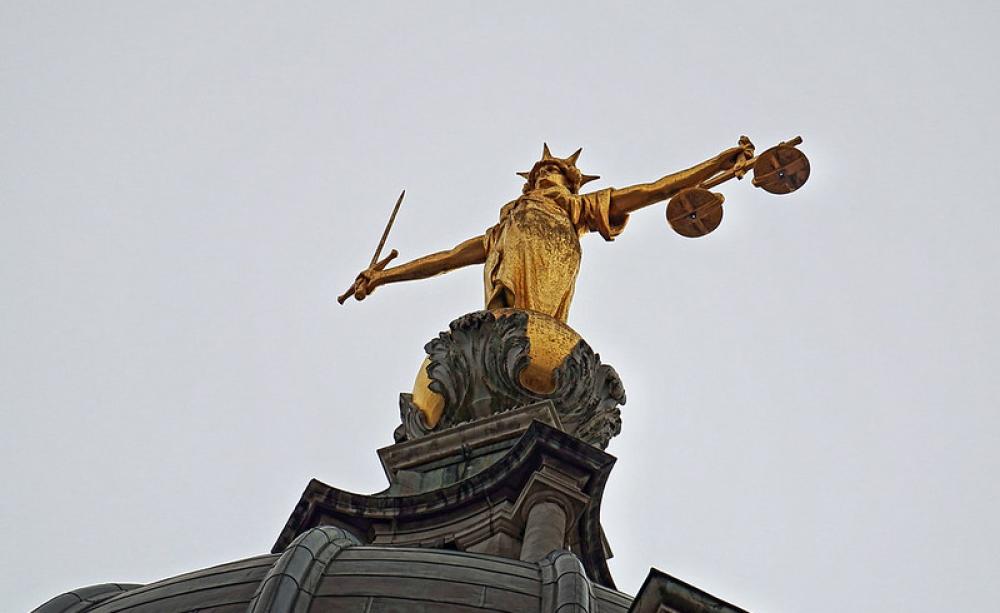
One way to look at all of this is that, in our common law system, a huge amount of the law is shaped by judges. And so, what really matters is who they are, and how they get appointed, and whose interests they serve.
David Renton, a barrister and author, argues that Britain’s senior courts have become less progressive of late. Jolyon Maugham, a barrister and the director of the Good Law project, agrees.
Renton said: “At every stage from 1990 until the last five years, we’ve always had a degree of heterogeneity in the high court. You could talk about people like Lord Justice Brooke, who in his old age became a Corbynite. There has always been a role for the slightly eccentric person politically, who is just a really good lawyer. Baroness Hale. Lord Hoffman. There has been this quite steady stream for about 30 years of judges who are willing to do whatever they felt was right.
Light-touch
“And then it stopped five years ago. For the last five years, the high court has been terrible. There is no one interesting, politically. There is no one who will stand up to the government.”
Maugham made a similar argument. “High court judges are more conservative now
than 10, 20, 30 years ago.” This observation is uncontentious in legal circles, he says. “If you got Lord Reed [the president of the supreme court] on the phone and asked him if the courts had become more conservative,” he would agree that they had, Maugham argues. The trend goes higher than the high court.
Connor Gearty, a prominent human rights lawyer, wrote an essay for the London Review of Books called ‘In the Shallow End’ in 2022. He argued that the supreme court in the UK had become significantly more conservative since Reed took over from Hale as its president in 2020.
He described the supreme court under Reed as “backward-looking” adding,“It has reverted to an approach rooted in legal formalism, an extremely narrow reading of the rule of law, while displaying an old-school lack of interest in the lived experiences of those whose plights have brought them to the judges’ attention.” The essay continued: “Reed has made himself the master of an approach to judicial review so light-touch as to be almost no touch at all.”
Self-perpetuating
Since Reed’s appointment, human-rights-based appeals to Britain’s top court have succeeded much less often. This has been proved by an analysis by Lewis Graham, a leading academic, which was published by the UK Constitutional Law Association.
The reason for this shift is disputed. Renton argues that it relates to the way that financialisation and neoliberalism have played out in the British courts. “If you look at new appointments to the high court they tend to come from people who have spent a career making lots of money in the most highly paid, corporate cases.”
There appears to Renton to increasingly be an assumption among those who are involved in appointing judges that “anyone who is serious would do these commercial cases… [and that] if anyone was at all smart they’d do the high value cases.”
His impression is that, if people haven’t been representing big businesses, “they’re not interested” in appointing them as judges. And once the judiciary is dominated by the sort of people who spent their careers representing big businesses, they are generally more likely to be sympathetic to big business.
This argument points to a potentially self-perpetuating process. The UK is now, after the US, the preferred jurisdiction for big business and the hyper-wealthy to conduct their legal affairs in.
Scourge
Globally, British law firms are second only to those in the US in the total fees they collect. This industry has boomed in recent decades, in parallel and often within the financial services industry - during an era in which the rest of the legal system has faced drastic government cuts.
The result is on the one hand, law firms operating out of glitzy tower blocks representing oligarchs and corporate giants, and on the other, courts in which, as Renton puts it, “the computers don’t work, the papers never show up, there’s no water in the water dispenser.”
In that context, it would be unsurprising if sharp-suited lawyers who built a career in well funded teams representing super-rich clients ended up attracting the eyes of those who appoint judges, while those who rely on ever-dwindling pools of legal aid appeared less glamorous.
Once this started to happen, the judiciary would increasingly be made up of people with such a background, and it’s certainly plausible that these people would, on average, be more likely to be sympathetic to people like their former clients, which would likely, in turn, attract more big-money clients to use British courts.
When I put this thesis to Maugham, though, he was sceptical. There are plenty of lawyers, he says, who spent their career working for big businesses, only to become the scourge of their former clients once they reach the bench.
Ideological
“There is, in the first-tier tribunal tax chamber, a judge who had spent his career advising tax avoiders, and came to really hate tax avoiders,” he adds, by way of an example.
But, while I’m sure he’s right that there are a lot of exceptions, it’s easy to think of ways that neoliberalism has an ideological gravitational force in other parts of society. Fredric Jameson famously wrote that it is “easier to imagine the end of the world than it is to imagine the end of capitalism”.
Similarly, it seems plausible to me that the well documented growing conservatism of Britain’s senior courts - and their unwillingness to stand up for human rights - is at least in part a product of the growth of the financial services industry and the wider neoliberalisation of British society.
Baroness Hale and Lord Neuberger, Lord Reed’s two predecessors as president of the supreme court, started their careers in the late 1960s and early 1970s respectively, and had an ideological rooting in pre-Thatcherite Britain.
As their generation has retired over the last decade, they have been replaced by people whose careers thrived as the City boomed in the 1980s and 1990s. It wouldn’t be surprising if, as Renton suggests, this new generation of senior judges took that relatively newer ideological framework into the courts with them.
Elite
Obviously, this concern expands beyond the fossil fuel industry. But coal, oil and gas companies are some of its main beneficiaries.
British jurisdictions host a radically disproportionate share of these firms, from our two biggest companies - Shell and BP - to Bermuda’s collection of many of the world’s biggest tanker, rig owning and oil industry insurance companies, which are ultimately protected by British courts.
Britain’s recent economic history may well have moulded the judiciary. It is also true that the judiciary itself has profound problems.
Research by The Sutton Trust shows that 62 per cent of senior judges attended private school, one of the highest portions of all the professions they looked at. Further, 75 per cent studied at Oxbridge.
While four per cent of people in England and Wales are black, just one per cent of all judges are from this racialised community. This lack of representation is more severe than in almost any other elite group in British society.
Breached
This means people living in Britain with roots in countries that have experienced colonisation - such as in the interests of the oil industry - are excluded from the profession.
While this doesn’t inherently mean that British judges are more liable to side with the oil industry than those in other countries, it certainly suggests that there is a major problem with how Britain appoints its judiciary. And, given the fondness of oil companies for British jurisdictions, it seems reasonable to ask whether these two things are connected.
In some countries, judicial appointment processes are a major feature of public debate. In Britain, how the system works rarely reaches the newspapers or social media. Until 20 years ago, the legal world was opaque: judges were chosen by the lord chancellor, based on private ‘soundings’ with current judges.
They were then appointed by the monarch. Because the lord chancellor was also a member of the cabinet, and the chair of the House of Lords, this role breached any idea of the separation of powers between legislature, executive and judiciary.
Hyper-wealthy
In 2005, the Constitutional Reform Act changed that: now judges are effectively chosen by the Judicial Appointments Commission, which is made up half of senior judges, and half of members from outside the legal world but who, in reality, come from a particular world, which one legal academic described this as the “circular economy of quangocrats”.
The appointment of judges is now supposed to be transparent and egalitarian. But lawyers I spoke to said one important aspect of the system remains unchanged. A judge is likely to be promoted if they have impressed - or at least, not offended - those who have served as judges before them.
Renton goes even further: “I think the problem is that there are so many commercial lawyers who are high court judges that, when they recommend who’s a decent person, they can’t see beyond people who look like them and have a similar career to them.”
This explanation, however, is contentious among the lawyers I spoke to for this piece, and others strongly disagreed with it. One barrister told me that she felt the previous system was “very much who you know”, but that it is “now done fairly and neutrally”. What clearly is true, though, is that big money loves a British judge.
The broad structure of the English legal system is a significant problem. There are also multiple details about how it works - which could be changed relatively easily - that make England particularly attractive to big business and the hyper-wealthy.
Zeal
Maugham gave one important example: “It’s very difficult to sue British companies in Britain because of our adverse costs regime. If I sue Shell and I lose, I have to pay all of Shell’s costs, which are enormous.” Maugham brought a case against the Dutch authorities during the Brexit process, and his side lost. He was surprised at how low the costs were.
“The high costs that would follow losing a case in the British courts, in contrast, produces “the profound difficulty of holding Shell to account through the courts system” and is “why these evil b*****ds never get sued”.
He added: “We have adverse costs in UK law. If you sue and you lose, the general rule is that you pay the other side’s costs. Many other countries don’t have that rule. UK law has a very narrow exception to that rule. You can seek protection against adverse costs if you’re involved in public interest judicial review proceedings.”
However, such proceedings are only available when you are taking action against public bodies. “If you’re suing a private company, you have no right to have your potential costs capped,” even if your case is on behalf of the public, rather than yourself. “That is a profound deterrent to suing these b*****ds in UK courts.” Further, he stated: “The courts have taken a very, very formalistic line on what amounts to public interest litigation in the UK.”
António Guterres, the UN secretary-general, back in June 2024 called for a “clamp down on the fossil fuel industry”. He said: “We must directly confront those in the fossil fuel industry who have shown relentless zeal for obstructing progress – over decades.”
Colonial
Britain’s courts, tribunal services and legal firms continue to be one of the main networks of infrastructure propping up that fossil fuel industry. To use LegalUK’s language, the English legal system is one of the platforms on which the carbon economy is built. In itself, this is a situation that the British government should - in Guterres’ language - “clamp down on”.
An industry that is imperilling the future of civilisation shouldn’t be treated as a legitimate actor. Activists have challenged the financial institutions funding the fossil fuel industry, the PR firms cleaning up their reputation, and the museums and galleries helping them win back people’s affections through sponsorship deals. We also need to challenge the legal institutions drafting and enforcing their contracts without any regard to the impact those agreements have on any of the rest of us.
Even if you see English law as a network of neutral train lines, facilitating global trade, British citizens have a right to ask which locomotives are running on those tracks, and whether we have a duty to block them.
When environmental activists and policymakers think about how many tonnes of climate changing gases a country is responsible for, they tend to think about two numbers: the emissions rising up from the country’s land, and those produced by the manufacture of the goods imported into the country.
Sometimes a third factor is added: what are our financial institutions funding? When people who are concerned about the climate crisis consider what campaigns they are going to run, or what laws or public policies they might change, they tend to think about things relating to one of these questions. And in most countries that makes perfect sense. But Britain’s different.
Because of our imperial and colonial history, elements of the British constitution still provide large portions of the wiring of our global economic and legal system. The fossil fuel industry all over the world relies heavily on English and Welsh law. If we want to think about our role in preventing climate breakdown, we need to consider how we can stop our courts from servicing the organisations driving us over a cliff edge.
This Author
Adam Ramsay is an investigative journalist and the editor of the Abolish Westminster newsletter.