The global pesticide and bioscience giant Monsanto is a byword for evil for millions of campaigners and concerned citizens, writes JP Sottile. But that has never stopped it getting its way with the people that matter - politicians and regulators. And now the company is on the verge of biggest victory ever - winning clearance to spray biologically active RNA sequences on US crops.
Of all the impacts of climate change, one stands out for its inexorable menace, writes Pete Dolack: rising oceans. And it's not just for distant future generations to deal with: new scientific studies show that people alive today may face 6-9 metres of sea level rise flooding well over a million sq.km including many of the world's biggest cities. So where's the emergency response?
Just as climate change deniers leap from scientific uncertainty over the precise impacts of greenhouse gas emissions to certainty of little or no impact at all, so 'pro-nuclear environmentalists' conflate uncertainty of the mortality arising from Chernobyl and other nuclear disasters to certainty of few if any deaths, writes Jim Green. Their position is equally indefensible.
Britain is shipping 700kg of highly-enriched uranium capable of making scores of nuclear bombs to the US, writes Gordon MacKerron. The move is a symptom of a huge problem that's afflicting all nuclear nations - what to do with their nuclear wastes? The only real solution is deep geological disposal. But it's politically fraught, technically challenging, very expensive - and has yet to be done.
North American buffalo are officially 'vulnerable to global extinction', writes Louise Willcox, yet the US National Parks Service and Montana are intent on their wholesale slaughter. In place of a complete ecosystem with wild-roaming buffalo and grizzly bears, wildlife managers are systematically favoring the over-abundant elk that drive the politically powerful hunting industry.
The rights of nature and of indigenous communities are enshrined in Ecuador's constitution, writes Kevin Koenig. But down in the Amazon the government is going full speed ahead with oil extraction on indigenous territories whose owners are committed to keeping their forests and waters pollution-free. A mighty battle is brewing that looks certain to come to a head this year.
Among Cuba's greatest achievements is its organic farming sector, writes Miguel Altieri. Developed in the 1990s following the collapse of the Soviet Union, small agroecological farms now employ 300,000 campesinos and provide an abundance of healthy fruit and vegetables. But now US food and agribusiness corporations are eyeing up a multi-billion dollar business opportunity.
In 1975 Indonesia invaded the small Pacific country of East Timor, writes John Pilger, and then massacred a third of its population to suppress demands for independence. Now unearthed documents show the genocide was supported by Australia so it could grab the oil and gas reserves of the Timor Sea. Despite East Timor's independence, won in 1999, Australia is still stealing its oil and gas revenues worth $5 billion and counting.
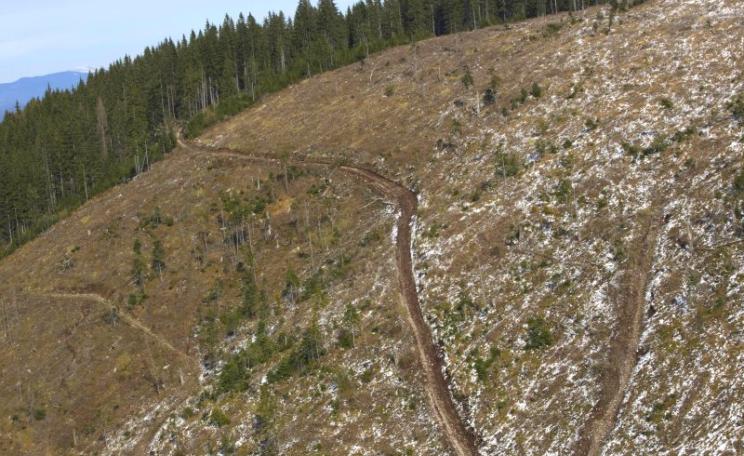
Austrian timber giant Schweighofer claims to be working hard to ensure that the huge volumes of timber it buys from Romania's mountain forests are strictly legal, writes Katy Jenkyns. But an Ecostorm investigation has uncovered its purchase of illegally cut wood, its acceptance of fraudulent paperwork from suppliers, and the deep shadow of fear it casts over local communities.
Campaigners are celebrating after defeating plans to build America’s largest open pit coal mine, writes Nick Engelfriend. In an epic 'David and Goliath' battle, Montana activists challenged the project, and all the politicians and businessmen that supported it, with fierce opposition, protests and demonstrations. The outcome spells hope for all in the fight against dirty energy.
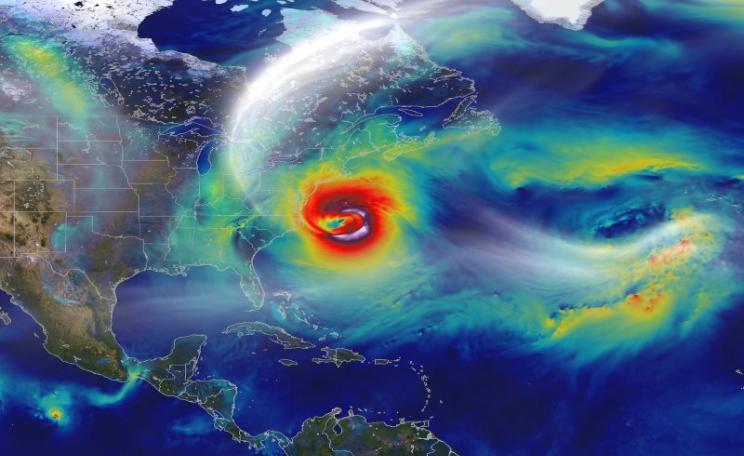
The term 'global warming' has a reassuring, comfortable sound, writes Jim Hansen. But paleoclimate data shows the reality could be anything but, with rapid climate oscillations, large, abrupt rises in sea level, major disruptions to ocean circulation, and massive superstorms. It may already be too late to forestall this dystopian future - but then it may not be. So let's act while we still can!
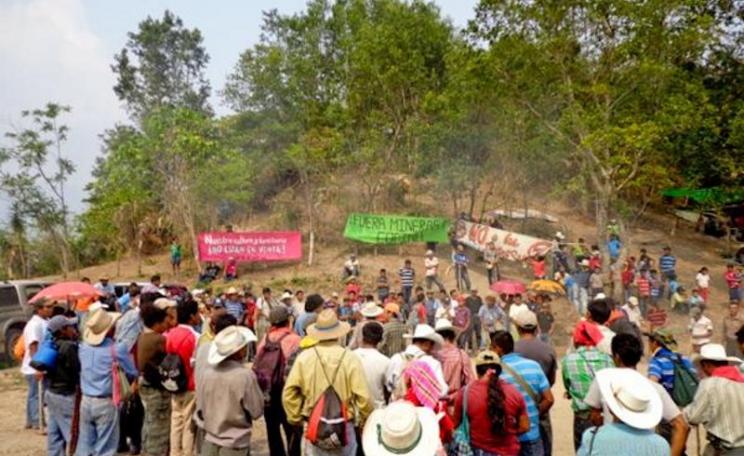
The Government of Honduras is intent on framing the only witness to the murder of Berta Cáceres as the one guilty of the crime, writes Beverly Bell. Gustavo Castro Soto, an eco-defender from Mexico, is now in effective detention in his country's embassy in Tegucigalpa in fear of his life, having himself been injured in the attack and seen the real assassin. The US Government must break its resounding silence.
After five months of wrongful imprisonment, an environmental activist has finally been set free and reunited with his family, writes Rod Harbinson. His case highlights the way Cambodia's Government subjects eco-defenders to harsh, unjust and arbitrary detention, while illegal logging barons and large-scale timber smugglers lead charmed lives, always above the law.
GMO enthusiasts insist that organic, agroecological farming could never feed the world, writes Colin Todhunter. But it has been feeding us all for millennia - and it's the only way to continue while enriching the soils and biodiversity on which all farming depends. As Mahatma Gandhi once observed, industrial agriculture is but a nine-day wonder. And its time will soon be up.
It will take decades to completely leave fossil fuels, writes Richard Heinberg. But we can do it, starting with the easy stuff: going big time for wind and solar, raising energy efficiency, replacing oil-fuelled vehicles, and moving to organic farming. But deeper changes will follow as we transition to a more enduring sustainability - consuming better, and much less.
Cancer is just one of of the outcomes of the genetic damage inflicted by nuclear radiation, writes Chris Busby, and perhaps one of the least important. Of far greater long term significance is the broad-scale mutation of the human genome, and those of other species, and the resulting genomic instability that causes cascades of heritable mutations through the generations.
Media furore over the shooting down of a helicopter in Tanzania masks a bigger picture of commercial hunting and evictions of indigenous tribes in the name of wildlife, writes Navaya ole Ndaskoi. It's time to rethink 'white saviour' mythology and develop new models of conservation that respect and engage with African communities, recognise their achievements, and inspire a new generation of conservation heroes.
What was NATO's violent intervention in Libya really all about? Now we know, writes Ellen Brown, thanks to Hillary Clinton's recently published emails. It was to prevent the creation of an independent hard currency in Africa that would free the continent from economic bondage under the dollar, the IMF and the French African franc, shaking off the last heavy chains of colonial exploitation.
Five years after the Fukushima nuclear disaster began to unfold, the searing psychological effects are still being felt among the 160,000 refugees who fled the fallout, writes Linda Pentz Gunter. But now there's growing pressure to return to contaminated areas declared 'safe' in efforts to whitewash the disaster's impacts. Why the rush? To clear the way for the 2020 Tokyo Summer Olympics, complete with events in Fukushima City.
The main claim used to justify nuclear is that it's the only low carbon power source that can supply 'reliable, baseload electricity', writes Mark Diesendorf - unlike wind and solar. But not only can renewables supply baseload power, they can do something far more valuable: supply power flexibly according to demand. Now nuclear power really is redundant.
One of the world's biggest energy companies has been caught out in what may be the biggest ever climate scandal, writes Bill McKibben. Way back in the 1980s ExxonMobil knew of the 'potentially catastrophic' and 'irreversible' effects of increasing fossil fuel consumption, but chose to cover up the findings, spread misinformation on climate change, and go for high carbon energy sources.
BASF are to halve their GM research and development and reduce the time spent on developing these technologies, writes Peter Melchett. Given the many problems that GM agriculture is facing, and that new non-GE technologies offer such valuable benefits as increased crop yields, does BASF's announcement spell the beginning of the end of GM crops?
Some of the world's most powerful figures tout the benefits of GMOs, writes Stacy Malkan, but what's the real story? Facts on the ground expose the PR spin, half truths and outright propaganda that has come to dominate a public conversation that is not so much about engineering genes, but engineering truth for the benefit of multinational corporations.
As if Iraq has not suffered enough under Saddam Hussein, the vicious UN sanctions regime, the US-UK occupation and the depradations of Daesh, a new threat looms that could kill a million people or more, and destroy Baghdad and a string of other cities along the Tigris river. The porous rocks beneath the Mosul dam are dissolving away and the entire edifice could collapse at any moment, releasing 11 cubic kilometres of water.