The choices made now will shape these landscapes and the lives tied to them, for generations.
Smoke hangs over the southern Amazon where forest stood only weeks before. Along new highways, cattle trucks roll past rivers running low, and in the vast neighbouring Cerrado, soya stretches towards a horizon once thick with native vegetation. What’s unfolding isn’t an isolated surge of deforestation, but a decisive moment for the economic model shaping modern Brazil.
From beef to biofuels to carbon credits, oil blocks and mega-dams, this special edition traces how familiar extractive practices are being reframed in the language of green growth. Infrastructure projects such as the BR-319 highway, expanding fossil fuel frontiers and weakened environmental safeguards expose a widening gap between climate promises and reality. This isn’t only a story of loss, but also about resistance.
Indigenous leaders, traditional communities and researchers are resisting a path that could push these ecosystems towards irreversible tipping points. The stakes reach far beyond Brazil’s borders. What happens there will echo through global food systems, water cycles and climate itself.
READ OUR FULL REPORT (PDF)
The stakes
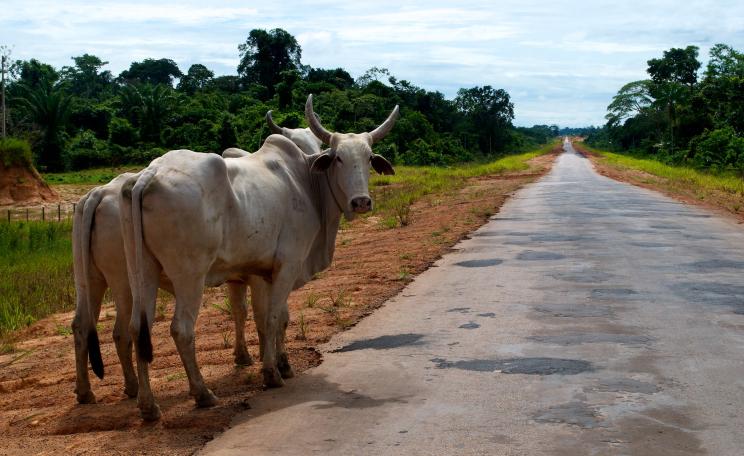
Deforestation and degradation are no longer distant phenomena in large parts of the southern Brazilian Amazon. They are daily life. Trucks move cattle along newly open roads; clouds of smoke rise from fields where forests stood only weeks before. During the dry season, rivers start to dry, the horizon blurs into a dull grey line, and the smell of burning wood carries for kilometres, sometimes for days. Taken together, these stories reveal not a single crisis, but an interlocking web of ecological, political and economic pressures that will reshape the Amazon and the Cerrado for decades to come. This isn’t the work of a few rogue actors. It’s the outcome of decisions made in offices and trading floors far away, in Brasília, São Paulo, Beijing and European capitals. Global demand, political deals, new highways and finance packages all converge here, at the forest’s edge.
Across the Amazon and the neighbouring Cerrado, powerful forces are colliding. Agribusiness pushes deeper into intact land, while oil and gas projects advance, dams rise, and highways like BR-319 carve through remote regions. At the same time, battles over Indigenous land rights and environmental protections unfold quietly in Congress and courtrooms, often out of public sight but with lasting consequences on the ground. Alongside this expansion runs a new promise: a ‘green’ future built on biofuels, carbon markets and the so-called bioeconomy. These ideas are sold as climate solutions. They attract investors and applause. But many Indigenous and traditional communities ask a simple question: will this truly keep the forest standing, or is it extraction dressed in softer language?
The choices made now will shape these landscapes and the lives tied to them, for generations.
The stakes reach far beyond Brazil. The Amazon and the Cerrado regulate rainfall across South America and help steady the global climate by storing immense amounts of carbon. The Amazon alone holds more than half of the world’s remaining tropical forests and shelters an extraordinary share of its wildlife. If it tips beyond recovery, the shockwaves will be felt in harvests, water supplies, public health and economies across continents. What’s unfolding isn’t a single crisis, but a tightening web of political, economic and ecological pressures. The choices made now will shape these landscapes and the lives tied to them, for generations.
Beef and soya
Brazil is the world’s largest producer and exporter of beef, supplying the markets in China, Europe, the Middle East, the UK and beyond. Yet cattle ranching remains the single largest driver of deforestation and degradation in the Brazilian Amazon. Vast tracts of forest cleared, often illegally, are converted into pasture, a transformation that can take weeks, but the effects endure for generations. Researchers tracking deforestation patterns estimate that around 80 per cent of cleared land in the Amazon is ultimately converted to cattle pasture. The greenhouse gas implications are profound: emissions from deforestation, fires, methane and soil degradation make the livestock sector one of Brazil’s largest climate liabilities.
Indigenous territories are increasingly surrounded by pasture. Fires set to clear land frequently escape into forest edges, degrading ecosystems that evolved without regular burning. In drought years, those fires can rage out of control. The smoke doesn’t respect boundaries drawn on maps. For communities living in the forest, the consequences are immediate. Rivers become blocked with silt, fish stocks decline, and smoke increases respiratory illness among children and elders.
Luciana Gatti, senior researcher at Brazil’s National Institute for Space Research (INPE), said: “There’s been an enormous increase in exports of wood, beef, soy, corn, and minerals. This is a project based on destroying nature to sell primary commodities. Water systems are harmed by these development models, with severe consequences for ecosystems and the Brazilian population, while concentrating wealth and power among large landowners.”
While cattle are the dominant driver of deforestation and degradation in the Amazon, soya has transformed the Cerrado, a mix of grasslands, forests and savannas that covers more than 2 million square kilometres and feeds the headwaters of eight of Brazil’s twelve major river basins. In the last five decades, half of the Cerrado has been destroyed. Industrial soya, much of it destined for animal feed supplying China, Europe, the UK and beyond, continues to expand and destroy the remaining areas. Unlike the Amazon, the Cerrado has fewer legal protections and less international scrutiny. As enforcement tightened in parts of the Amazon, agribusiness shifted to the Cerrado, where governance is much weaker. Cássio Cardoso Pereira, researcher at the Federal University of Minas Gerais (UFMG), said:
“Unlike the Amazon, most deforestation in the Cerrado is still legally permitted, which protects corporations and supply chains from oversight. International accountability has failed because global climate and biodiversity frameworks largely neglect grasslands and savannas, treating them as disposable landscapes rather than critical ecosystems.”
Brazil’s water system depends on a delicate partnership between the Amazon rainforest and the Cerrado. Together they form a vast hydrological system that moves moisture through the atmosphere, stores groundwater and stabilises river basins across much of South America. The Amazon basin is the largest freshwater system on Earth, and the Cerrado contains about 80 per cent of Brazil’s water basins. Despite this abundance, Brazil is entering a water crisis. As native vegetation disappears, aquifers recharge more slowly and rivers that feed the continent’s great hydrographic basins run thin. Rainfall patterns weaken, droughts lengthen and heatwaves intensify. What begins as land clearance becomes something far larger: a slow destabilisation of the water cycle. According to Gatti, 2024 marked the Amazon’s highest carbon emissions on record, driven largely by fires. Yet Brazil’s Ministry of Science, Technology and Innovation (MCTI) classifies emissions from Amazon fires as net zero under its official accounting methodology, even though fires are now the region’s single largest source of carbon emissions.
Augusto Getirana, a research scientist at NASA’s Goddard Space Flight Centre in the Hydrological Sciences Laboratory, speaking in a personal capacity, said: “A water crisis in Brazil that results in a disruption in domestic food production quickly becomes a global crisis. We saw that in 2021, when prices of these commodities increased substantially worldwide.”
Communities report reduced water availability and contamination from agrochemicals.
Traditional geraizeiro (traditional communities of the Cerrado region) and quilombola (communities formed by Afro-Brazilian fugitive or freed enslaved people), many lacking official land titles, find themselves surrounded by monocultures. The transformation isn’t just physical, but also cultural. This isn’t just about beef or soya, but about a model of growth that clears land faster than it can recover. Profits move abroad, while the damage remains, seen in depleted rivers, degraded soil, and communities pushed to the margins. If this continues, Brazil risks weakening the very systems that sustain its people and its economy.
The BR-319 highway
Few projects symbolise the Amazon’s crossroads more starkly than the BR-319 highway. BR-319 is an 885-kilometre federal highway running from Manaus, the capital of Amazonas, to Porto Velho in the southern edge of the forest. Built in the 1970s under Brazil’s military dictatorship and abandoned in the late 1980s because maintenance proved too difficult, the highway has become the centre of a high-stakes debate over the Amazon’s future. It cuts through one of the most untouched areas of the Amazon. Current government plans to reconstruct and pave it are framed as a boost for regional development and connectivity to the rest of the country, but critics warn that BR-319 could unleash widespread environmental, social and health consequences. Philip Fearnside, a research professor at the National Institute for Research in Amazonia (INPA), explained: “Repaving the BR-319 highway would link the relatively undisturbed central Amazon to the AMACRO region – a deforestation hotspot named after the states of Amazonas, Acre, and Rondônia. Although AMACRO is promoted as a sustainable development zone (ZDS), it has become a major driver of deforestation in the Amazon rainforest.”
One Indigenous leader from the Mura people at the Lake Capanã Grande shared his concerns about the highway’s impact on his village. (His name has been withheld to ensure his safety.) He said: “I would like to express my indignation in front of everyone regarding the impact of the BR-319 highway on the Indigenous lands of Lake Capanã. This brings us problems, manipulation of rights, violation of our traditional areas, occupation by land grabbers, pollution of our river, destruction of our nature. And this is causing major problems in the flow of our rivers. Streams are being buried. Here we use the water from the river. The result of this road will become an open door for the entry of criminals, drug dealers, all types of drugs, as already exists. The Indigenous population lives off food from nature; the Indigenous population does not live off livestock. The Indigenous people live off traditional objects. They live off the subsistence of nature and subtract nature for itself for their survival and protect their own nature. I am against this paving.”
The reconstruction of the BR-319 highway is particularly dangerous because it encourages expansion beyond the main road. A network of unauthorised side roads already branches off the corridor, carved by loggers, miners and land grabbers. Once the main highway is fully passable year round, these side roads are expected to grow rapidly in a ‘fishbone’ pattern, cutting deeper into forests that have remained largely undisturbed. Official plans also include state highways such as AM-366, AM-360, AM-343 and AM-356, designed to connect BR-319 to remote forest areas like the Trans-Purus region, further opening areas that have so far been largely protected from large-scale human activity. Indigenous and traditional communities are on the frontlines of these threats. There are 69 Indigenous territories and eighteen thousand Indigenous people along the path of the highway. These communities have not been properly consulted, in violation of the ILO Convention 169, requiring free, prior and informed consent before projects affecting Indigenous lands proceed. For these communities, the highway isn’t just a development project: it threatens their livelihoods, rivers, forests and cultural survival.
The environmental consequences would be enormous. The Amazon stores vast amounts of carbon and generates the moisture flows known as ‘flying rivers’, which sustain rainfall across Brazil and beyond. Building a paved highway and opening the planned side roads would accelerate deforestation, fragment habitats, and release large amounts of carbon, undermining the forest’s ability to function as a stable ecosystem. Scientists warn that the combined infrastructure could push the Amazon to an irreversible climate tipping point. Health risks are already evident and likely to grow. Forest fragmentation and increased human activity along BR-319 have been linked to rising malaria cases, while diseases such as Oropouche fever have surged in the region. Expanding into previously untouched natural habitats brings humans and animals into closer contact, raising the risk of zoonotic spillovers, when pathogens jump from animals to humans, and creating conditions for potential new pandemics. “Deforestation in the Amazon rainforest and other tropical regions increases the risk of emergence of new human diseases by increasing contact between rainforest wildlife and the human population and its domestic animals. It also contributes to climate change, which can create conditions favouring the emergence of parasitic, fungal, viral, and bacterial infections,” explained Fearnside.
BR-319 also attracts organised crime, already growing in the region. Land grabbing, illegal logging and mining flourish where enforcement is weak, and a paved highway with multiple branch roads would make these activities easier and more profitable. Instead of spreading benefits to local communities, the highway risks spreading displacement, violence and environmental destruction. The choices made about BR-319 and its network of side roads will shape not only the Amazon’s future but also climate stability, biodiversity and human health across Brazil, South America and the rest of the planet for decades to come.
Biofuels
Brazil has long positioned itself as a biofuels pioneer. Ethanol from sugar cane, and biodiesel from soya are framed as lower-carbon alternatives to fossil fuels. Recent policy shifts have accelerated blending mandates and incentivised production, but behind the slogans lies a complex reality. Large-scale cultivation of sugar cane, oil palm, soya and corn, crops central to biofuels, continues to expand into ecologically sensitive areas. Projects framed as ‘green’ or ‘clean’ too often replicate the same extractive logic that has defined past waves of agricultural growth.
Jorge Ernesto Rodrigue Morales, lecturer and researcher at the Department of Economic History and International Relations at Stockholm University, cautions: “Despite its success, the biofuels industry in Brazil developed within broader developmental and territorial security goals, often placing significant pressure on ecosystems and communities in an institutional environment that generally overlooked socio-environmental concerns.” He added: “This unsustainable co-evolution of development pathways and bioenergy – marked by deforestation, land colonisation, and agricultural expansion – has limited the adaptation space in agriculture.”
Morales explained that like food production, ethanol requires land, water and nutrients, meaning that a large-scale expansion could intensify the negative side-effects of agricultural growth. These include significant socio-environmental challenges related to sustainable development goals, such as deforestation (SDG 15), CO2 emissions from land-use change (SDG 13), nitrogen losses (SDGs 13, 14, 15), unsustainable water withdrawals (SDG 14), and food security risks (SDG 2), among others. In this context, the biofuels boom resembles less a climate solution and more an intensification of longstanding land conflicts and ecological strain. While Brazil produces billions of litres of ethanol and biodiesel annually, full accounting of climate impacts, including emissions from land-use change and the energy intensity of cultivation, undermines the claim that biofuels are inherently ‘green’.
Carbon credits
Forest-based carbon credits are promoted to finance conservation while allowing companies to offset residual emissions. Forest carbon projects, including REDD+ (Reducing Emissions from Deforestation and Forest Degradation) schemes, have multiplied across the Amazon. In theory, carbon credits could channel resources into protecting forests, creating economic incentives to maintain ecological integrity. In practice, the reality has often fallen short. Critics argue that the current system gives polluters what amounts to a free pass to continue emitting, while land rights, governance and enforcement are glossed over.
The notion that buying carbon credits lets a company offset its pollution while global forests stay standing sounds tidy but is challenged by academics, revealing a far messier reality. Projects that once gained international recognition, such as the Suruí Indigenous-led conservation initiative, have collapsed under the pressure of illegal mining and cattle expansion, showing that even well-designed offsets are vulnerable in weak legal and enforcement environments. Additionally, the permanence of forest carbon is increasingly uncertain in a warming world. Drought, fire and illegal logging threaten the integrity of carbon stocks that underpin offset schemes. Thales A.P. West, a tenured assistant professor at the Institute for Environmental Studies (IVM) at the Vrije Universiteit Amsterdam and a leading voice among researchers analysing carbon market mechanics, warned that unless systemic reform occurs, carbon trading will continue prioritising convenience over climate integrity. He said: “Unless there is a change in attitude among companies, governments, and organisations such as the UN, the market is likely to continue prioritising convenience over integrity.”
For Indigenous communities, carbon markets can also commodify territories long governed by cultural and spiritual relationships. Forests become units of measurements and trade, while questions of land rights and power remain unresolved.
Bioeconomy
Brazil promotes a bioeconomy as a pathway to growth without deforestation. President Luiz Inácio Lula da Silva has described a future in which the Amazon becomes a centre for sustainable business, using renewable resources instead of clearing forests. This idea has become a key part of the government’s climate pitch, attracting big investment pledges and international attention. But there is a growing gap between the hopeful language and what’s happening on the ground. The term ‘bioeconomy’ has been used to describe everything from biotech research and carbon markets to large biofuel crops and mining, without clear rules about environmental protection or community rights. While organisations like Eco Invest Brasil are raising billions for ‘green’ projects, critics worry that weak safeguards could allow large companies to push ahead without proper local involvement or oversight.
Ossi Ollinaho, lecturer at the University of Helsinki, cautioned that the promise of green products can easily be subverted when the economic incentives still favour large monocultures at the expense of biodiversity. He warned: “The extension of this concept [of bioeconomy] to the Amazon and similar high sociobiodiversity contexts carries the inherent risk of it ending being pulped and sold for profit.” In other words, without careful planning, the bioeconomy could end up harming the very forests and communities it claims to protect.
One of the issues is that the word ‘bioeconomy’ is being stretched to cover very different things. Putting industrial crop plantations and small-scale forest products in the same category hides the fact that they have very different impacts. Crops like soya, palm oil, corn and sugar cane, even when called ‘bioeconomic’, can still drive land-use change, displace small growers and harm biodiversity. Açaí is the best-known example. Once a local food staple, it’s now a global product worth more than US$1 billion. It’s often held up as proof that the bioeconomy can work, but rising demand has changed how it’s grown and harvested, reshaping parts of the forest and creating new pressures on the people who have lived there for generations. What was once seen as sustainable, community-based work is now part of a larger commercial system that doesn’t always benefit those who depend on the forest.
Indigenous leaders and local communities point out that they’ve long lived with and depended on forest resources. Brazil nuts, açaí and other products have been part of their economies for centuries. What has changed is the scale and type of outside money arriving. Big initiatives like Amazônia 4.0, promoted as high-tech paths to a modern bioeconomy, risk repeating the same patterns of extraction and inequality that have long marked the region.
Without secure land rights and decision-making power for local people, there’s a real fear of biopiracy: companies using traditional knowledge and genetic resources without fair compensation. Brazil has an opportunity to model a type of economic growth that truly supports both people and nature. But if policies remain vague and safeguards are weak, the bioeconomy could end up being little more than a new label for familiar patterns of extraction.
Oil and gas
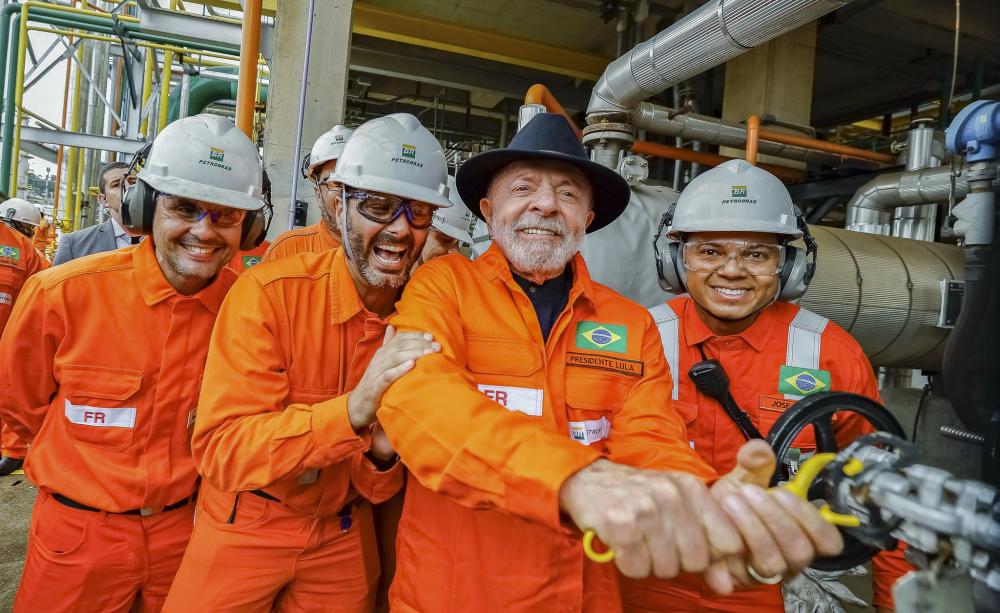
While Brazil positions itself as a climate leader on the global stage, the country continues to expand oil and gas exploration at an alarming rate. In June 2025, just ahead of hosting COP30, Brazil’s oil sector regulator, ANP, announced an auction for exploration rights to 172 oil and gas blocks, most of them offshore, including 47 blocks in the Amazon basin. This move underscores a growing tension between climate commitments and ongoing fossil fuel development. The state oil company, Petrobras, is already drilling in the Amazon’s equatorial margin, just 500km from the Amazon River. This is a highly sensitive ecosystem, home to coral reefs and mangroves. Oil spills have already been reported in the area.
According to Amazônia Real, planned exploration at the river’s mouth threatens to directly affect several Indigenous communities in the state of Amapá. Among those most at risk are the Karipuna, Palikur-Arukwayene, Galibi Marworno, and Galibi Kali’na peoples, who live across three officially recognised Indigenous territories: Uaçá, Juminã and Galibi. Together, these territories cover roughly 518,454 hectares and are home to around 13,000 people living in 56 villages, an area that relies intimately on the forest and waterways for survival.
Further west in the Amazon, Rosneft, the Russian state-owned oil and gas company, holds drilling rights to several blocks in the Solimões sedimentary basin near the Purus River, the route of the proposed BR-319 highway. This remote, largely intact part of the rainforest remains remarkably undisturbed, with ecosystems and local communities highly dependent on the surrounding land and rivers. Environmental concerns are pressing, as new roads and infrastructure could open these isolated areas to industrial activity, putting the forest under pressure from deforestation, habitat fragmentation and fossil fuel extraction in one of the most ecologically sensitive regions of the Amazon.
In 2025, Brazil moved further towards expanding fossil fuel production, with daily oil and gas output averaging just under 4.9 million barrels of oil equivalent, representing a 13.3 per cent increase from the previous year. Oil production alone accounts for about 3.7 million barrels per day, more than half of which is exported, linking Brazil’s expansion directly to global energy demand. The consequences are clear and urgent. Rising fossil fuel production drives emissions higher, intensifying climate impacts already visible through stronger storms, heatwaves, flooding, and the loss of ecosystems. Every delay in reducing fossil fuel reliance deepens the future risks, and the window to prevent the most catastrophic outcomes is rapidly closing.
Hydropower
Hydropower provides over 50 per cent of Brazil’s electricity and is often celebrated as a national achievement. Large dams are promoted as a source of clean energy, but the social and ecological costs tell a much harsher story. Across the Amazon basin, dams have flooded vast areas of forest, displaced thousands of Indigenous and riverside communities, and disrupted river flows that these communities rely on for food such as fish. They’ve triggered widespread deforestation and pollution and, ironically, contributed to greenhouse gas emissions, including methane and carbon dioxide. The arrival of workers to dam sites often drives rapid urbanisation, overwhelming local infrastructure and fuelling increases in violence, crime, and both mental and physical health problems. The effects leave deep, lasting scars on communities already struggling to survive.
A striking example is the Belo Monte hydroelectric complex in the state of Pará. Its construction forcibly displaced around 40,000 people, including riverside communities (ribeirinhos) and a quarter of Altamira’s population, relocating them to remote settlements on the city’s outskirts. Igor Cavallini Johansen, professor in the Demography Department of the State University of Campinas (UNICAMP), explained: “We must reckon with the persistent inequalities created by large hydropower dams – both in the Altamira region and across the Amazon basin. This legacy of uneven development, where local communities bear the environmental and social costs while distant urban centres reap the energy benefits, demands urgent redress.”
For Maria Francineide Ferreira dos Santos, Belo Monte took more than her home. It took her paradise. Living in Paratizinho, she spoke out against the destruction, only to be forced into the city. Yet she never stopped fighting. Today, she lives in Volta Grande do Xingu, not just as a survivor, but as a fierce protector of the river and its people. She said: “All the impacts we’ve had are irreparable. The first impact was the biggest crime that Belo Monte committed in the Xingu, the death of the fish and with the displacement of its people who were born and raised in this region, who lived on the islands, without rights, without being heard, without respect, having their houses ripped out and burned, violating our rights.
Another impact was seeing our people, who didn’t understand anything, lose their homes, being moved to the city where land had exorbitant prices, not giving us the conditions to survive. The government does what it wants. This has been a losing fight. No justice has been done.” Rodolfo Salm, ecologist, activist, and lecturer at the Federal University of Pará (UFPA), who lives in Altamira, described the project’s broader consequences: “The Belo Monte hydroelectric project stands as a clear example of environmental, social and economic failure. Far from bringing prosperity, the project has left the region economically weakened and environmentally damaged. Energy production at Belo Monte is unreliable, with the Xingu River running too low for most of the year, a flaw that was well understood before construction even began.”
Johansen highlighted the irreversible damage caused by hydropower dams in biodiversity hotspots like the Amazon: “First and foremost, these projects cause irreversible ecological damage – flooding vast areas of pristine rainforest, destroying unique habitats, and potentially driving species extinction. Equally troubling is the consistent pattern of human rights violations. Indigenous and traditional communities repeatedly face displacement without proper consultation or fair compensation, as starkly demonstrated by the Belo Monte project. The climate calculus for tropical dams has also proven flawed. Rather than being clean energy solutions, their reservoirs become methane factories as submerged vegetation decomposes. This challenges the very rationale for prioritising hydropower in rainforest regions. Perhaps the most crucial lesson is that we can no longer justify sacrificing the Amazon’s ecological and cultural wealth for questionable energy gains. The evidence clearly shows that in biodiversity hotspots, the costs of large dams nearly always outweigh the benefits – a reality that demands a fundamental shift in energy policy.” Despite this, proposals for new dams continue, often defended as essential for energy security and industrial development.
The legislative battlefield
Infrastructure and agribusiness expansion are growing in the Amazon and Cerrado regions alongside controversial legislative proposals. The controversial marco temporal (‘time frame’), a legal argument stating that Indigenous peoples are only entitled to lands they physically occupied on 5 October 1988, the date of Brazil’s constitution, has been fiercely debated. Indigenous organisations argue that this ignores forced displacement during the dictatorship and earlier periods. This law could undermine claims to territories not formally demarcated by 1988, opening them to exploitation. Indigenous territories remain among the most effective barriers to deforestation and degradation. Studies consistently show lower rates of forest loss inside demarcated Indigenous lands compared to surrounding areas.
Meanwhile, the ‘devastation bill’ (15.190/2025), which came into effect in February this year, introduces a self-licensing system. Companies can now obtain environmental permits by filling out online forms, bypassing environmental impact assessments. Previously, licensing could take from five to seven years, but now it may take only 12 months. This will ease large-scale infrastructure projects, such as the reconstruction of the BR-319 highway, mining, oil and gas, and dams. This bill also exempts from any licenses 13 categories of activity, ranging from road maintenance to agribusiness. Environmental law experts warn that weakening licensing at a time of expanding infrastructure could exacerbate deforestation and degradation, and increase pollution and social conflict. It’s essential to highlight that at least 40 per cent of Indigenous lands recognised by the Brazilian state will be exposed to industrial development, deforestation and illegal mining.
To make things worse, the Amazon Soy Moratorium (ASM), a 2006 that stopped companies from buying soya grown on newly cleared Amazon forest land, is now being weakened as Brazil’s main soya industry groups, the Brazilian Association of Vegetable Oil Industries (ABIOVE), and the National Association of Cereal Exporters (ANEC), step back from supporting it. These groups represent big global traders such as Cargill, Bunge, ADM, Louis Dreyfus and COFCO, whose buying decisions strongly influence whether forests are protected. Environmental groups warn that if the agreement falls apart, it could lead to more deforestation and violation of Indigenous rights, while some UK and European supermarkets, including Tesco, Sainsbury’s, Asda, Lidl, Audi, Ocado and Waitrose, are pushing companies to keep strict no-deforestation sourcing rules.
Collective action
Brazil finds itself at a decisive moment. On one side are promises to end illegal deforestation, to protect what remains of the forest, to act in the name of the climate. On the other are powerful interests pushing for more cattle, more soya, more mines, more roads cutting deep into ancient lands. The language of protection is loud, but the machinery of expansion is louder. What happens in Brasília won’t stay in Brasília. The smoke rising from the Amazon doesn’t stop at national borders: it becomes part of the same air we all breathe. The pressure to clear land doesn’t begin with a chainsaw: it begins with global appetite. The steak served in Shanghai, the soya fed to livestock in Europe, the minerals inside phones in California, the wood used to build luxury hotels in the US are all tied in some way to what happens in these forests. Loans signed in financial centres far from the forest edge. We may live thousands of miles away, but our economies and our consumption are closely connected to the same fabric. The forest isn’t falling in isolation. It’s being pulled apart by a global system that rewards extraction and calls it progress. Yet this story is not finished.
There are choices that could bend the arc away from destruction. Stronger protections on soya, real zero-deforestation commitments that mean something in practice, not just on paper. Infrastructure projects refused when they threaten intact forests, environmental laws enforced as if they matter, because they really do. Indigenous territories recognised and protected, not delayed or disputed. Time and again, the evidence shows that where Indigenous peoples have secure land rights, the forest stands. But even the best national policies won’t hold back a heating planet on their own. Unless fossil fuel use drops, sharply and fast, drought and fire will intensify, and the Amazon and the Cerrado will dry from the inside out. There is a tipping point beyond which the forest cannot recover, and once crossed, no pledge or summit will bring it back.
The Amazon and the Cerrado aren’t ‘resources’. They’re living, breathing systems, vast communities of water, soil, plants, animals and people, bound together in ways we’re only beginning to understand. They store carbon, yes, but they also hold stories, languages, medicines, songs. They regulate rain that feeds crops across South America, they cool a planet that’s running a fever. Protecting them requires more than polished speeches. It demands political courage, science that’s listened to, and a deep respect for the Indigenous and traditional communities who have defended these lands for generations, often at great personal risk. It requires confronting the uncomfortable truth that endless economic expansion on a finite planet is a contradiction.
If we fail, the consequences will be felt in failed harvests and rising food prices, in water shortages, in forced migration, in conflict over shrinking resources, in cultures and species lost forever. The unravelling of these ecosystems wouldn’t be Brazil’s tragedy alone. It would be a global reckoning. In the end, the Amazon and the Cerrado are more than policy debates or campaign slogans: they’re a measure of who we choose to be. Do we continue down a path where short-term profit outweighs human rights and ecological sanity? Or do we step into a different story, one shaped by cooperation, justice, and humility before the living world? The window is closing. The decisions made now will echo for generations. And one day, history will ask whether we defended the forest when we still had the chance, or whether we watched it burn and called it inevitable.
This Author
Monica Piccinini is a Brazilian-British journalist and a member of the National Union of Journalists. She is a regular contributor to The Ecologist and publishes on Substack, Medium and on her own platform, YourVoiz.org.