We have fallen in love with our kidnappers.
The annual COP climate change talks have collapsed without an agreement - for the first time since Copenhagen in 2009.
But is this global failure actually something of blessing in disguise?
The UN climate conference, the annual Conference of Parties, or COP, has collapsed in Antalya, Turkey (Türkiye), without any agreement.
Collapse
It ran two days over schedule, the longest COP on record, and became the first since Copenhagen in 2009 to miss its deadline and still fail to adopt a deal.
Copenhagen, at the time of its failure, was greeted with utter despair by the climate movement, who felt that a last, serious chance to halt the rush into an overheated world had been missed.
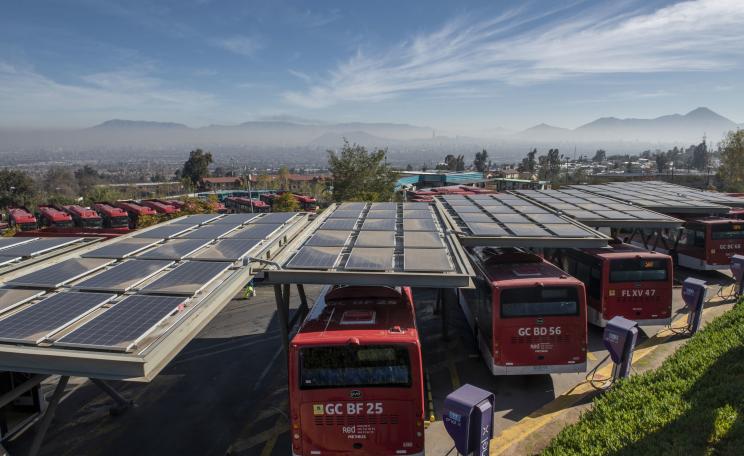
Seventeen years later, the world is very different. As we at the Macrodose podcast keep reporting, the technological shift over that period of time, bringing solar and wind – with backup power – from an esoteric sideshow to the cheapest electricity we can produce.
This is having real, material impacts on the progress of emissions, whatever happens to international agreements.
And climate diplomacy expert Michael Jacobs, writing in Inside Story, thinks the COP collapse may turn out to be the most useful thing a COP has done in years.
Honesty
In his account, the talks broke down over five words. Around 130 of the 196 parties wanted to keep the commitment made in Dubai in 2023 to "transition away from fossil fuels", but Saudi Arabia, Russia and other producers would not accept it.
At COP in Belém, Brazil, last year the disagreement had been papered over; in Antalya the majority refused to do that again.
Panama's environment minister, Juan Carlos Navarro, summed up their frustration: "We have fallen in love with our kidnappers."
For Jacobs, the value of the failure is that it has exposed the real divide, between the two-thirds of countries that support moving away from fossil fuels and the third that remain tied to oil and gas by their revenues and their foreign policy.
It is better, in his argument, to have some honesty about the system, rather than making verbal commitments and doing nothing - or worse.
Disappeared
Critics from the global South tell a slightly messier story. Third World Network, which reports on the talks from the developing countries' side, describes the final night as EU brinkmanship.
In its account, the EU threatened to walk out unless fossil fuels were named in the final text, and its own claim to have 130 supporters for its position fell apart once the African Group, the Arab Group and the Like-Minded Developing Countries made clear they had not signed up.
We have fallen in love with our kidnappers.
Most of those groups accepted the final text, with reservations, to keep the process alive. The EU, Britain, Canada and Norway were among those who sank it.
Poorer countries were willing to swallow a weaker text largely because of money.
The pledge to triple adaptation finance was left with no firm commitment, and a proposed $120 billion adaptation target disappeared from the draft.
Consensus
India reminded the closing session that the EU's own climate commissioner had declared talks on new climate finance dead before the summit even began.
Friends of the Earth and the Climate Action Network argue that rich countries spent the fortnight blocking progress on finance, then rejected the final text and presented themselves as the champions of ambition.
Ilan Kapoor of York University in Toronto, writing for Al Jazeera, argues that the system is working as designed.
Under the Paris Agreement, governments set their own targets and nothing stops them expanding fossil fuel production.
Consensus hands the reluctant a veto, and carbon capture offers a promise of future fixes in place of actually winding down extraction.
Adapting
In the same week, the leaders of the United States, Russia and China met in Shenzhen and promised to increase the production and supply of refined petroleum products.
Russia was in both rooms, blocking fossil fuel language in one and signing up to more oil in the other. Since the Iran war's oil shock, energy security has become the language of great-power diplomacy, and it pulls directly against everything the climate talks are trying to do.
Jacobs is right that the failure has made the politics clearer, but it has exposed two divides rather than one.
A rich-world majority that demands an end to fossil fuels while refusing to fund adaptation leaves the poorest countries choosing between oil revenue and debt.
Next year's summit goes to Addis Ababa, the capital of Ethiopia, where the question of financing – and especially that for adapting to our warming world – will be centre stage.
This Author
Dr James Meadway is an economist and a co-director of Verdant, a think tank for a just and green future.
This Image
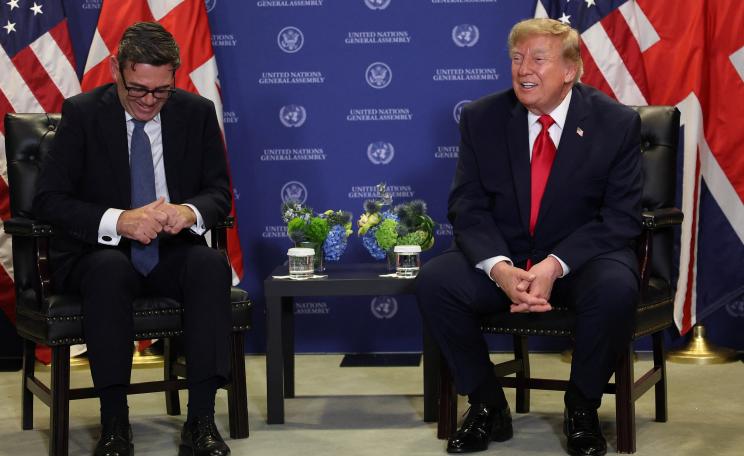
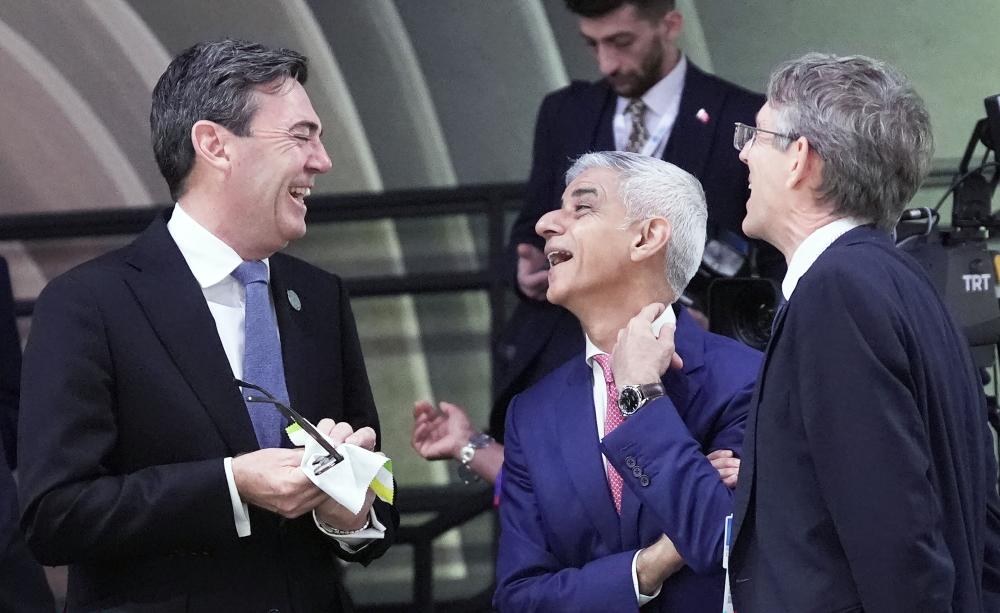
Andy Burnham, the British prime Minister, and Lord Sadiq Khan, the Mayor of London, attend the Cop31 UN Climate Change Conference on November 12, 2026 in Antalya, Turkey. The EU, Britain, Canada and Norway were among the countries that sank the final agreement, according to Third World Network. Photo by Stefan Rousseau - WPA Pool/Getty Images