Countries in South America are at risk of losing their indigenous bee populations due to the introduction of alien species to support government agricultural policy. Scientists warn urgent international action needs to be taken. CATHERINE HARTE reports
The Ecologist was an early adopter of systems theory after its launch in 1971. The way of thinking has come to influence a range of disciplines, from ecology to change management. In the first in a series of articles on systems theory, Dr ROBERT BIEL argues that its application can be effective in healing the rift between society and nature
After bailing out RBS to the tune of £45 billion following the 2008 financial crash, the government plans to relaunch the privatisation process in March 2019. This is ill-conceived argues ROB MACQUARIE and would be a wasted opportunity for meaningful change in the banking sector.
Lithium-ion batterie mean your smartphone is light enough to carry around in your pocket. But the raw materials are associated with child labour, forced labour, corruption and the exposure of communities to dust contaminated with toxic metals. We have a serious problem with our smartphones, argues KATHRYN HINDESS
The internationally important seabird colony of the Shiant Isles has officially been declared rat-free following a four year programme to eradicate an invasive species of rodent. CATHERINE HARTE reports on how wildlife experts now predict a brighter future for seabird populations on the islands.
The first country in the world write the 'rights of nature' or 'Pachamama' into its constitution is now being decimated by mining companies, argues JOHN SEED of The Rainforest Information Centre. The people of Ecuador, their government and the international community need to work together to preserve the country's unique ecosystems
Honeybee populations have been in decline for several years. Scientists now believe they've made a breakthrough in finding out why. For the first time they've identified the spread of diseases shared with other pollinator groups - such as the hoverfly - as a significant factor. CATHERINE HARTE reports
The government 25 years ago proposed the ambitious National Forest project, which now provides a home to 8.5 million trees and spans 200 square miles of the Midlands. And now the current government is looking to mirror this success with a new Northern Forest. At some twenty times its size, it's a bold but welcome move says JOHN EVERITT, chief executive of National Forest
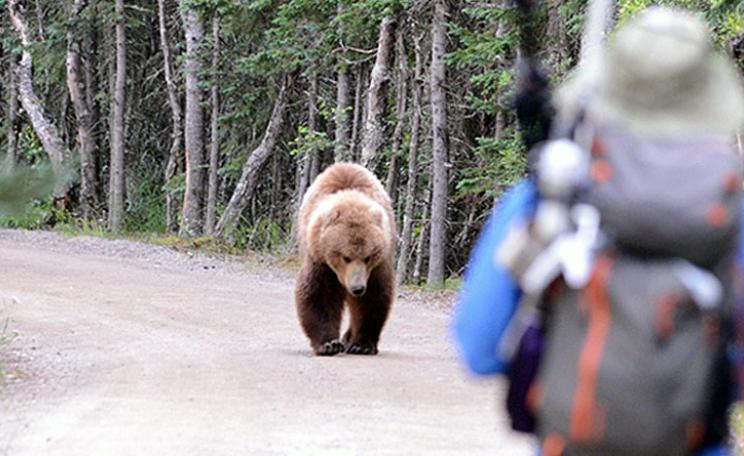
Scientists at the University of Alberta say the way to put the threatened grizzly bear on the road to recovery is to close routes that drive through their habitats. Their recent study was the first to make strong links between low grizzly bear populations in areas of high road density. CATHERINE HARTE reports
The famous and somewhat abstract Beatles lyric reflects on "a soap impression of his wife" being donated to the National Trust. But what the charity really needs is hard currency - and in the next few days its average membership fee is about to go up 50p. BRENDAN MONTAGUE reports
The Beast of the East has dumped snow all across Britain just as we should be looking ahead to Spring. The RSPB has today warned that birds will struggle to cope with the plummeting temperatures and urges people to give them a helping hand by providing food and shelter. CATHERINE HARTE reports
A new report recommends how best to protect and restore a valuable marine ecosystem in west Hawaii - home to vibrant coral reefs, fish, green sea turtles, spinner dolphins, whales, and manta rays. CATHERINE HARTE reports
The largest deposit to the Svalbard Global Seed Vault was made yesterday to mark ten years since the opening of the facility. There are now more than a million crop varieties in storage, reports CATHERINE HARTE
The potential of rewilding to halt biodiversity loss could be missed unless it's better understood by policy makers and is included in future environmental legislation, according to a study by the Zoological Society of London. CATHERINE HARTE reports