The UK government has showered £500 million of its aid budget on 'partnerships' with global corporations that are meant to help the poor, writes Kevin Smith. Surprise - an independent assessment has found that the only ones to benefit were the companies themselves. This ideologically-driven farce must stop now!
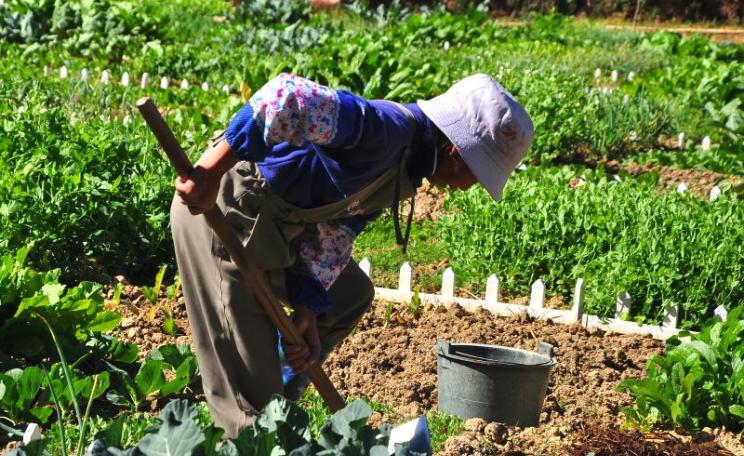
Sharing and saving seed is a crucial part of traditional farming all over Africa, writes Heidi Chow. Maybe that's why governments, backed by multinational seed companies, are imposing oppressive seed laws that attack the continent's main food producers and open the way to industrial agribusiness. But Ghana's women farmers are having none of it.
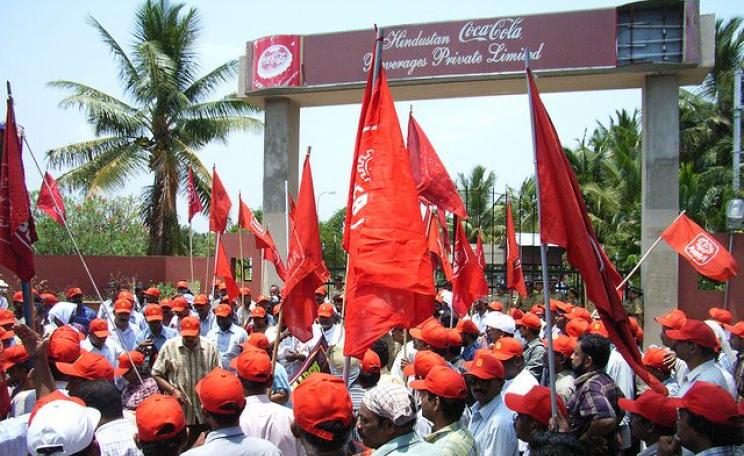
First the Pepsi-Cola bottling company in south India caused outrage by depleting groundwater. Next it was found to be operating without valid permits.Then as protests grew the company won a High Court order giving it police protection. Now locals are vowing to keep the plant shut for good.
Thanks to TTIP the corporate drive for free trade is once more facing critical public scrutiny, writes Alex Scrivener. But in the rush to oppose TTIP we mustn't lose sight of the context in which the deal is being negotiated - the hundreds of bilateral treaties that give corporations the right to sue in secret 'trade courts'.
Next to McDonalds, Burger King and KFC, Chipotle's Mexican Grill is a minnow, writes Jonathan Latham. But its decision to go GMO-free will ultimately compel all America's consumer-facing food brands to follow suit - because that's what their customers want. Could this be the beginning of the end of GMOs? That's what Monsanto, Dupont, Bayer and Syngenta fear.
Corporate lobbyists and their tame politicians love to present GMOs as being humanitarian in purpose, writes Colin Todhunter - as if they exist only to feed the starving millions. But if that's the case, why are they silent on genocidal land grabs, agrochemical poisonings and the destruction of efficient, productive smallholder farming?
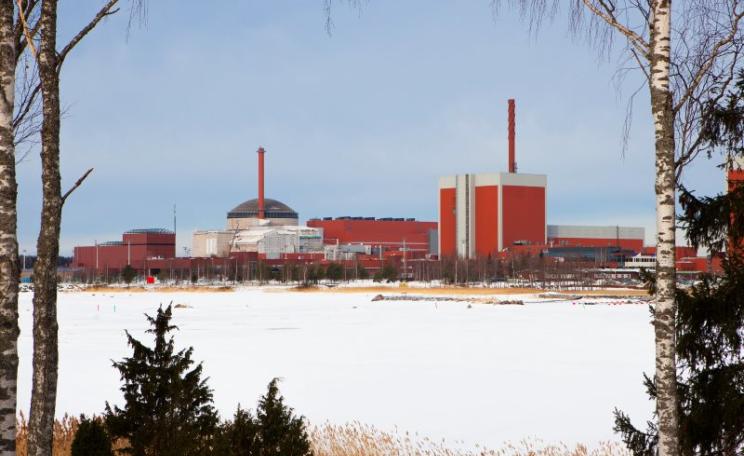
This week Finland cancelled its option for a second European Pressurised Reactor as the existing EPR project sinks into a abyss of cost over-runs, delays and litigation, writes Jim Green. It now looks like the EPR is a failed technology and its owner, French nuclear giant Areva, is fast running out of both money and orders as its 'hot prospects' evaporate.
The palm oil industry's repeated failure to keep its promises illustrates why global initiatives to achieve 'sustainable palm oil' must place communities centre-stage, writes FPP. Standard-setters like the RSPO must demand action, enforcement and accountability - not just lofty commitments that inspire hope, but rarely deliver.
This week the people spoke - and a tad under a quarter of them voted to put the Conservatives in power for another five years, writes Jonathan Cook. Was it an act of collective insanity? No, it's much worse than that. It's because our politics, media and ultimately our minds are controlled and manipulated by billionaires.
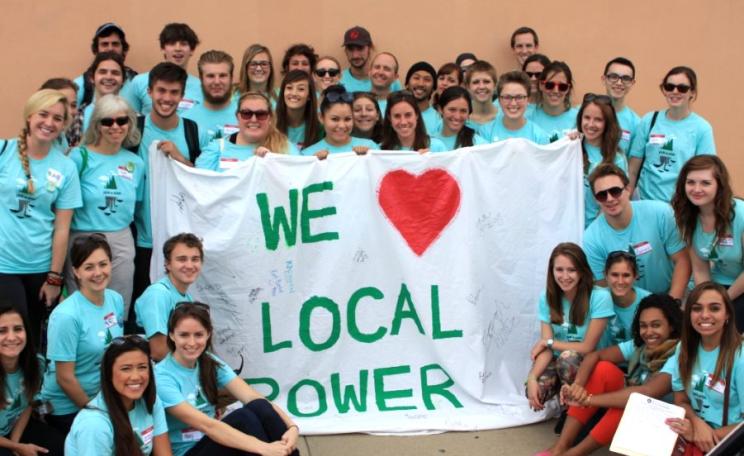
Fed up with being gouged by profit-driven corporations, let down by state neglect and under-investment, urban communities across the US are taking control of local services like public transport, energy, water, internet and telecoms, writes Max Holleran - bringing better service, lower prices and clean energy.
Industrial agriculture has become a prime driver of many of the world's most serious problems, writes Henrietta Moore: the loss of wild and farmed biodiversity, huge climate-changing emissions, and the entrapment of small farmers in ever-deepening cycles of poverty. But there is a solution: the widespread adoption of agroecological farming.
The Port of Seattle is violating its shoreline permit in allowing Shell to set up a 'home port' for its Arctic oil drilling fleet, according to Seattle officials. The finding could nix Shell's oil drilling plans for the 2015 season.
Tired of politicians' platitudes, defensive pledges and blinkered vision? As the General Election approaches, we desperately need to expand our discussion of 'the economy' beyond its usual narrow confines, writes David Powell. And if they won't get the ball rolling, he will ...
The oil industry and oil producers have a long history of market manipulation, writes Karl Grossman, and we see it going on right now with the low oil price that's squeezing fracking and getting America back onto gas-guzzling SUV's. But longer term, solar power is going to win out, and even Saudi Arabia knows it. Its game? To make out big, while the going's good.
Does Finland suffer from a nuclear death wish? So it seems, writes Ulla Klötzer. Its government responded to the world's two greatest nuclear disasters by ... ordering a new nuclear plant. And as the Olkiluoto nuclear project descended into face and litigation over a disputed €5 billion, they resolved to build two more. This time, supplied by Russia's nuclear weapon-maker Rosatom.
The risk of cancer from the world's top herbicide, glyphosate, is just the tip of the iceberg of health damage caused by exposure to pesticides and other toxic agrochemicals, writes Georgina Downs. It's time for governments to correct their scandalous failure to protect rural residents from the cocktails of poisons sprayed on crops.
Palestinian children as young as 11 work on Israeli farms in the occupied West Bank, an HRW investigation reveals. While the EU buys produce worth $300m a year from the illegal 'settlements', undocumented child labourers are exposed to pesticides, paid well below the minimum wage, enjoy no employment rights, and toil long hours in hot fields and greenhouses.
British taxpayers are forcing private health care and schooling onto many of the world's poorest countries including Nepal, Rwanda, Ethiopia and Mozambique, writes Nick Dearden - backing a huge neoliberal experiment whose only certain outcomes are high costs, low standards and massive corporate profits.
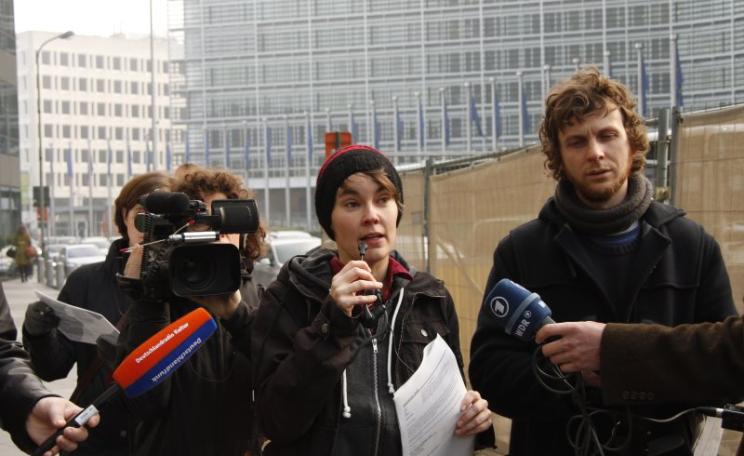
Brussels is a city of ruthless, well-resourced corporate lobbyists. And unlike ordinary EU citizens, they enjoy priviliged access to officials, negotiators and parliamentarians, and are used to getting their own way. That's a state of affairs that David Lundy & Olivier Hoedeman are determined to end with their 'citizens tours' of EU Lobbyland ...
Local campaigners fearful of water shortages and industrial pollution have forced state authorities to cancel an unpopular plan to allocate land for a Coca-Cola bottling plant in Tamil Nadu, India.
The GMO industry has legitimised itself via a vast network of lobbyists and the assiduous capture of the politicians, regulators and scientists that should be holding it to account, writes Colin Todhunter. But as the failure of the GM revolution and its disastrous impacts become ever more evident, the industry's legitimacy is fast eroding away.
Hopes of strengthening Britain’s energy security are often pinned on the fossil fuel industry says Vicente López-Ibor Mayor, as exemplified by the hysteria over the claimed 'discovery' of 100 billion barrels of oil beneath Gatwick airport. But the real long-term solution lies with abundant and ever cheaper decentralised renewables.
Private water companies have never been more aggressive in their sabotaging of efforts to 'make water public', writes Satoko Kishimoto, with legal threats and challenges launched under 'free trade' agreements. But as citizens worldwide reject corporate water profiteering, the trend of water re-municipalisation has gathered unstoppable momentum.
Now it's Argentina's turn to be sued in a secret 'free trade' court run by the World Bank, writes Nick Dearden. After bringing a profiteering water company that was missing all its service and quality targets back into public ownership, the country has been ordered to pay $405 million 'compensation'.