The UK government today announced that Heathrow, already the UK's busiest airport, is its 'preferred option' for a new runway in southeast England, writes Simon Evans. It's just too bad about the climate: the airport expansion implies that aviation emissions alone could take up half to two thirds of the UK's 'carbon budget' for the country to comply with its 1.5C Paris Agreement target.
Should it be Heathrow or Gatwick? The answer, writes Keith Taylor, is neither. For climate and pollution reasons alone the UK should be scaling back on aviation, and in any case projections of future demand have been monstrously exaggerated. Step 1: a 'frequent flyer' tax on the 15% of people who take 70% of flights.
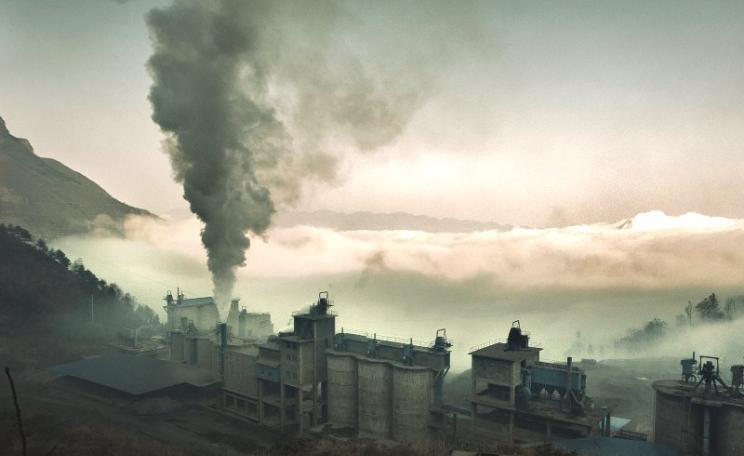
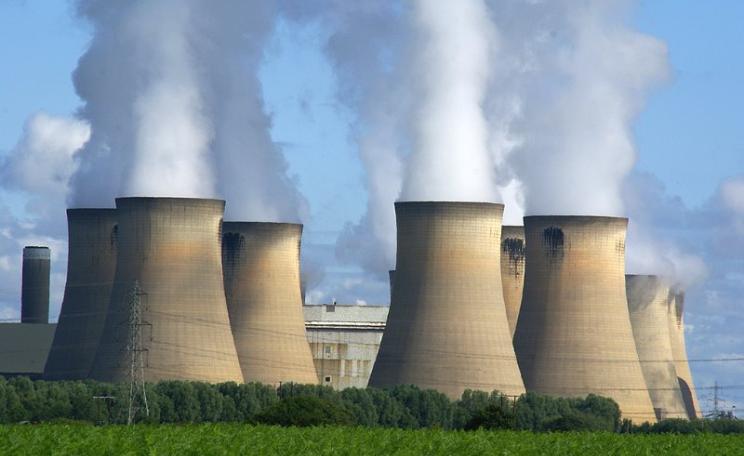
The Drax power station in North Yorkshire is among Britain's greatest greenhouse gas emitters, writes Almuth Ernsting. Not only is it burning some 6 million tonnes of coal every year, it is also burning its way through forests in the USA and other countries as it converts to biomass-fired units, rewarded by £1.3 million a day in subsidies. Join the #AxeDrax protest this weekend!
The 'Kigali Amendment' agreed this weekend to control HFC gases thousands of times more powerful than CO2 is the first major step in delivering the goals of the Paris agreement, writes Nigel Paul - and a second huge success for the Montreal Protocol, originally agreed to save the ozone layer from destruction by CFCs.
International investors worth a collective $24 trillion have warned car manufacturers that they must 'get with the beat' on climate change, writes Terry Macalister. If car makers fail to shift to low emission models, they will face a large-scale sell-off of their shares.
Using carbon markets to 'offset' industrial pollution is a failed experiment of 19 years duration, writes Chris Lang. But the International Civil Aviation Organization, which holds its General Assembly later this month in Montreal, is determined to offset its emissions - up 76% in 12 years - rather than constrain or reduce them.
The UK imports millions of tons of American wood pellets every year to be burned in power stations for 'climate friendly' electricity, writes Matt Williams. But his recent visit to the southern US showed him that this practice is devastating beautiful, natural forests rich in wildlife - while the UK government's own research shows that it's worse for the climate than the coal it replaces.
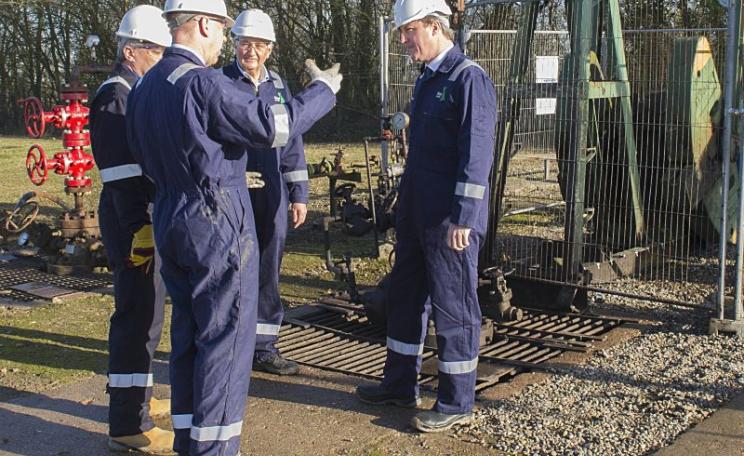
A long-awaited report by the UK Climate Change Committee has found that fracking could produce a 'substantial' emissions footprint if left unregulated, writes Victoria Seabrook, and force the government into more rapid emissions cuts in other areas of the economy to compensate.
In its decision to leave the EU, the UK is cutting itself off from one of the world's most effective systems of climate governance, write Tim Rayner & Brendan Moore. But we still have our own Climate Change Act and can lead the EU, if not as a member, at least by example - provided current and future Conservative Party leadership make their commitment clear, and implement their promises.
The UK's latest carbon budget was well-received, even by environmentalists, write Kate Scott & Marco Sakai. But that's only because they didn't look hard enough. The Paris Agreement hugely elevated ambition to achieve even a 2C temperature rise limit - and the UK's effort is nowhere near the mark.
The key study that justifies the Government's claim that fracking is a climate change 'solution' is based on serious scientific errors, writes Nick Cowern. Not only has the Government failed to correct them, but it is now delaying the publication of a new official report that would reveal the truth - that fracking is considerably worse for the world's climate than coal.
The UK government is all for fracking, writes Dr Robin Russell-Jones, but on climate grounds alone it should be banned. Evidence from the US shows that shale gas is twice as dirty as coal from a climate viewpoint due to 'fugitive emissions' of methane. That makes fracking incompatible with the UK's climate change commitments and the Paris Agreement - as the CCC may soon rule.
Slavery is a terrible thing for the world's estimated 36 million slaves, writes Kevin Bales. But it's also an environmental disaster. Many slaves are forced to work in destructive activities like clearing forests for mines, farms and plantations - making slave labour the world's third biggest 'country' in terms of CO2 emissions. It really is time to end slavery!
World leaders are meeting in New York today to sign the Paris Agreement on climate change, write Stephen Buranyi & Oliver Tickell. But the world just failed a big test of its commitment to the Paris targets by deadlocking on IMO proposals to limit emissions from international shipping.
American NGO advocating for young people's future environmental rights has won a first key legal battle in its fight to force the United States to avoid dangerous climate change by cutting its greenhouse gas emissions, writes Sophie Marjanac. If upheld on appeal in higher courts, the ruling has huge implications for us all.
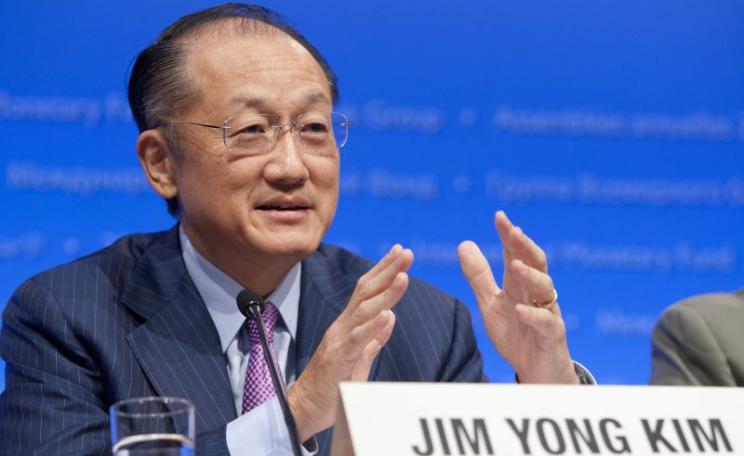
World Bank President Jim Kim talks a good talk on cutting support to fossil fuels. But what the bank does, writes Victoria Seabrook, is a whole other story. Not only is the WB Group still pouring money into the sector, but its funding doubled between 2011 and 2015.
This week, the International Maritime Organisation could act to curb fast-rising emissions from shipping under the Paris Agreement, write Barry Gardiner & Richard Burden. But there are growing fears that the UK government may seek to delay and obstruct vital progress.
BP's plans to explore for oil in the deep seas of the Great Australian Bight came under fire today at the company's Annual General Meeting in London, writes Graham Readfearn. The drilling would risk the ocean's rich marine wildlife - while blowing a massive hole in Australia's COP21 emissions targets.
Of all the impacts of climate change, one stands out for its inexorable menace, writes Pete Dolack: rising oceans. And it's not just for distant future generations to deal with: new scientific studies show that people alive today may face 6-9 metres of sea level rise flooding well over a million sq.km including many of the world's biggest cities. So where's the emergency response?
For the second year running CO2 emissions flatlined even as the global economy was growing at around 3%, writes Alex Kirby. But sharply rising temperatures show the need for further massive renewable energy deployment to actually bring emissions down.
The European Union's carbon market, the EU ETS, is meant to cut pollution in a cost effective way. But a new report shows that it handed the EU's biggest emitters a €24bn bumper payout over six years. Not so much the 'polluter pays' principle but the precise opposite: people pay, and polluters profit.
The US Constitution guarantees the rights of future generations, not just current ones, writes James E. Hansen. But those rights are being betrayed, knowingly and deliberately, by governments and politicians who are standing by and allowing climate change to wreak long term havoc on the planet. Today, this legal principle is being asserted in a Federal Court in Oregon.
Not only can the US save money on its electricity by moving to a 48-state power network based on high voltage DC power lines, writes Christopher Clack. It's also the key to increasing the penetration of renewables as the lowest cost energy source, with wind and solar delivering 55% of the nation's electricity demand - and a 78% reduction in carbon emissions.
Fund managers who neglect their 'duty of care' to clients by failing to put pressure on the companies they invest in to reduce their carbon emissions and prepare for a fossil-free future could be sued for their negligence, say respected experts in law, environment and finance.