Just imagine: gas for your cooking and heating made by composting home-grown British grass, writes Almuth Ernsting. What's not to like? Well, it would need almost all the UK's grassland to match our gas demand, leaving cows and sheep to starve or forcing them into sheds to eat foreign-grown feeds. And methane leakage could easily wipe out any climate benefit.
Ultimately the UK Government's new industrial strategy has the potential to use government investment to shift the country in the right direction for the environment. But we need more than just ‘public money,' we need the public's money too writes JOE WARE
The UK's abject failure to implement national and EU laws on energy efficiency in buildings is a disgrace, writes Andrew Warren, and one that is costing us dear in higher fuel bills now and for long into the future, while adding to air pollution and climate change.
In its second consultation for the EDF's planned Sizewell C nuclear power station there's a strange omission, writes Peter Lux: that the plant would use 1,600 m3 of mains water a day, adding to stresses on important local wetlands like RSPB's Minsmere reserve. The omission is not just strange - it's also illegal and could make the entire exercise invalid.
President Trump comes into office determined to discard huge swathes of his predecessor's legacy on day one, writes Mark Barteau. But he will struggle to undo Obama's clean energy regulations. It's not just that they are legally robust, it's also that energy markets in the US and the wider world have shifted firmly, and irreversibly, towards efficiency and renewables. Sorry, Mr Trump.
The nuclear industry faces an uncertain future as the reactor building boom is struck by unexpected costs, serious technical problems, and long, expensive delays, writes Paul Brown. Meanwhile renewables like wind and solar are offering investors an enviable combination of falling cost, low risk, fast build times, predictable returns and minimal long term liabilities.
A legacy of lies and covered-up accidents has left nuclear energy with a serious credibility gap, writes Paul Brown. But poor safety is only the beginning of the industry's problems. With 'new improved' reactor designs all running late and way over budget, any nuclear revival can only be sustained at massive, unaffordable taxpayer cost.
Fracking has no social licence in the UK, will contribute little to the economy, will have a huge adverse impact on other sectors, will be a disaster to climate and the environment, and won't even improve energy security, write Peter Strachan and Alex Russell. Do we really want to see 16,000 or more shale gas wells drilled in the British countryside? Let's FraXit now!
The Lifetime Study of Japanese A-bomb survivors is a monumental fraud which deliberately excludes controls for being 'too healthy', writes Chris Busby. Put them back in, and you find that low levels of radiation cause over 100 times more cancer than they are 'meant' to, creating a silent global massacre of the innocent. Under the Euratom treaty, the entire nuclear industry must now be 'rejustified'.
What kind of companies is the European Central Bank supporting by buying €46 billion of their bonds under its QE programme? Research by Corporate Europe Observatory reveals a strong preference for oil, gas, tar sands, dirty power generation, armaments, aviation, airports, car makers, motorways, luxury goods and gambling. Our sustainable be future be damned!
While the government is cutting vital public expenditure across the board there's one industry for which no costs are too great, writes Martin Forwood. The price of an 'evaporator' at the Sellafield nuclear complex is escalating towards £1 billion, while billions more of taxpayer finance are being lined up to finance cooling systems, power lines and transport links for the adjacent Moorside new-build nuclear power plant.
President-elect Trump's widely anticipated appointment of Exxon's CEO Rex Tillerson as new US Secretary of State is creating a government of, by, and for the oil and gas industry, writes Steve Horn.
Nuclear giant EDF could be heading towards bankruptcy, writes Paul Brown, as it faces a perfect storm of under-estimated costs for decommissioning, waste disposal and Hinkley C. Meanwhile income from power sales is lagging behind costs, and 17 of its reactors are off-line for safety tests. Yet French and UK governments are turning a blind eye to the looming financial crisis.
To secure the clean energy transformation for the long term we must get the good news out there, writes Natalie Bennett - driving forward a popular movement for warm, comfortable homes, affordable fuel bills, community renewables and thriving local economies.
Next April the UK government proposes to increase taxes on self-consumed solar electricity installations on schools, offices, warehouses and factories by a whopping 6-8 times, write the STA and undersigned. This inexplicable move, which threatens a once thriving solar industry already on its knees, must be abandoned.
The Valbona Valley in northern Albania faces destruction from the planned works, despite being within the protected area of the Valbona National Park. LAURA BRIGGS reports
The International Energy Agency's latest World Energy Outlook is calling for increased investment in new oil and gas, writes Oliver Tickell, while minimising the fast-growing and ever lower-cost contribution to world energy supply of renewables like wind and solar.
Article 6 of the Euratom Treaty provides for nuclear industry practices to be rejustified in the light of new scientific evidence of harm to health, writes Chris Busby. We now have that evidence, in particular that radiation exposure even at very low levels causes severe and heritable genetic damage to people and entire families. Now, we must use the law to protect our health from radiation!
Three new reactors are planned for the Moorside site next to Europe's biggest nuclear complex at Sellafield, writes Peter Roche, with a combined capacity of 3.8GW. But a new report for Radiation Free Lakeland shows that the chosen AP1000 reactor design, for all its claimed 'advanced passive' safety features, is not fit for purpose - and should be rejected as unsafe by UK regulators.
The Trump Presidency may not be the climate disaster that many fear, writes Joe Ware. The transition to clean energy is increasingly driven by technology and economics, not politics. it was Obama's 'all of the above' energy policy that enabled the fracking revolution. And pro-fossil fuel measures instituted by Trump will now galvanise massive domestic and international opposition.
Trump has pledged to ditch the Paris Agreement, scrap Obama's clean power plan, get coal miners back to work, and 'make America great again' on the back of a huge expansion of fossil fuel production, writes Mark Barteau. But he will run into serious difficulties, not least states going their own renewable ways, cheap natural gas, and weak international demand for coal.
The intimate connection between landscape and religion is at the center of Native American societies, writes Rosalyn R. LaPier, and a key reason why thousands of Native Americans and Indigenous peoples from around the world have traveled to the windswept prairies of North Dakota. There is no excuse for the ignorance and disrespect of corporations, and government.
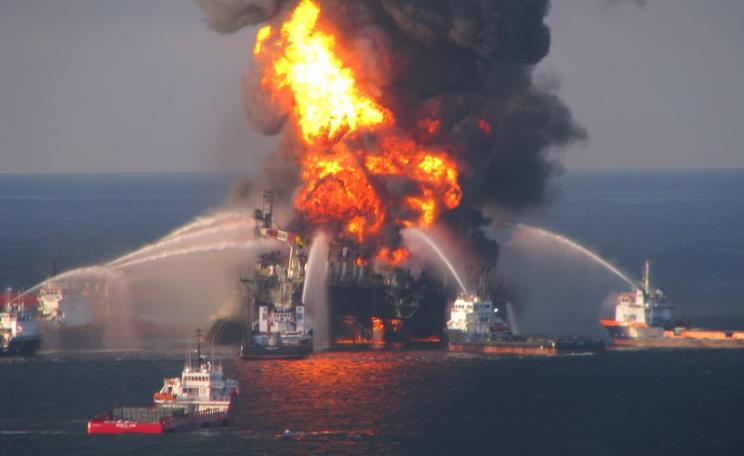
We must coldly examine how inherently dangerous systems work and how they fail, writes Earl Boebert, and then apply those insights to reducing the risk of failure through systems design, regulation, and education. That examination must apply the most modern and effective analytic tools. To do otherwise is to almost guarantee a repeat catastrophe.
Renewable energy may play a huge part in helping to achieve the ambitions of the Paris Agreement, now in force and under discussion at COP22 climate talks in Marrakesh, writes Steffen Böhm. But it can never be the whole story, and nor does it relieve the need for deeper changes in how the world works.