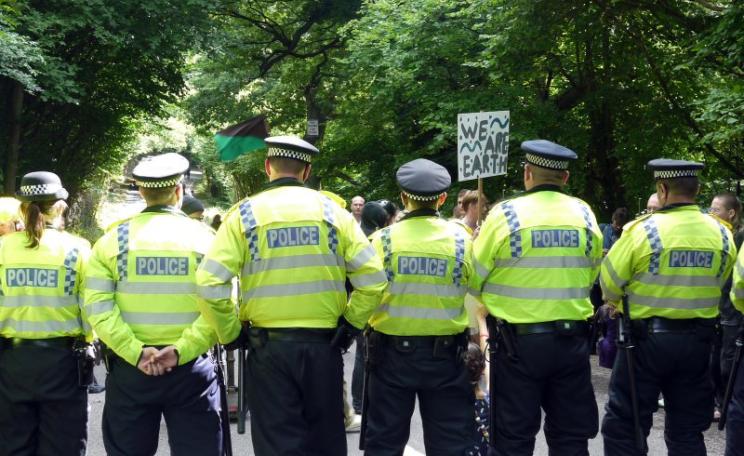
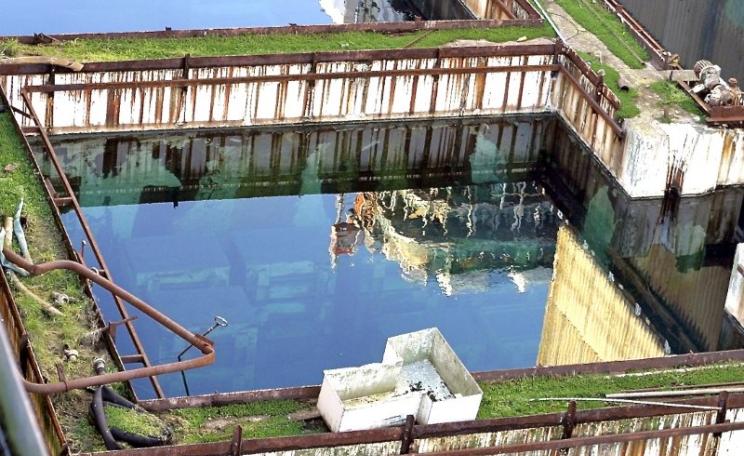
As the nuclear juggernaut drives the destruction of the Cumbria coast at Sellafield with nuclear waste dumps, boreholes, dredged-out rivers and a massive new nuclear power station, Marianne Birkby recalls ancient legends of the Woodwose, the Green Man, and the Beast of Beckermet. Can these forces of untamed nature be called upon to combat the growing nuclear menace?
Contrary to arguments advanced in a recent Ecologist article, the biomass industry supplying the Drax power station in North Yorkshire is a model of sustainability, writes Nina Skorupska, and delivers genuine, substantial emissions reductions compared to coal.
The Drax power station in North Yorkshire is among Britain's greatest greenhouse gas emitters, writes Almuth Ernsting. Not only is it burning some 6 million tonnes of coal every year, it is also burning its way through forests in the USA and other countries as it converts to biomass-fired units, rewarded by £1.3 million a day in subsidies. Join the #AxeDrax protest this weekend!
Seaweed is known for its culinary uses and has seen a renaissance in past years thanks to its health claims and a distinctive taste - but there are more ecological benefits to seaweed that currently remain untapped.
An international summit exploring real and imagined narratives of art, energy and consumption for a troubled planet, taking place at Schumacher College, Dartington, on 11th November 2016
Full credit to Peru for creating the Sierra del Divisor national park in one of the most precious areas of the Amazon, write Lewis Evans & Sarina Kidd. But not for leaving it open to oil drilling, risking the future of uncontacted indigenous tribes that depend on their pristine rainforest environment to survive.
Sajid Javid's decision to allow shale gas wells to go ahead in Lancashire marks a new phase in the industry's development, writes Michael Bradshaw. But it will also trigger a new phase of organisation, protest and resistance among impacted communities. Cuadrilla, IGas and other companies may just find the 'social licence' they thought they didn't need is essential, after all.
'Fast breeder' reactors are promoted by nuclear enthusiasts as the clean, green energy technology of the future, writes Jim Green. But all the evidence tells us they are a catastrophic failure: complex, expensive, unreliable and accident-prone. Is Japan's decision to abandon its Monju reactor the latest nail in the coffin of a dead technology? Or the final stake through its rotten heart?
A new study shows that the cost of 'integrating' the variable power output of large scale solar PV is surprisingly affordable, writes Oliver Tickell, at just a few pence per unit. Costs will fall further as more wind power, batteries and ever-cheaper solar drive the transition to a 100% renewable power system.
Off-grid renewable energy is key to achieving the global goal of 100% electricity access by 2030, writes Adnan Z. Amin, and to achieving the emissions reductions enshrined in the Paris Agreement. Thankfully, a confluence of factors - including rapid cost declines and impressive technology innovations - are making this goal more achievable than ever, and investment in the sector is taking off.
London Mayor Sadiq Khan promised electors that he would be the 'Greenest Mayor ever'. In spite of his apparent support for a new Thames road crossing in East London and an expanded London City Airport, he still has huge opportunities to make good his pledge. And Green Assembly Members will be working hard to make sure he does.
A new report finds that 28 nuclear reactors, 18 of them EDF plants in France and one at Sizewell in the UK, are at risk of failure 'including core meltdown' due to flaws in safety-critical components in reactor vessels and steam generators, writes Oliver Tickell. The news comes as EDF credit is downgraded due to a growing cash flow crisis and its decision to press on with Hinkley C.
With its choice of Hinkley Point C - a £100 billion nuclear boondoggle - its enthusiastic support for expensive and environmentally harmful fracking, and its relentless attack on renewable energy, the UK government's energy policy is both morally and economically bankrupt, write Peter Strachan & Alex Russell. It must urgently reconsider this folly and embrace the renewable energy transition.
There's a simple way to induce us to make good environmental choices, writes Cass R. Sunstein: make them the default setting. Whether it's selecting double sided photocopies or renewable electricity tariffs, defining easily-overridden 'green defaults' is by far the most efficacious means to influence consumer choices for the environment and the planet.
The clean-up after the February 2014 explosion at the world's only deep underground repository for nuclear waste in New Mexico, USA, is massively over budget, writes Jim Green - and full operations won't resume until at least 2021. The fundamental cause of the problems: high level radioactive waste, poor regulation, rigid deadlines and corporate profit make a dangerous mix.
The French and the Chinese may be celebrating the UK's decision to press ahead with the Hinkley C 'nuclear white elephant', writes Oliver Tickell. But the deal is a disaster for the UK, committing us to overpriced power for decades to come, and to a dirty, dangerous, insecure dead end technology. Just one silver lining: major economic, legal and technical hurdles mean it still may never be built.
A new energy market analysis shows the average cost of electricity from renewables is already lower than from fossil fuels, writes Alex Kirby. And as renewables eat deeper into the 'market share' of coal and gas power plants, so the entire economics of fossil fuel power generation will unravel.
The European Investment Bank is set to offer €3 billion to build the 3,500 km Southern Gas Corridor pipeline from the South Caucasus to the EU, writes Terry Macalister - even though it would undermine EU climate change targets and exacerbate serious human rights abuses.
First we heat up cold water for baths, showers and washing, write Jan Hofman & Laura Piccinini. Then we chuck all that precious heat down the plughole. So how about recycling our waste heat to warm up water on its way to the boiler or hot water tank, cutting bills and emissions? Or on a larger scale, use the sewage from entire communities as a free energy source for heat pumps?
Under my leadership Britain will act to protect the future of our planet, with social justice at the heart of our environment policies, writes Jeremy Corbyn. Meeting our Paris climate targets will be the starting point for a green industrial revolution that will deliver clean, affordable energy to all, create millions of new jobs, and establish the export industries of the future.
Theresa May's first big decision as PM was to duck out of a signing ceremony and review the Hinkley C nuclear project. But she will soon have to reach her decision. In this open letter Scientists for Global Responsibility set out six compelling reasons for her to let the whole monstrous white elephant go.
A new opinion poll of 2,000 adults reveals more than two thirds of the public support renewable energy schemes where projects are undertaken at a community level and local people receive financial benefit. The support even extends to wind and solar farms close to people's homes.
Last night's BBC Panorama programme did a good job at lifting the lid on Britain's ongoing nuclear disaster that is Sellafield, writes Ian Fairlie. But it failed to expose the full scandal of the UK's 'reprocessing' of spent fuel into 140 tonnes of plutonium, enough to build 20,000 nuclear bombs - while leaving £100s of billions of maintenance and cleanup costs to future generations.
As the G20 meet in China this weekend, it's time for governments to finally get tough on the world's tax dodgers, write Dipti Bhatnagar & Sam Cossar-Gilbert. The missing tax revenues would be able to finance a 100% renewable electricity system covering half the planet by 2030 - a major step in raising living standards and tackling climate change.