The latest text of the Paris Agreement on climate change published today sets 1.5C as its 'long term temperature goal', half a degree lower than previously agreed. It's a big victory for poor 'climate vulnerable' countries - and a blow for Saudi Arabia.
Native wild beavers in their natural range are meant to receive stringent protection under European and Scottish law, writes Louise Ramsay. But farmers have declared 'open season' on the small but growing population, shooting them at will, while the Scottish Government and its wildlife agency look the other way.
Climate change denier Lord Monckton was making waves at COP21 in Paris yesterday, write Brendan Montague & Kyla Mandel, with his claims of a 'synergy of interests' between 'malevolent scientists' and power-mad politicians intent on setting up a fascist / communist world government under the guise of a climate treaty.
David Cameron's vision of striking terrorists in Syria betrays a pitiful lack of vision. We must bomb terrorists and their accomplices wherever they are lurking: Saudi Arabia, Turkey, Molenbeek, the Parisian banlieue, even Leeds and Finsbury Park if we have to.
Little publicised government plans to 'reform' court costs are intended to foreclose access to environmental justice for all but the wealthiest individuals and communities, writes Paul Mobbs. Meanwhile cuts to agencies and regulators will make it ever harder for them to do their jobs - making public participation in environmental protection all the more important.
As protestors gather to oppose yet another illegal war in the Middle East, Colin Todhunter asks why David Cameron is so keen to bomb. Of course there's access to oil and routes for gas pipelines, but beyond that, it's about re-entrenching militarism into our national culture, and re-asserting the dominance of capital over people.
The surprise removal of tax benefits for investors in community renewable energy schemes - effective from Monday - is unlawful and must be reversed, states a legal letter to the Treasury. But meanwhile, investments in the sector have hit record levels, with two days still to go.
The 'Autumn Statement' delivered with such aplomb by the Chancellor is yet another attack on the UK's sustainable future, write David Lowry & Oliver Tickell - cutting energy efficiency funds just as tens of thousands are set to die of cold this winter, betting £250m on pointless nuclear research, and raiding the renewables budget to fund subsidies to nuclear power and fossil fuels.
Amid the human suffering caused by terror attacks, it's easy to forget the economic dimensions, writes Paul Mobbs. But after the 13th November attacks in Paris defence industry shares soared, while a host of connected think tanks, lobbyists and politicians dominated the media in pushing for military responses. Is it time to expose and confront the terror industrial complex?
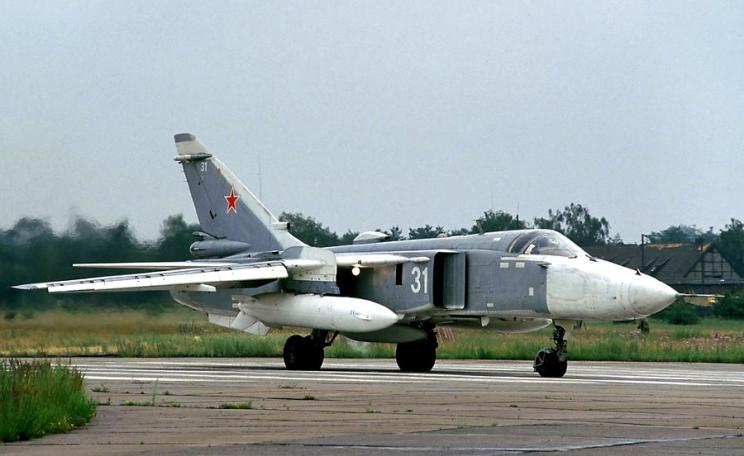
Turkey's shooting down of a Russian jet near its border with Syria has just revealed the real nature of the war, writes Oliver Tickell, and sharply illustrates the dangers of getting involved in a conflict that is driven more by a battle of two gas pipelines than a clash of ideologies. The message for the UK - keep well out! Or if we are serious about crushing IS, best join in with Assad and Putin.
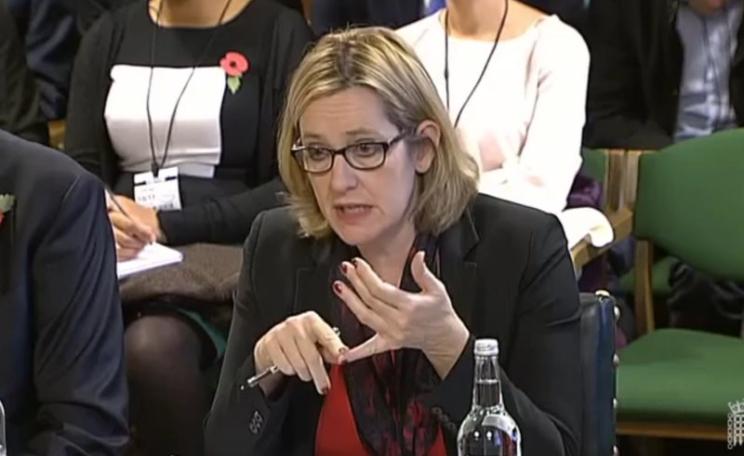
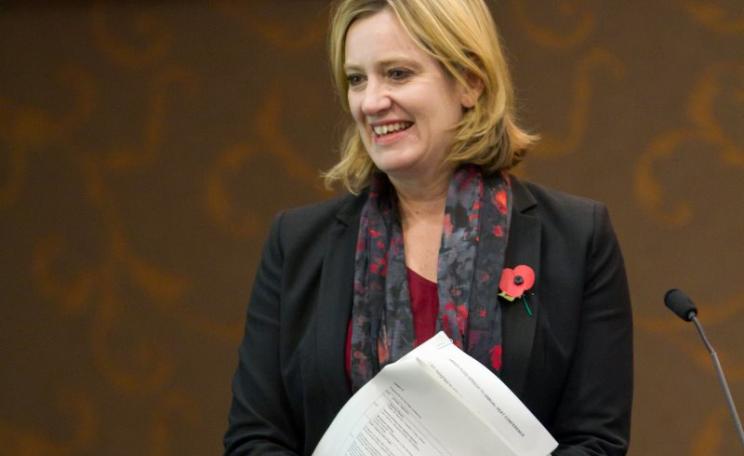
Amber Rudd's speech today exposes her total failure to assemble a coherent energy strategy, writes Oliver Tickell. It reveals the increasingly certain failure to meet EU renewable energy targets, proposes a new tax on wind and solar generation, and leaves the country facing the real prospect of lights going out in the next decade. The one hard policy? To maximise oil and gas recovery.
Right wing Labour MPs have launched a full-scale coup against Jeremy Corbyn, and against the members of the party they represent, writes Oliver Tickell. Their plan is simple - backed by mainstream media, to discredit him so utterly that even his supporters turn against him - and elect a new 'heir to Blair' leader.
After a massive oil find in Syria's Golan Heights, occupied by Israel since 1967, Israel is asking President Obama to recognise its annexation of the territory, writes Jonathan Cook. To consolidate its hold, plans are afoot to quadruple Israeli settler numbers to 100,000.
The government's policies on climate, energy and industry are not merely stupid, writes Alan Simpson. The repeated cuts to renewables and energy efficiency, combined with limitless largesse to fossil fuels, has reached the point of insanity in the face of the UK's legal obligations and the growing climate crisis. Only we, the people, can end the madness.
As Aung San Suu Kyi's National League for Democracy takes a strong lead in Burma's elections, Nafeez Ahmed warns that the military will remain the real power in the land. And as UK, EU, US, Chinese and Gulf state energy corporations compete to exploit Burma's hydrocarbons, don't expect them to denounce the ongoing genocide of the Rohingya, and anyone else in the way of their oil and gas infrastructure.
Despite strong public support for wind and solar power in an official survey published today, the UK's likely failure to meet its EU renewable energy target, and an impending legal challenge, Energy Secretary Amber Rudd today told MPs she would not be reversing recent cuts, writes Oliver Tickell.
A letter from Energy Secretary Amber Rudd leaked to The Ecologist shows that she misled Parliament by promising the UK was 'on course' to deliver on its renewable energy targets - when in fact there is a delivery shortfall in 2020 of almost 25%. Her plan to fill the gap relies on more biofuels, buying in green power and 'credits' from abroad - everything but wind and solar.
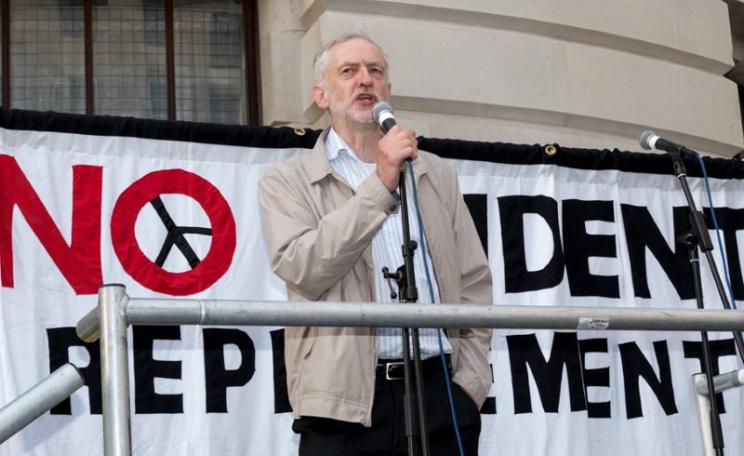
Jeremy Corbyn came under attack yesterday for his refusal to countenance the use of nuclear weapons, writes Commander Robert Green. But his stance is honourable and both legally and strategically correct - especially with his opposition to renewing the Trident nuclear missile system.
The fox-hunting season is now well under way, writes Toni Shephard. But with Cameron still pressing for a Commons vote on wrecking amendments to the Hunting Act, political controversy shows no sign of subsiding. Take, for example, the proposed lifting of the limit on number of dogs that can be used for the 'observation or study' of a wild mammal.
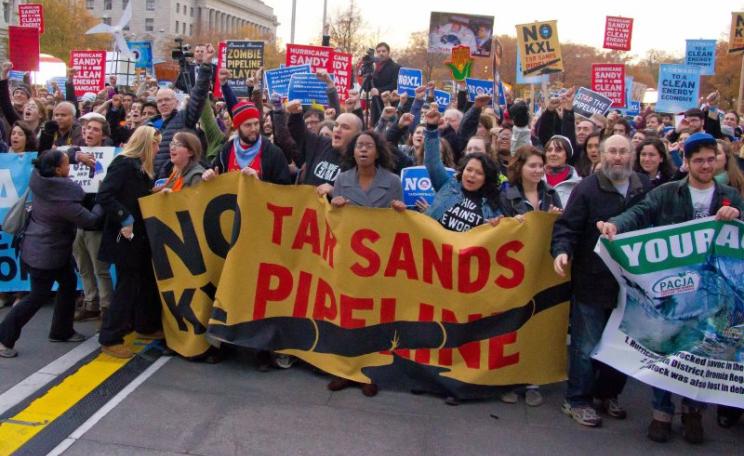
US President Obama today refused to permit the 1,200 mile Keystone XL pipeline from Alberta to Nebraska that would have carried 800,000 barrels of oil a year of tarsands oil into the US, citing climate concerns.
The UK's nuclear deal with China makes no sense, writes Jeffrey Henderson - unless you factor in the simultaneous agreement to forge lucrative links between UK and Chinese financial markets. Lucrative, that is, for the City institutions whose interests the British government so assiduously represents. As for the rest of us, our task is simple: to bear the ever-growing cost.
Economics is much more than the study of money, writes Paul Mobbs. It is a belief system, and in its 'mainstream' incarnation, one that serves a very useful purpose - for those that reap the benefits. But as Brian Davey shows in his insightful new book, it's letting the rest of us down: failing to deliver human wellbeing, while driving ecological calamity.
The EU's Nature Directives have been doing a great job of protecting Europe's most threatened species and habitats and building up wildlife numbers, writes Catherine Weller, and the UK knows it. But now it's the Directives themselves that are under threat. Other EU countries are standing up for them - but not the UK.
Political groups in the European Parliament have sent a clear message to the Commission on its GMO proposals, writes Molly Scott Cato - we are not willing to have piecemeal and vaguely-defined 'opt-out' legislation forced down our throats.