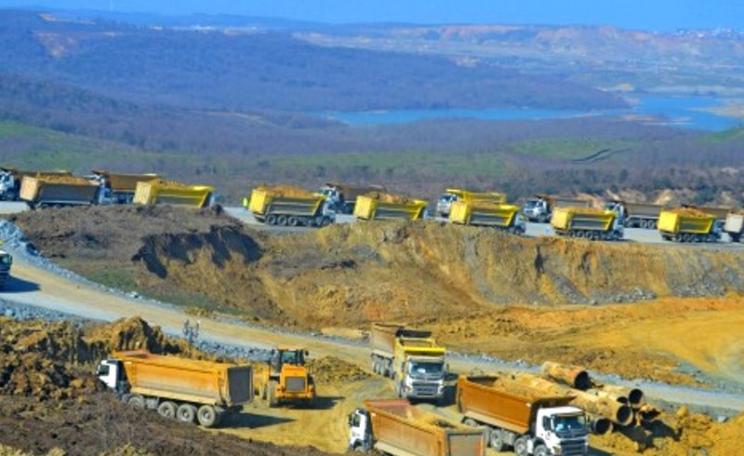
Destruction of 76 square kilometres of forests, lakes and farmland is proceeding north of Istanbul for the city's third airport, writes Rosie Bridger. But the gigantic ‘aerotropolis' project is vigorously opposed by local farmers and residents, and an urban resistance fighting other ecologically destructive megaprojects across the beautiful, biodiverse region - both on the streets and in the courts.
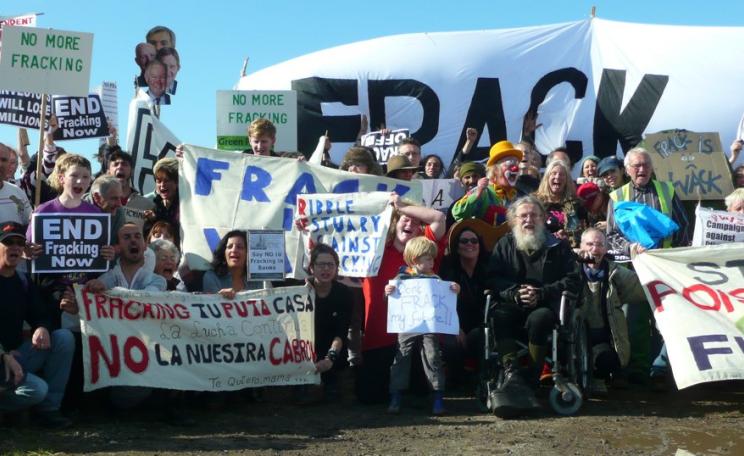
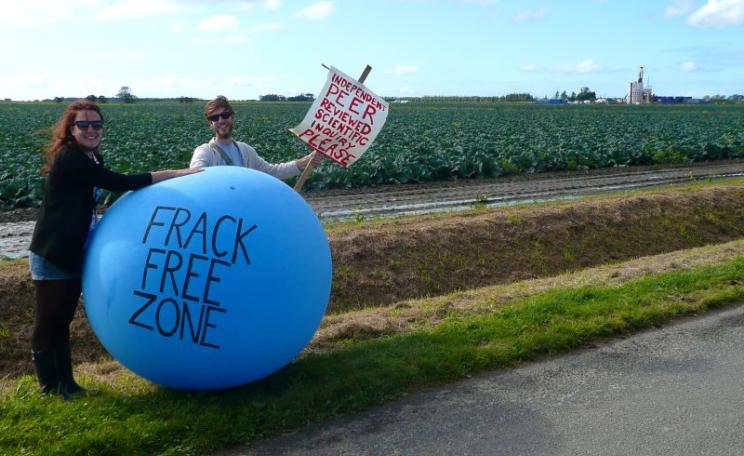
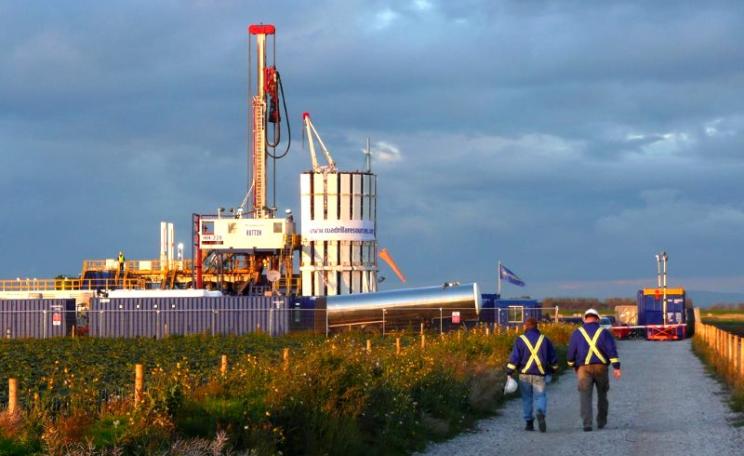
Shale gas company Cuadrilla will appeal Lancashire's decision to refuse permission to frack, write Kyla Mandel & Ben Lucas. The planning battle will last well into 2016, as campaigners prepare to fight all the way.
The climate change discourse rarely looks beyond 2100, writes Pete Dolack. Maybe that's because even at current levels of CO2, we are committed to thousands of years of warming and polar ice melt that will raise sea levels by at least six meters. However the implacable imperatives of capitalism mean there's little prospect of change for a long time to come.
The damage caused by fracking to people, communities and the wider environment will be put under the legal spotlight in public hearings in the US and the UK, write Damien Short & Tom Kerns. While the 'ruling' that emerges will be non-binding, it will provide an authoritative, expert dossier of fact and argument for real legal actions to follow.
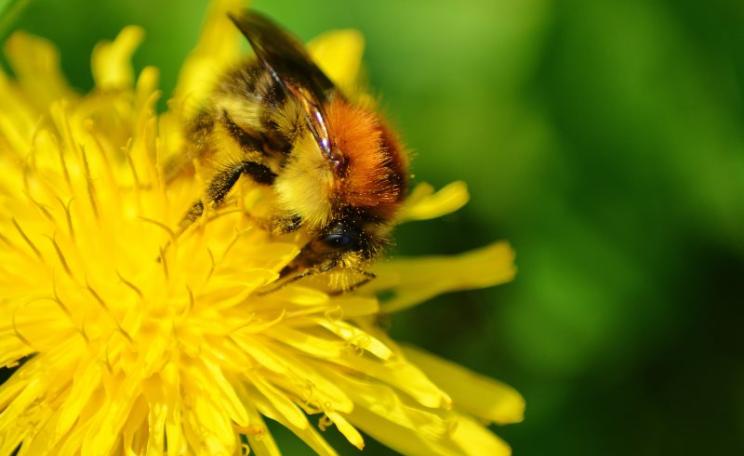
An Emergency Ordinance comes into force in Germany today that extends the EU's ban on 'neonic' pesticides to protect bees. But the UK's farming minister Liz Truss has relaxed the ban to allow farmers to use neonics on 30,000 hectares of oilseed rape.
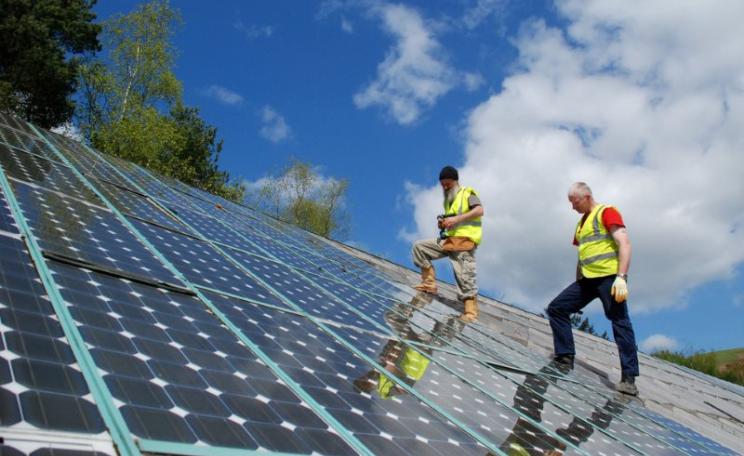
The UK government has announced massive cuts in support for solar roofs and farms that appear designed to undermine investor confidence just as the technology is on track to be subsidy-free by 2020.
USAID, the UK's DFID and the World Bank are among those covering up for severe human rights abuses against indigenous peoples in Ethiopia's Omo Valley, inflicted during forced evictions to make way for huge plantations, writes Will Hurd. Their complicity in these crimes appears to be rooted in US and UK partnership with Ethiopia in the 'war on terror'.
A new study led by RSPB shows that more than half of Britain's most precious upland moors are suffering from burning - widely used to increase the numbers of red grouse available for recreational shooting.
The anti-fracking movement scored a great victory when Lancashire councillors refused planning permission for two fracking wells, writes Damien Short. But dig deeper and the triumph was all the greater, as it overcame not just Cuadrilla, but a morass of pro-fracking bias and legal and scientific misrepresentation from those meant to be providing impartial advice.
Energy secretary Amber Rudd promised 'a new solar revolution' for the UK, writes Kyla Mandel. But now the industry is braced for a massive round of cuts that could kill off the sector, just as it's on course to be the UK's first subsidy-free renewable power source in 2020.
Last week David Cameron backed down over his plans to bring back fox hunting by 'fatally amending' the Hunting Act, writes Dominic Dyer. The way he spun it, it was all about SNP interference in English law, but the real problem was opposition within the Conservative Party, which increasingly sees blood sports as a barbaric relic that alienates voters of all persuasions.
Just as the chemical industry and its shills once proclaimed the safety of DDT, they are doing the same today with the herbicide glyphosate which has penetrated throughout the food chain, writes Evaggelos Vallianatos. And once again it is a toxic lie that threatens species, ecosystems and people. It's time to demand a new kind of agriculture, and a future free of all pesticides.
A welt of anti-wildlife 'riders' have been attached to essential legislation in the US Congress, writes Caeleigh MacNeil - aimed at stripping protection from endangered species and so grease the skids for industrial exploitation of wildlands against the wishes of the great majority of Americans.
Breaking a clear pre-election promise, the government will allow fracking to take place in the UK's most precious wildlife sites and in vital groundwater source areas, writes Adam Vaughan.
After 20 years of oil spills, deforestation, waste dumping and ill health, farmers and indigenous people in the the Ecuadorian Amazon have been fighting the Chevron-Texaco corporation. But despite its three times conviction and a $9.5 billion damages award to the victims, the oil giant looks no closer to making good its damage.
Three in one: EFSA set to re-licence glyphosate based on secret industry studies; Monsanto moves against IARC verdict that glyphosate is a 'probable carcinogen'; and new science shows that FDA principle of GMO 'substantial equivalence' is bunk.
The 1865 Treaty of Point Elliot is clear, writes Jan Hasselman: the Lummi Nation has the right to fish, hunt and gather in their accustomed places in perpetuity - and they can't do that if a gigantic coal terminal is built in the Salish Sea's most productive waters. First Nations' treaty rights are now central to protecting the Pacific Northwest from destruction by fossil fuels.
A second legal challenge to the UK's proposed Hinkley C nuclear power plant in Somerset was launched this morning by ten renewable and municipal power suppliers in Germany and Austria, citing grave distortions to European energy markets.
A new biosafety report for the Norwegian Environment Agency says GM foods cannot be declared safe due to major gaps in the science, writes Nafeez Ahmed. Indeed research clearly indicates harmful and adverse impacts to both health and environment. But Monsanto insists that GMOs are just as safe as, or even safer than, conventional crops.
The Council of Monte Maiz, a small town in Argentina surrounded by intensive GMO soya farms, has enacted a law that forbids the spraying and storage of pesticides and other agrochemicals after severe health impacts were detected.
Under the guise of a land-titling project, Peru is breaking up and privatising indigenous common lands across the Andean highlands, writes Arthur Scarritt. While the law provides for communal titling and democratic votes, in practice there's no provision for communities to exercise these rights, and the many are being dispossessed in favour of large, 'efficient' market-oriented producers.
Shell's Arctic drilling expedition is literally on the rocks after its icebreaker MSV Fennica suffering a metre-long gash to its hull below the waterline, writes Zachary Davies Boren.
Dissent over the massive USA-EU TTIP trade deal is focused on the 'corporate courts' allowing investors to sue national governments, But largely neglected has been the equally serious issue of 'Regulatory Cooperation' - which would impose a huge burden of 'red tape' on EU and US legislatures, while forcing down health, safety, social and environmental standards.
The EU's nature directives provide effective protection for endangered species and habitats, writes Leonardo Mazza. So why the Commission's decision to 'review' and 'modernise' the laws? With its commitment to business-friendly deregulation and uninterest in the environment, the aim is surely to gut them - something only EU-wide citizens' mobilisation can prevent.