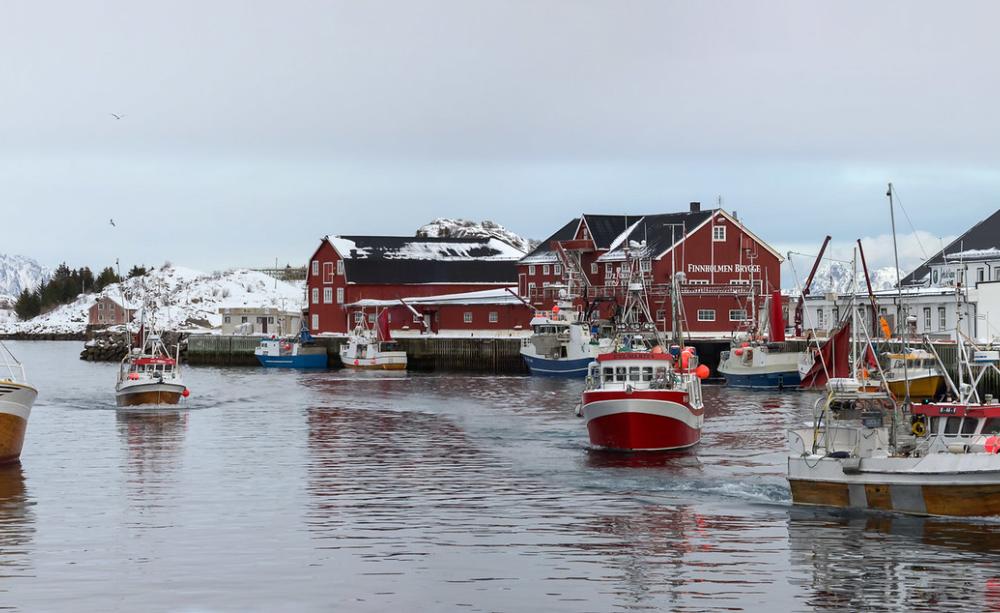
Nutritious wild fish must first and foremost help feed local populations and secure the livelihoods of the region’s fishers, women fish processors, and traders.
The UN body responsible for food security quietly dropped hunger protections important to vulnerable nations in the first global rulebook for aquaculture, an investigation by the non-profit Changing Markets Foundation has found.
The move benefitted salmon giant Norway, which helped fund and lead the rule-setting process. The revelations could spark anger today at a global meeting on sustainable fishing and food security hosted by the agency, the UN Food and Agriculture Organization (FAO), in Rome.
READ: THE CATCH
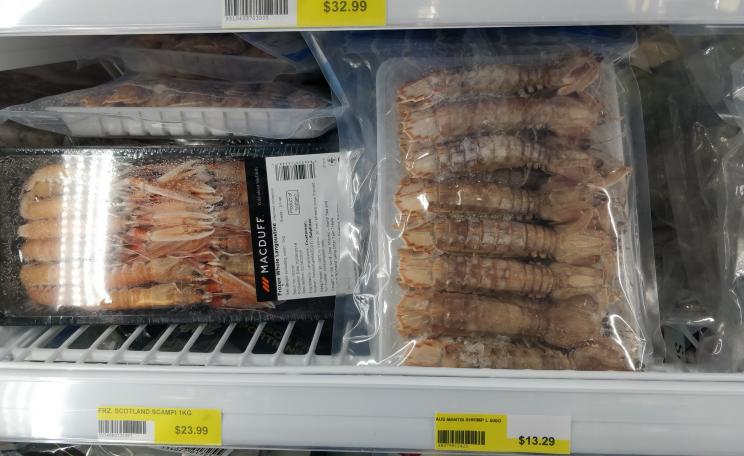
Nearly a billion people in Asia, Africa and the Pacific depend on local fishing grounds that are under growing pressure to supply feed for salmon, sea bream, sea bass, tuna and shrimp, seafood that is mostly sold to richer nations or classes.
Ambiguity
Tara Ganesh, the lead investigator, and the senior campaigner at Changing Markets’ said: “Feeding fish to fish instead of people is a recipe for disaster in vulnerable nations.
"The FAO was founded to prevent this but instead left the door open to growth without guardrails. That should be corrected through updated guidelines, starting in Rome next week.”
Nutritious wild fish must first and foremost help feed local populations and secure the livelihoods of the region’s fishers, women fish processors, and traders.
Muhammed Oyinlola, an aquatic ecologist at the University of British Columbia, said: “Our modelling shows that the outcome of the FAO’s growth target is not inevitable.
"There are two pathways that put huge demand on fisheries already under pressure, but there is a more diversified option that favours growth in lower-input species and still achieves the roadmap’s ambition.
"This is why the detail on how a 75 per cent increase in aquaculture could be met is so crucial - ambiguity leaves the door open to growth that threatens communities, fisheries and the climate.”
Aquaculture
Gaoussou Gueye, president of the African Confederation of Professional Artisanal Fisheries Organisations (CAOPA) said: “For West Africa’s artisanal fishing communities, the issue is simple.
"Nutritious wild fish, particularly small pelagics, must first and foremost help feed local populations and secure the livelihoods of the region’s fishers, women fish processors, and traders. Aquaculture development cannot come at the cost of increased competition for these resources.
“We therefore call on the FAO and governments to prioritise forms of aquaculture that genuinely complement artisanal fishing and do not rely on whole wild fish, suitable for human consumption, as feed, and to fully involve artisanal fishing organisations in the decisions that will shape the future of our aquatic food systems.”
Fish farms convert nutritious and affordable fish into a smaller quantity of generally higher-priced seafood, while losing nutrients in the process, raising “serious human rights concerns.”
Feed-intensive aquaculture has boomed in recent decades, aided by aggressive ongoing salmon and shrimp marketing campaigns.
Sustainable
Aquaculture’s explosive growth pushed the FAO to draft the world’s first rulebook so farming “grows sustainably”.
An early draft called on governments to ensure fish farming does not "adversely affect the nutritional needs of people for whom fish is critical to a nutritious diet" with the benefits "equitably distributed”, while a later draft required that any conflicts be studied.
Those safeguards were removed from the final text, published in 2025, and replaced with clauses that mirror industry demands and include a flexible call to “minimize negative impacts on livelihoods, food security and the environment”, the Changing Markets investigation revealed.
The world’s biggest salmon producer, Norway, was influential in the rule setting process, the investigation documents.
From the start, Norway openly promoted salmon farming as a model of sustainable aquaculture, despite it being one of the most reliant on wild fish for feed.
Security
Norway funded foundational scoping work for the rule-setting process and a Norwegian, who now heads the industry ministry, successively chaired early formative meetings.
Industry figures enjoyed high level FAO access during the rule-setting and industry concepts and buzzwords are present in the final rules.
An FAO study conclusion to strongly prioritise West Africa fish for local consumption and limit extraction for fish feed was softened through a workshop funded by Norway and co-organised with industrial fish feed processors, a rebalancing of priorities mirrored in the final guidelines.
Norway features as a prominent sponsor of an FAO fisheries event starting in Rome tomorrow titled “Securing sustainable small-scale fisheries in the context of food security and poverty eradication”. FAO fisheries experts will follow up, holding their first full meeting since the rules were published in Rome.
Feed-intensive
The rules are not binding but will influence how a separate FAO target to nearly double aquaculture output by 2040 is met, through shaping legislation, donor priorities, development programmes, certification schemes and best practice.
Besides driving hunger and irregular migration, poorly regulated growth risks spreading more disease, parasites, invasive species, algal blooms and seabed "dead zones", the FAO and outside experts say.
The FAO failed to model the impacts of its growth target. New figures by leading fisheries scientists at the University of British Columbia, produced in partnership with Changing Markets, plug this gap. If current trends continue, up to 34.6 million tonnes of wild fish will be caught and fed to farmed fish every year by 2040.
Should growth occur in more feed-intensive species such as salmon and shrimp, that number climbs to 41.4 million tonnes annually, roughly half of the entire 2020 wild catch, the researchers conclude.
Drifting
Extra demand for wild fish would fall on already stressed and increasingly climate-vulnerable fisheries. More than a third of assessed marine fish stocks are fished at unsustainable levels.
A third modelled pathway offers a relatively low impact way forward, relying more on shellfish and fish species needing little to no fish feed.
The FAO growth target would be achieved and demand for wild fish could reduce by up to 15.5 million tonnes annually, or around a 17 per cent fall compared to 2020 levels.
The FAO was founded to promote common welfare, “raising levels of nutrition and standards of living... and ensuring humanity's freedom from hunger”. In recent years the agency has repeatedly been accused of having close ties to industry and drifting from its founding mission.
This Author
Brendan Montague is an editor of The Ecologist. This article is based on a press release from the Changing Markets Foundation.