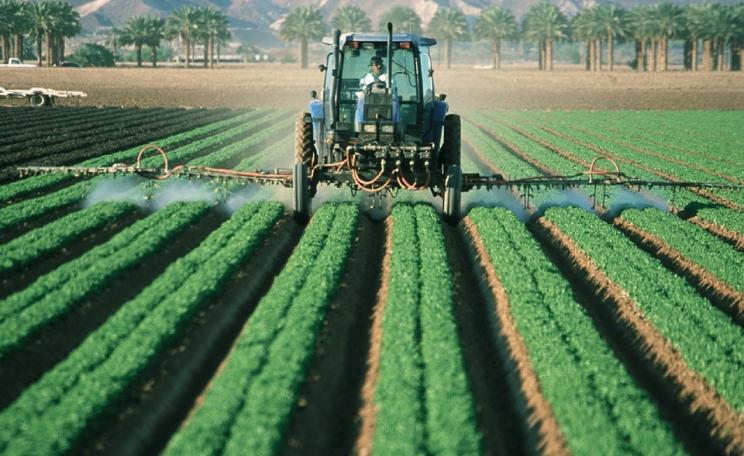
Among Cuba's greatest achievements is its organic farming sector, writes Miguel Altieri. Developed in the 1990s following the collapse of the Soviet Union, small agroecological farms now employ 300,000 campesinos and provide an abundance of healthy fruit and vegetables. But now US food and agribusiness corporations are eyeing up a multi-billion dollar business opportunity.
BASF are to halve their GM research and development and reduce the time spent on developing these technologies, writes Peter Melchett. Given the many problems that GM agriculture is facing, and that new non-GE technologies offer such valuable benefits as increased crop yields, does BASF's announcement spell the beginning of the end of GM crops?
Conventional agriculture has made an enemy of evolution as pests and diseases develop resistance to biocides and over-bred hybrids succumb to them, writes Salvatore Ceccarelli. But there is another way - for farmers to participate in breeding seed lines that are continuously adapting to their environment, with ever improving yields, flavour, pest-resistance, and other sought-after qualities.
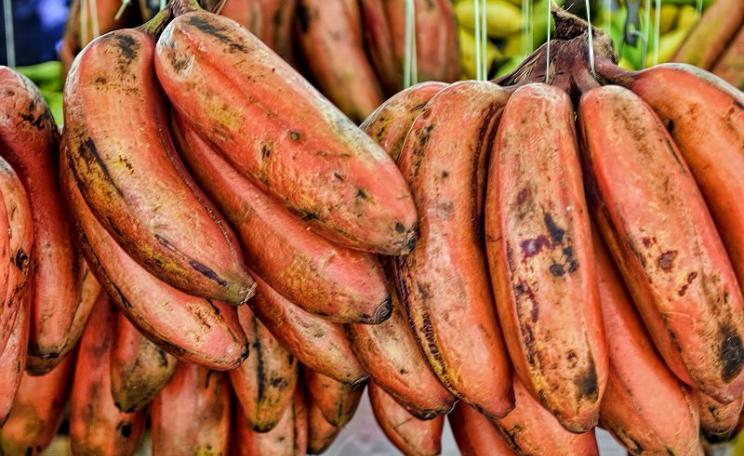
The Gates Foundation has received a 57,000 strong petition denouncing its support for a 'biopirated' GM banana program in Africa, and calling on it to suspend a feeding trial on US students, writes Vanessa Amaral-Rogers. The banana threatens both the health of the students, say campaigners, and the future of African agriculture.
The global use of glyphosate has rocketed over the last decade thanks to the introduction of 'Roundup ready' GM crops, writes Vanessa Amaral-Rogers. But since IARC classified the chemical a 'probable carcinogen', and with the spread of resistant superweeds, the tide may finally be turning.
Paris has been awash with hype about 'CO2 recycling' and 'carbon neutral' or even 'carbon negative' technologies based on burning millions of trees, writes Rachel Smolker. But the alchemical notion that waste carbon can be spun into corporate gold is hitting serious reality checks. It's time to ditch the fantasies and progress the real solutions: like caring for land, soils, forests and grasslands.
As delegates prepare for the Bonn climate talks, India is being struck by extreme heat with a long-delayed monsoon season and a death toll of thousands, writes Liz Hanna. If this is an indicator of the warming world to come, it's giving us all the reasons we could possibly want to act decisively before it's too late.
You can help save our bees with 'citizen science', writes Paul de Zylva - recording those you spot in your local area to help build up a long term picture of their changing numbers. Today we publish an identification guide to the 'top ten' bees, so you can get started right away. But be quick - the Great British Bee Count 2015 ends on Sunday.
A palm oil company's 'forest conservation' programme in Indonesia has ended up being a second land grab, writes Marcus Colchester - seizing resources from local communities' control.
A simple agricultural technique could release farmers from the grip of agrochemical corporations. With no patents, no royalties and no licensing fees, this system just benefits the farmers.
An Indonesian palm oil company has been convicted of large-scale burning of protected swamp forest in Aceh - home to some of Sumatra's last orangutans.
A Complaint has been filed today with the European Commission to prevent import of the 'super-GM' SmartStax maize developed by Monsanto and Dow AgroSciences.
This month in Sumatra, Indonesia, 1,500 armed men demolished four indigenous villages and displaced inhabitants who were not willing to surrender their land to a palm oil company.
Lone Droscher Nielsen addressed the Oxfordshire village of Wootton about the deforestation that is pushing orangutans towards extinction - all driven by the world's hunger for palm oil. Andy Morgan was deeply moved ...