The UK imports millions of tons of American wood pellets every year to be burned in power stations for 'climate friendly' electricity, writes Matt Williams. But his recent visit to the southern US showed him that this practice is devastating beautiful, natural forests rich in wildlife - while the UK government's own research shows that it's worse for the climate than the coal it replaces.
The cost of offshore wind power in the North Sea is 30% lower than that of new nuclear, writes Kieran Cooke - helped along by low oil and steel prices, reduced maintenance and mass production. By 2030 the sector is expected to supply 7% of Europe's electricity.
The idea that our profit-oriented, growth-driven economic system can deliver a sustainable society is a beguiling one, write Lili Fuhr, Thomas Fatheuer & Barbara Unmüßig. But it is doomed to failure. The changes we need are in the first place political, and will be driven by a new democratic will to put people and planet before money.
The industries that have primarily caused, are still causing, and will continue to cause climate change, are the recipients of huge subsidies. Whilst the marginalised are promised a paltry and relatively insignificant amount to mitigate and adapt to the consequences of the problem they did little or nothing to bring about. That's just plain wrong says MARK KERNAN
A once quiet voice, hard to distinguish against the grinding machine of intensive food production is now shouting above the noise. LAURA BRIGGS reports on the growing interest in grass as a feeding option
The winning Brexit slogan was 'Take Back Control', write Victor Anderson & Rupert Read. But leaving the EU will only increase the power of corrupt elites unless the UK reforms its own democratic governance, combats the excessive power of corporations, upholds the rights of all its citizens, decentralises its economy, and forges progressive alliances with its European partners.
Last week a massive 350 hectare open cast coal mine at Druridge Bay took an important step towards winning panning permission. This got Chris Goodall wondering: what if the land was turned into a solar farm instead? His surprise discovery: solar power on England's south coast already costs no more than coal - and it's only getting cheaper.
Illegal logging accounts for between 30 and 50 percent of wood harvested in Romania. Horatio Morpurgo reports on the destruction of Romanian forests, post communism, and looks at what we can learn.
Renewable electricity is already undermining the big energy utilities' business model, writes Emma Howard, breaking their monopoly and bringing down energy bills. But with the unfolding battery revolution, it's going to reach a whole new level as wind and solar powered families and communities become ever more self-sufficient, leaving utilities high and dry.
Campaigners fear that the abolition of DECC, the department of energy and climate change, indicates that climate will take a low priority in Theresa May's policy agenda. Meanwhile the pro-fracking, pro-nuclear Andrea Leadsom is in charge of environment department Defra.
A new dam on indigenous lands at Muskrat Falls will join a network of other hydroelectric projects spanning Innu territories across the Labrador-Quebec peninsula, writes Colin Samson. The continual violation of Innu rights imperils their ability to enjoy healthy and sustainable lifestyles - and follows in a long tradition of indigenous land theft in North America.
Africa is being opened up like a tin of sardines to a new wave of resource extraction, writes Colin Todhunter. Masked under the soubriquets of 'investment', 'growth' and 'free trade', a handful of vast global corporations are systematically plundering the continent's mineral wealth and leaving desolation in their wake, backed to the hilt by that ever-faithful servant of capital - the UK government.
Rice-eating peoples are very particular about the rice their diets are based on, writes Ted Greiner. And they have a strong aversion to yellow grains, the tell-tale sign of the deadly mould that causes beri-beri disease. That alone makes GMO 'Golden Rice' a non starter; 107 Nobel Laureates had better start eating their words.
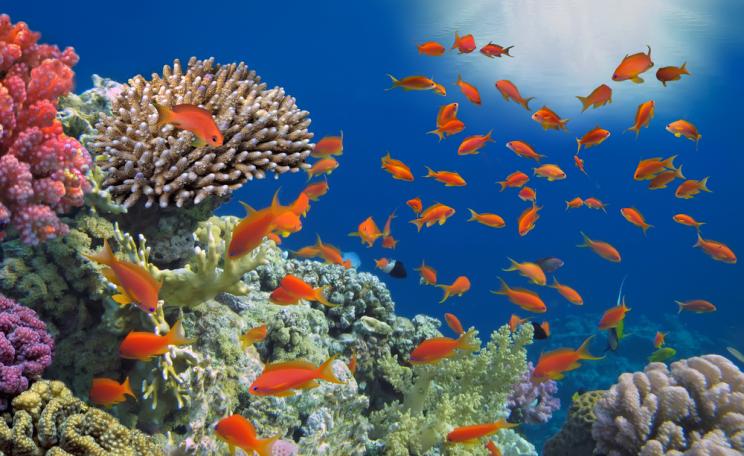
The Great Barrier Reef was a key talking point in the run up to Australia's federal election as politicians promised billions to improve water quality, whilst talking down coral bleaching and report rigging. Ecologist writer, Maxine Newlands, reports...
The Royal Society purports to provide unbiased information on scientific issues, writes Steven Druker. But its new guide on GMOs is grossly misleading - glossing over the many dangers inherent to the technology with bland, unsupported re-assurances. The Society must end its partisan promotion of GMOs or risk its reputation as Britain's premier scientific body.