The ground of Koh Ach Sehmwas was shaking every night because of the vibrations released by the illegal trawling fleet.
The turquoise waters of the Gulf of Thailand hold a unique and diverse array of marine life ranging from dugongs to leatherback turtles and whale sharks.
The stunning variety of fish and crustaceans of the thousands of coral reefs have attracted divers from all over the world for decades. But it has attracted a far more dangerous thing as well. The fishing industry.
READ: THE CATCH
Near the island of Koh Ach Seh, off the coast of southern Cambodia, the overfishing was omnipresent, according to Laura Rehm of Marine Conservation Cambodia (MCC). The trawls ravaged the seabed, wiping out seagrass meadows, catching juvenile whale sharks and everything else that was in the way.
Entangle
"The ground of Koh Ach Seh, where MCC is based, was shaking every night because of the intensity of the vibrations released by the illegal trawling fleet", Rehm told The Ecologist.
Together with the Cambodian authorities and local communities, MCC managed to establish the first Marine Fisheries Management Area (MFMA) in the country around the Kep Archipelago.
But just declaring the area protected wasn't enough to deter fishing in the area, so firmer measures had to be implemented.
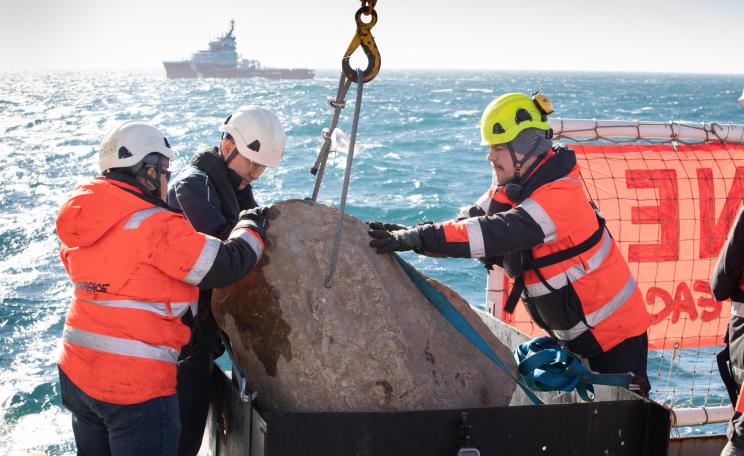
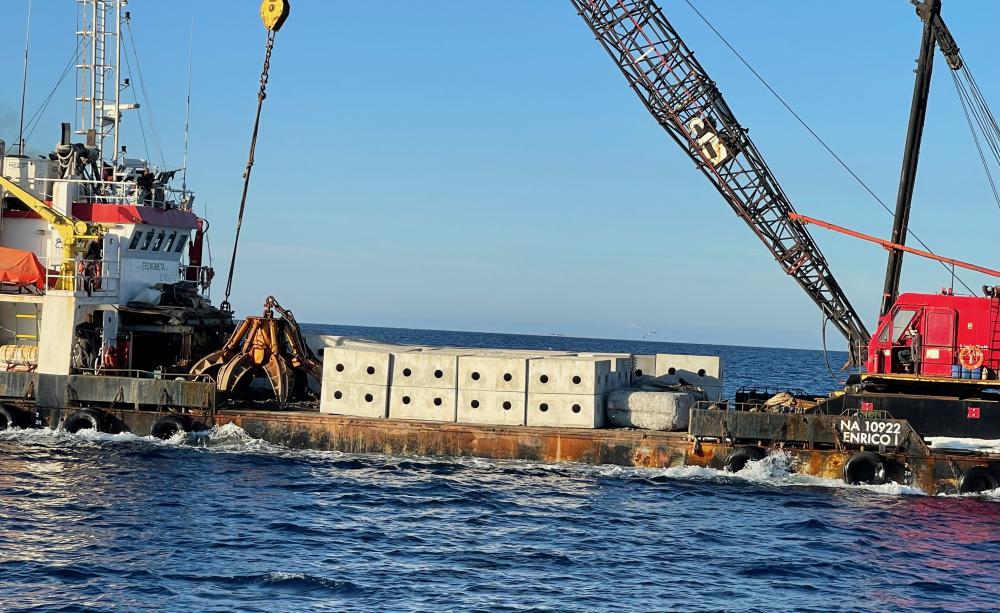
Under the waves they assembled hexagonal structures made of concrete blocks that are linked together, meant to damage and entangle the nets being dragged on the seafloor. And together with regular patrolling by MCC, it worked.
As Rehm put it: "Together, this combination of physical deterrents and active surveillance has led to a clear decrease in trawling activity within the Kep MFMA."
Blooming
In Tuscany on the Maremma Coast, illegal fishing also used to run rampant. The area, like the Kep MFMA, is home to lush seagrass meadows. And just like in Kep, the illegal trawling was destroying those meadows, shallows and the life within them.
Casa dei Pesci, a local organisation founded for the protection of the marine environment, decided to act.
They came up with a similar solution as the MCC and decided to sink 5-ton concrete blocks from Giannella beach to the mouth of the Ombrone River, covering more than 25 kilometres of the coastline. And yet again it worked.
"In the areas where we deployed our blocks, bottom trawling completely stopped, because trawlers risk to lose their nets", the president of Casa dei Pesci Giovanni Contardi told The Ecologist.
And what's even more important, the marine life started blooming again.
Recovery
In both Cambodia and Italy, the results speak for themselves. Even before any formal studies, it was clear that the blocks were working.
No scientific studies were done early on in the Casa dei Pesci project due to lack of funding, but in 2024 the organisation made an agreement with the University of Siena to monitor the area, and the preliminary results are very promising.
The ground of Koh Ach Sehmwas was shaking every night because of the vibrations released by the illegal trawling fleet.
"Our action’s effectiveness is proved by artisanal fishermen, who find more fish in the area", Contardi said. Dolphins and sharks have also returned to the area, indicating a healthier environment.
In Cambodia the MCC has been working together with scientists for a long time, so their success is well studied and documented. In the areas where the concrete structures are deployed, the number of fish is sixfold compared to areas without them.
The seagrass has bounced back in previously dead areas with regrowth being documented over an area of 3,000 hectares. The return of dugongs that were extirpated from the archipelago for over a decade is another great sign of hope.
"Long-term monitoring indicates improved seagrass cover and distribution within block deployment areas", Rehm said.

Sculptors
While deploying concrete structures is usually cheaper than monitoring the whole area with patrol boats, it can still have prohibitive costs.
Casa dei Pesci expanded the area covered by the blocks in association with Planet Wild in 2024. The 14 square kilometre expansion cost them €105,000, which, while cheap compared to normal methods, is still expensive to use in a larger scale, holding back a proposed expansion all the way to Punta Ala.
Contardi believes that it is a good way to protect valuable areas, but as it cannot be done everywhere, the most important thing is to build peoples' awareness of seafloor protection, which they are doing with an underwater museum.
The 24 statues, carved out of marble by international sculptors, that lie in the Tyrrhenian Sea in front of the fortress of Talamone invite snorkelers, scuba divers and fish to visit them.
For MCC in Cambodia, protecting an area of roughly 110 square kilometres with the structures cost US$500,000. They also still have to patrol the MFMA for illegal fishing, because not every place is suitable for the structures. In total they spent US$1million to protect the area, with yearly operating costs at roughly one third of that now.
Future
While both Casa dei Pesci and the MCC hope to see the now tested technique expand all over the world, they also warn that it is not a once size fits all -solution.
The designs aren't yet tested on different environments nor with different types of fishing gear, although Contardi is confident that their heavy blocks can withstand every type of trawl used in the Tyrrhenian.
"Another important consideration is that bottom trawling is still legal in many parts of the world", Rehm adds.
The future of the oceans is still uncertain but at least for now, the dugongs in Cambodia and the dolphins in Italy, along with the seagrass meadows they inhabit are a lot healthier than just a decade ago.
But they will need organisations like MCC and Casa dei Pesci along with compliant governments and some heavy concrete blocks to keep them that way.
This Author
Tommi Rinne is a writer from Finland interested in nature, especially in the hidden world beneath the waves.