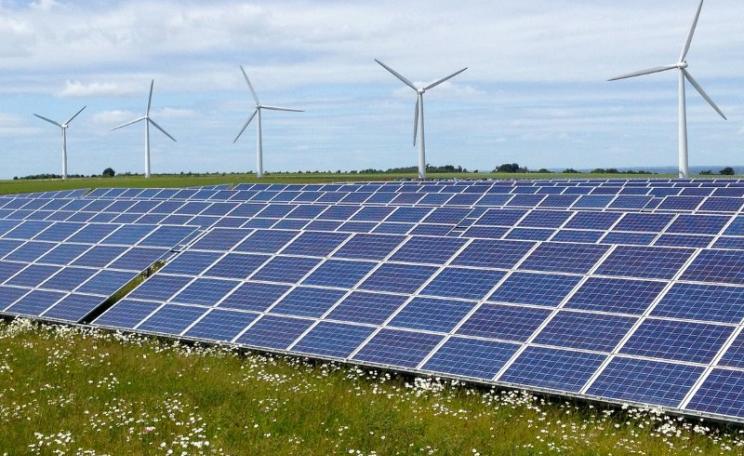
According to oil company executives, oil is going to be a major energy source to 2100 and beyond. So after hearing an oil man make his case, Chris Goodall went home and crunched some numbers. Money invested in solar power already produces more energy than if it's put into oil exploration and production, and the gap is only going to widen from here. Is this the new 'peak oil'?
The main engine of economic exploitation is the financial system's ever increasing extraction of value through interest payments, according to economist Michael Hudson. Paul Craig Roberts finds his analysis all too accurate, as the over-financialized economies of western countries head down a spiral of poverty, decline, injustice and despair.
Fund managers who neglect their 'duty of care' to clients by failing to put pressure on the companies they invest in to reduce their carbon emissions and prepare for a fossil-free future could be sued for their negligence, say respected experts in law, environment and finance.
For years the 'market mantra' has been to save forests by selling the carbon they embody, writes Chris Lang, harnessing the profit motive for the benefit of trees and climate. But it never worked, and now even former fans are admitting that REDD is just another failed conservation fad. So what next? How about asking local communities to manage their forests as commons?
As Cuadrilla's application to frack in Lancashire goes to public inquiry today, protestors from Greenpeace have installed a full-size 'fracking rig' in Parliament Square, London, complete with flare and deafening sound effects, to let MP's know just how great it is to have a fracking well on your doorstep.
Agriculture is big business and with the EU pumping money at the sector, the corporate profiteers are holding all the aces, writes Chris Lang. The documentary ‘Land Grabbing’ investigates what happens when well-financed agro-investors take over rural communities' land and water.
When Chancellor George Osborne delivers his Budget next month, we can be sure that climate and environment won't take a high priority, writes Alan Simpson. All the more reason for the Labour leadership to develop a new 'one planet' economics for the 21st century that delivers social justice and respects ecological limits.
Boosters of 'free trade' agreements - like the Trans Pacific Partnership that's being signed today - like to make big promises, writes Pete Dolack: trillions of dollars of economic gains, billions of dollars of investment, millions of new jobs. But there's only one certainty, and it's one they never mention: the permanent redistribution of power and income from working people to capital.
The wave of mechanization and automation that began with the Industrial revolution is not slowing down, writes Conor Lynch. Indeed it is gaining power and is driving another 'great transformation' that could produce untold opulence for the very few, and hellhole for rest of us, or an Earthly paradise for all. But which will it be? Ultimately the future is ours - to choose, and to fight for.
Why are we so surprised at the Google tax heist? It's not because there's anything new about it, writes Donnachadh McCarthy. It's because our own political class have long their noses in the trough, and the tax-dodging billionaires that own our mainstream media are anxious to hide the swindle that's keeping them rich, and us poor.
As presidential contenders gather in Iowa for the beginning of the party selection season, they may have noticed a lot of wind turbines, writes Zachary Davies Boren. And if they have any sense, they will find only nice things to say about them. Wind supplies 30% of the state's power, more than any other US state, and Iowans are all for it. Ted Cruz, mind your words!
EDF's unfolding fiasco over the Hinkley C nuclear power station proves that nuclear power can come only at enormous financial cost to consumers and taxpayers, writes Caroline Lucas - and even then, investors are scared off by the risks. The government must get over its nuclear obsession and seize our renewable future.
Monsanto has acquired a commanding role in the biotech, seed and agro-chemical industries, writes Carmelo Ruiz. So why is the company desperate to merge with its rival Syngenta? The truth is the company is in deep trouble, as its top-selling Roundup herbicide runs out of steam, and its rivals combine to challenge its dominance.
Just as EDF was due to make its 'final investment decision' on Hinkley C, writes Oliver Tickell, another delay. In spite of incredibly generous subsidies, the company is unable to finance it. Its last hope is to persuade the French state to take a 10% stake in the doomed project.
The EDF board is meeting tomorrow to reach its 'final investment decision' on Hinkley C. It was meant to be a rubber stamp but now it's anything but, as EDF's share price sinks to a new low, unions and employee directors harden their opposition to the project, and projects in France, Finland and China run way over time and cost with severe technical problems and safety concerns.