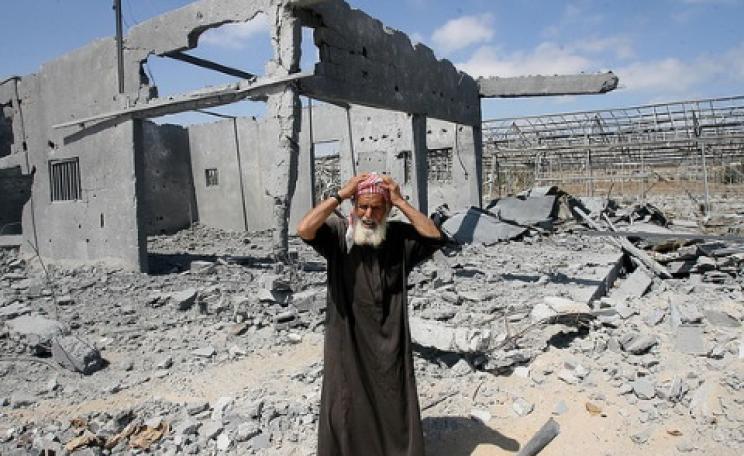
As Israel pursues its war on Gaza with ever-increasing ferocity, and with 25% of Gaza's people forced from their homes, what's the final objective? It's unthinkable that Israel's aim is to 'cleanse' the territory of its people, seize its vast gas reserves, and annex some of the Med's hottest real estate. Isn't it?
Israel's war on Gaza has seen the systematic and widespread destruction of civilian infrastructure essential for human survival, writes Luisa Gandolfo. This represents an apparently deliberate 'cutting off of life support' to those that survive the bombardment now under way.
As gold miners face eviction from Yanomami territory in the Brazilian Amazon, a rising tempo of death threats have been directed against the shaman Davi Kopenawa following his successful campaign.
Humans are to blame for the drastic declines in river dolphin populations around the world, writes Rachel Nuwer. But what exactly are we doing wrong? Mainly, scientists have found, it's building dams - and so destroying and fragmenting their habitat.
Global mining giant Rio Tinto markets itself as a 'sustainable company', writes Kemal Özkan. But serious failures in its reporting, and its attempt to hold an Australian indigenous group to ransom, reveal a very different truth: the company is driven by a reckless pursuit of profit at any cost.
Pesticide companies are responsible for assessing the safety of their products, writes Christopher N Connolly - and this situation cannot continue. The research should be carried out independently, subjected to peer review, and published.
A massive expansion of coal leasing by the US's Bureau of Land Management will release tens of billions of tonnes of carbon to the atmosphere, a new Greenpeace report reveals - completely at odds with President Obama's stated climate objectives.
The US, long the world's biggest oil consumer, has just surpassed Saudi Arabia to become the world's top oil producer, writes Don Lieber. Oil exports to Europe and Asia will begin shortly. Now what was that Obama said about climate change? Oh, forget it ...
Long after Blue whales have ceased to be hunted, their numbers have failed to record substantial increases, writes Luke Rendell. Are ship strikes to blame? A 15-year scientific study says the answer may be yes - and advises moving California shipping lanes.
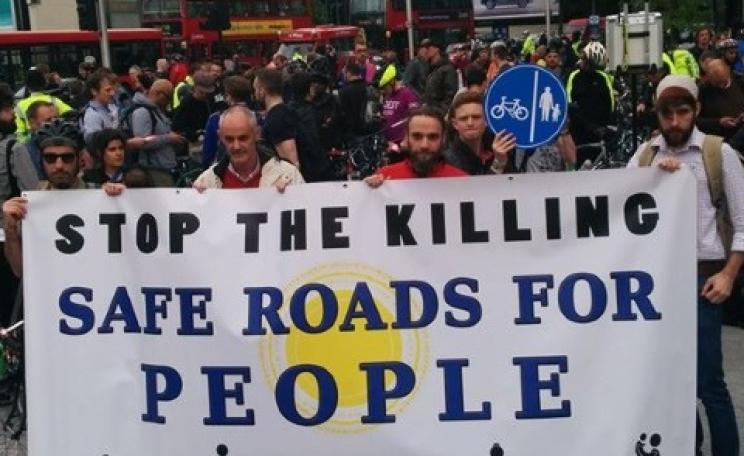
A major demonstration will take place in November to demand an end to the killing on Britain's roads, both direct and indirect, writes Donnachadh McCarthy. And now is the time to sign up, get involved, and build up the momentum for desperately needed change.
The UK has just opened a bidding round for fracking licences. But the rules contain only weak protections against fracking in National Parks and AONBs - and none at all for even the most important wildlife sites and drinking water aquifers.
'We need to look at the best scientific evidence' on badgers and bovine TB, says Environment Secretary Liz Truss. But as Lesley Docksey writes, the 'best scientific evidence' appears to mean only that which supports the cull - and there's precious little of it!
Since the 1980s Cambodia has lost 84% of its primary forests, and the remote Cardamom mountains are the country's last great natural treasure, writes Rod Harbinson. Just the place for grandiose dam projects? 'No way!" say indigenous people and young eco-activists.
Tatyana Novikova has been fighting an unsafe nuclear power plant right on the country's border with Lithuania. She spoke to Chris Garrard about her campaign, the official persecution of anti-nuclear activists, and her invocation of the Aarhus Convention to the anti-nuclear cause.
Human Rights Watch has gathered evidence in the war zones of Eastern Ukraine which show that Ukrainian government forces have violated the laws of war by using 'notoriously imprecise' rockets in civilian areas, destroying homes, killing and injuring non-combatants.