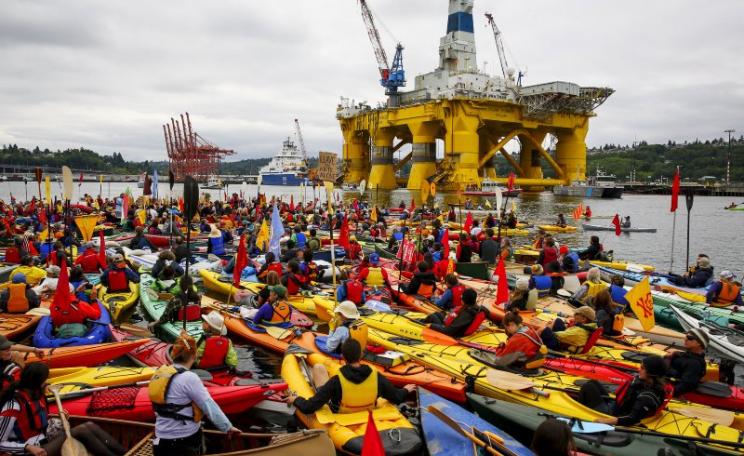
Shell's senior management are treading an impossible path, writes Steffen Böhm. On the one hand they accept that climate change is real and serious, and that many of their fossil fuel assets may prove unburnable. On the other, they insist that business as usual will continue for decades to come. It's high time they smelt the coffee!
A new report from the IMF has quantified the prodigious subsidies doled out to the fossil fuel industries, writes Pete Dolack - an astonishing $5.6 trillion per year, over 7% of world product, including direct payments, tax breaks and unpaid environmental costs. The obscene scale of public largesse proves the need for a social movement to challenge global energy capitalism.
The widely touted 'carbon capture and storage' technology is much more expensive than wind and solar, says a Greenpeace report. It also represents a perverse subsidy to the fossil fuel sector that will only boost coal and oil, and delay the transition to a renewable energy system.
It's odd how often the contribution of nuclear energy is overstated, writes Neil Crumpton, by mixing up 'energy' and 'electricity', while a similar trick to understates the importance of renewables like wind and solar. Even odder is how the mistake always seems to go the same way, to make nuclear look bigger than it really is, and renewables smaller. Welcome to the nuclear 'X factor'!
The renewable power boom is excellent news for people and planet, writes Pete Dolack. But let's not get carried away: much energy that claims to be 'renewable; like biomass and big hydro, is no such thing. And greening our energy is just one of many steps to a sustainable world. The greatest challenges - like tackling the monster of infinite 'growth' - all lie ahead.
Germany's 'Energiewende' has made the country a global renewable energy powerhouse. So why have its carbon emissions gone up? Not because of nuclear closures, writes Melanie Mattauch, but because powerful fossil fuel companies have blocked effective climate action. Now the fight is on as public calls to keep the coal in the ground get too loud to ignore.
Nuclear advocates must be admired for their optimism if nothing else, writes Mark Diesendorf. Disregarding over half a century of evidence that nuclear power is dangerous, expensive, enables the spread of nuclear weapons, and produces wastes we still don't know what to do with, still they cling to the 1950's dream of 'electricity to cheap to meter'.
The link between nuclear power and cancer is real, writes Chris Busby, and revealed in the UK's cancer statistics - if only you look for it. Previous approaches have focused on rare cancers over large, poorly selected populations. But look at common cancers among those most exposed to nuclear radiation, and the statistical evidence is overwhelming.
Cynical western media are pouring cold water on reports of China's declining carbon emissions, writes David Toke. The trouble is, the cross-sectoral statistics that demonstrate the reductions are actually rather convincing. Maybe journalists should be asking different questions - like just how well is the US performing?
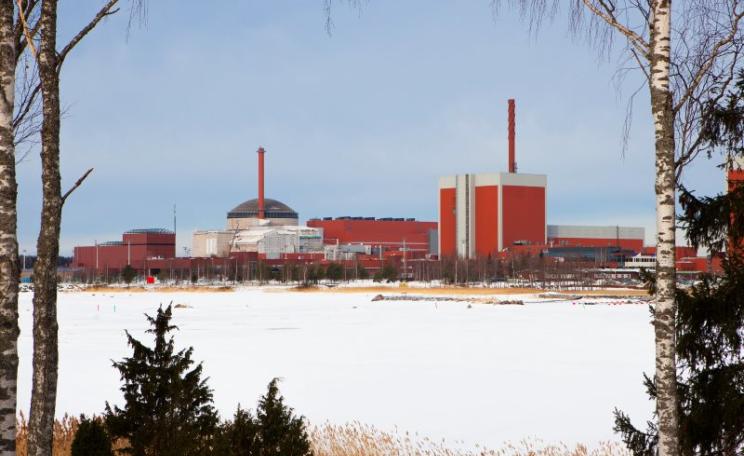
This week Finland cancelled its option for a second European Pressurised Reactor as the existing EPR project sinks into a abyss of cost over-runs, delays and litigation, writes Jim Green. It now looks like the EPR is a failed technology and its owner, French nuclear giant Areva, is fast running out of both money and orders as its 'hot prospects' evaporate.
Food and water shortages and sharp price hikes in the necessities of life are driving civil unrest and rebellion across the Middle East and North Africa, writes Nafeez Ahmed. Adding to the problem, many of the afflicted countries are of strategic importance for their oil and gas, putting them on the front line of destabilizing 'counter-terrorism' operations.
Powered by 100% renewable energy, Apple is maintaining its lead as the internet's greenest company, But others are lagging behind: Google has yet to reach 50% and relies heavily on coal, while Amazon's AWS, the massive 'dark cloud' of the web, won't even answer questions.
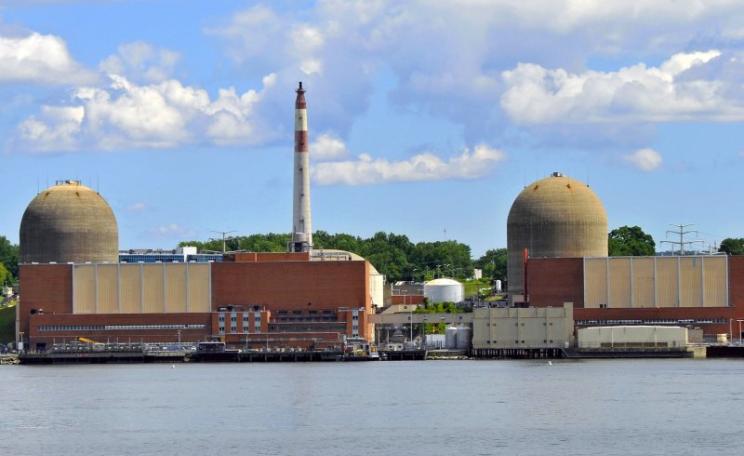
Following the accidental fire in a transformer at the troubled Indian Point nuclear site last weekend, and the unplanned release of oil into the Hudson River, calls are growing for the two remaining power plants to be shut down, writes Karl Grossman. The NRC is likely to extend its expiring licenses for another 20 years - but New York State could still refuse it a water use permit.
As Cameron appoints his cabinet, we had better get prepared for the 'green crap' that's about to be unleashed on us, writes Oliver Tickell - the return of fox-hunting, badger-culling, road building and nuclear power, the arrival of GM food and crops, more cuts to wind and solar power and the underfunding of home insulation.
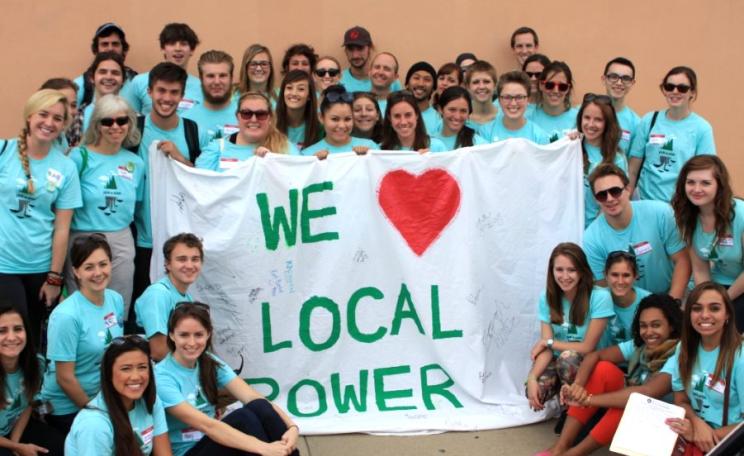
Fed up with being gouged by profit-driven corporations, let down by state neglect and under-investment, urban communities across the US are taking control of local services like public transport, energy, water, internet and telecoms, writes Max Holleran - bringing better service, lower prices and clean energy.