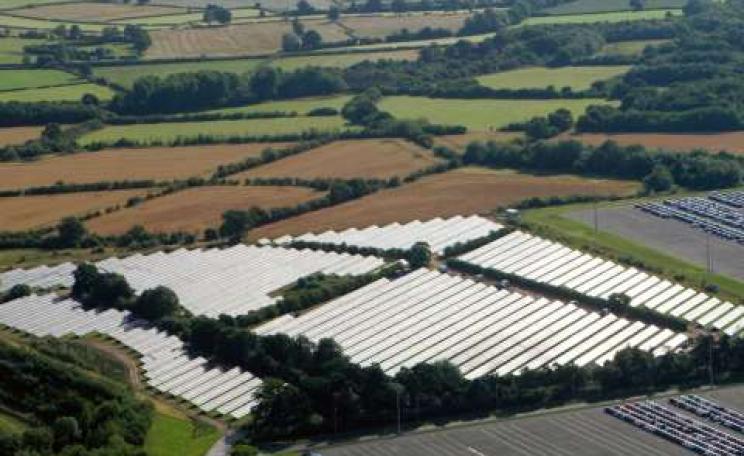
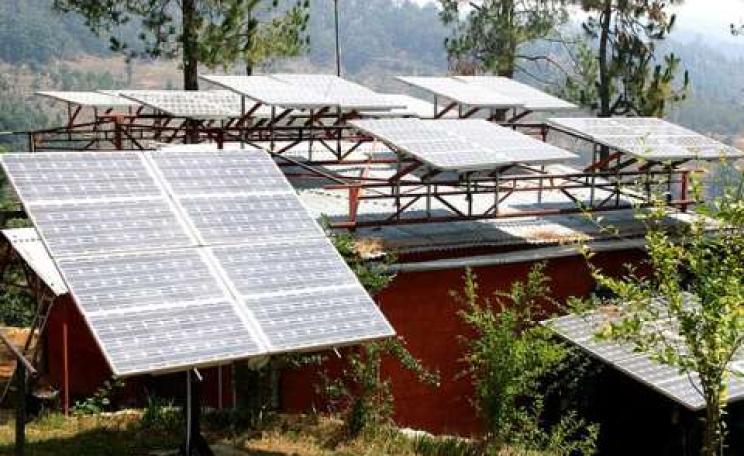
California and Texas continue to break new ground in making electricity generation from renewable sources, writes Mike G. Solar PV in particular has become a vital part of the US' energy mix, accounting for half of new generation capacity.
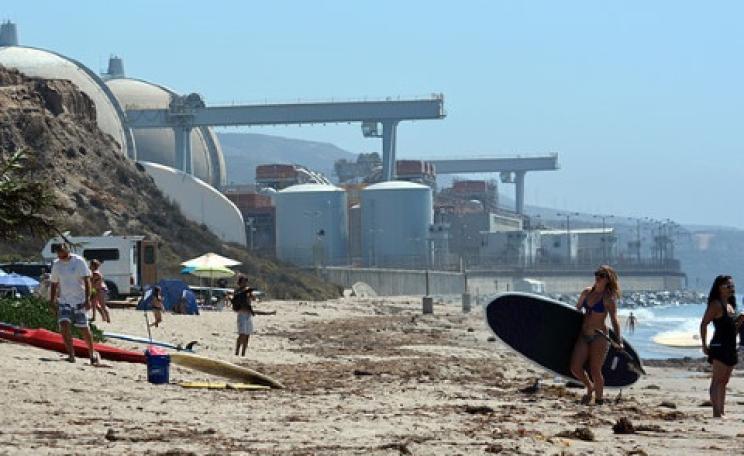
The recent closure of five US power stations is forcing the industry to confront big questions about radioactive waste, writes Paul Brown. Who is to pay the mounting costs of managing the wastes and keeping them secure? And precisely where will be their final resting place?
Never mind the 'war on terror' rhetoric, writes Nafeez Ahmed. The purpose of Israel's escalating assault on Gaza is to control the Territory's 1.4 trillion cubic feet of gas - and so keep Palestine poor and weak, gain massive export revenues, and avert its own domestic energy crisis.
Nuclear power advocates believe the technology is essential to building a fossil fuel free world energy system. In fact it is optional, writes David Elliott - and not even very helpful. Efficiency and the 'new renewables' can do the job faster, and at much lower cost.
The UK's conservative Daily Telegraph warns: investors in fossil fuels are 'throwing good money after bad', reports Nathan Wood, as renewable energy takes off leaving a potential $19 trillion of oil assets 'stranded'.
The devastating human impact of Syria's civil war may persist for decades to come as heavy metals and carcinogens in munitions end up in the environment, along with chemicals from destroyed industrial plants and stores. A long-term public health crisis is in the making.
Our current electricity system cannot accept much wind and solar power because they lack the 'inertia' of spinning turbines that stabilises grid voltage, writes Marek Kubik. But that's no reason to limit renewables - there are new, smart solutions ready for deployment.
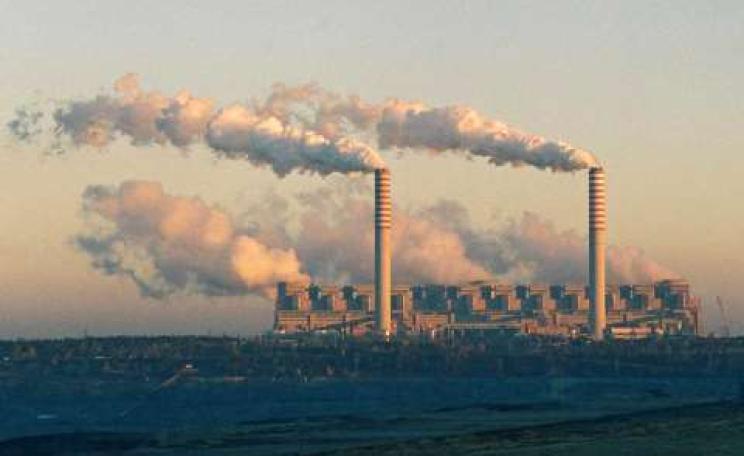
If we're serious about cutting CO2 emissions, there's no place for nuclear power, writes Ian Fairlie - because it's the least cost-effective way to do it. By far the best way is to improve energy efficiency. But tell the Government the truth, and it'll close you down.
in Ukraine, as in Afghanistan, Libya, Iraq, and Syria, US policy is all about dominating the world's fossil fuel supplies, writes Mike Whitney - in this case, the gas pipelines from Russia to Europe. But the 'great aggressor', Vladimir Putin, is refusing to play his part. So what next?
Polish PM Donald Tusk is using the Ukraine crisis as a pretext to revive the EU's fossil fuel industries. His proposals spell disaster for EU emissions targets and the wider environment, writes Mark Siddi. Europe's energy future must be efficient and renewable!
A new scientific paper presents the radiation produced by fracking as 'natural' and harmless. But it's based on sketchy data, hyperbolic statistics and questionable assumptions, writes Paul Mobbs. Is it an attempt to stifle an essential public debate?
With the Government wilfully undermining the UK's small but fast-growing solar power sector for the second time, Jonathon Porritt wonders ... why the attacks on what is our second lowest cost source of renewable energy, and getting cheaper all the time?
In Ken Silverstein's 'The Secret World of Oil', Louis Proyect investigates the uber-wealthy middlemen of oil, inhabiting a pampered universe of moral squalor and depravity - one in which Tony Blair found himself completely at home.
Two thirds of the world's investment in building new power generation until 2030 may go to renewable energy, reports Rosie Murray-West, causing CO2 emissions to peak at end of the 2020s.
In modern India any form of dissent from the neoliberal corporate model of development is being criminalised, writes Kumar Sundaram. Opponents of nuclear power, coal mines, GMOs, giant dams, are all under attack as enemies of the state and a threat to economic growth.