With USDA proposing to redefine GMOs for the purposes of food labeling, the issue is more important than ever, writes Jonathan Latham. It's not just to give consumers' the 'right to know' when they buy GM food, it's also a vital means to empower citizens to fight back against the industrialisation of food and farming, and the monopolies of agribusiness corporations.
In law, the Shuar Arutam People of Ecuador's Amazon control their ancestral forests. But the government has allocated more than 38% of their territory to large-scale mining, and a gigantic hydroelectric dam is about to be built. Peaceful resistance has been met with a violent military occupation against a People whose only demand, set out in this Open Letter, is peace and justice.
The opposition of Ecuador's Shuar People to large scale mining and hydroelectric development in their ancestral forests has triggered a full-scale military occupation of their lands in the Amazon cloud forest, writes Jake Ling, accompanied by a surge in state-sponsored murder and violence - for which Chinese and Canadian mining companies must share responsibility.
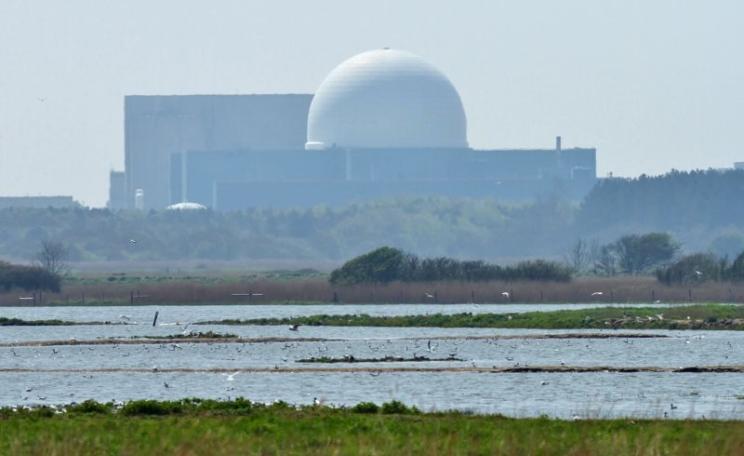
In its second consultation for the EDF's planned Sizewell C nuclear power station there's a strange omission, writes Peter Lux: that the plant would use 1,600 m3 of mains water a day, adding to stresses on important local wetlands like RSPB's Minsmere reserve. The omission is not just strange - it's also illegal and could make the entire exercise invalid.
President Trump comes into office determined to discard huge swathes of his predecessor's legacy on day one, writes Mark Barteau. But he will struggle to undo Obama's clean energy regulations. It's not just that they are legally robust, it's also that energy markets in the US and the wider world have shifted firmly, and irreversibly, towards efficiency and renewables. Sorry, Mr Trump.
Building on a talk prepared for the Resurgence 'One Earth, One Humanity, One Future' conference, (although not presented at that event) Fritjof Capra explains new scientific evidence supporting the long-held supposition of Buddhists and others that humans are interconnected and part of nature.
An extreme right-wing coup is unfolding day by day, writes Donnachadh McCarthy, as the government exploits Brexit to justify more huge cuts to public services, extreme deregulation and massive corporate empowerment. A new political leadership must step up to defend our hard-won rights and our children's futures.
On 10 January 2017 a new emergency plan was presented in a commission in Belgium's Parliament. The evacuation perimeter was conveniently halved to 10km to avoid an evacuation of Belgium's second and third cities in case of a meltdown. The plan has been called totally inadequate. NICK MEYNEN reports
Speaking on the Andrew Marr show last weekend, Jeremy Corbyn gave no clear support to the massive Moorside nuclear development in Cumbria, writes Marianne Birkby. But to win the impending Copeland by-election, he and the Labour Party must go further - and campaign against the deeply unpopular project.
2017 began with bang for Friends of the Earth, writes Tony Juniper, with a hostile media blitz orchestrated by the fracking industry and abetted by the Advertising Standards Authority (ASA). But the storm, over alleged errors in an FoE leaflet about the hazards of fracking, reveals nothing so clearly as the disgraceful conflict of interest at the top of the ASA itself.
Scientists are calling for the urgent protection of ecologically valuable roadless areas, writes Tim Radford, as a new global map shows that roads lead to loss of biodiversity and damage to ecosystems by fragmenting habitat and providing access to exploiters.
Global corporations and their lofty princes have outgrown the control of regulators, politicians and society, writes George Feiger. Such is their power that they can extract an ever-growing share of global income, block any moves to limit their freedoms, and loot our future wealth for immediate profit. The first step to regaining control is to keep private money firmly out of politics.
The nuclear industry faces an uncertain future as the reactor building boom is struck by unexpected costs, serious technical problems, and long, expensive delays, writes Paul Brown. Meanwhile renewables like wind and solar are offering investors an enviable combination of falling cost, low risk, fast build times, predictable returns and minimal long term liabilities.
This charming and beautifully illustrated story book will give pleasure to children everywhere, writes Lesley Docksey. It will also open their eyes (and with luck, those of parents and siblings) to the wonderful world of bats, and what we can do to look after them.
A 145,000 sq km area of peatland swamp forest has been discovered in the Congo Basin, writes Tim Radford, and it holds a record 30 Gt of carbon, equivalent to 20 years of US fossil fuel emissions. Now the race is on to protect it from damaging development that would emit that carbon over coming decades.