Almost entirely unknown to the outside world, and even to most local residents, hundreds of square kilometres of South Africa's Karoo dryland have been bought up by uranium mining companies, writes Dr Stefan Cramer. With no strategic assessment of the industry's devastating impacts and massive water demand, official permission could soon be granted for vast open pit mines.
Field studies show that the intense radioactivity released by the Chernobyl and Fukushima nuclear disasters is seriously and unequivocally damaging to wildlife, writes Timothy A. Mousseau - in stark contrast to theoretical studies that show little or no impact on plant and animal health and populations.
Since 1948 Jordan has taken in millions of refugees from Palestine, Iraq and most recently Syria, writes Doug Weir. Politically and economically the country has proved astonishingly resilient - but the population increase has caused huge damage to its fragile environment. Ecological degradation, pollution and resource scarcity may cause political instability unless more is done to tackle the problems.
We all know that coal and steam vanquished over water power in Britain's - and the world's - industrial revolution, writes Irma Allen. But as Andreas Malm sets out in his fascinating new book, the deciding factors in that victory were the unconstrained mastery over people and nature that coal provided mill owners. And so the model was set for the fossil age that may only now be coming to an end.
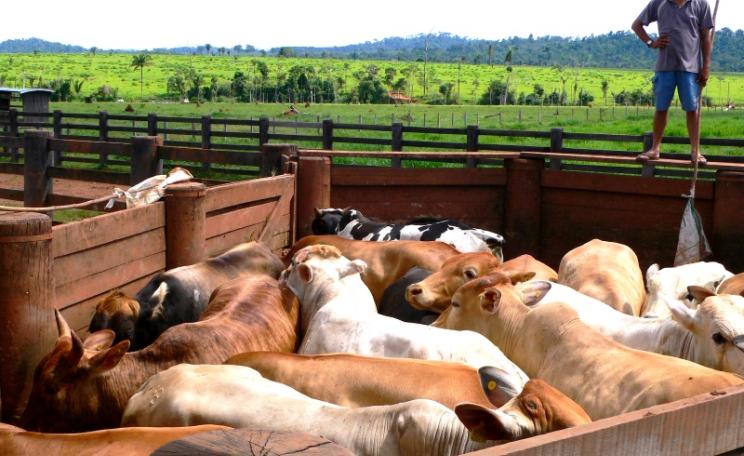
How do you solve a problem like deforestation? By a change of diet, writes Laura Kehoe. Scientists have discovered that we can feed the world and stop destroying forests by eating less meat. If we all went vegetarian that would reduce deforestation by 94%. And if we went the whole way to veganism enough land would be freed up for a new forest the size of the Amazon, and allow a widespread shift to organic farming systems.
The Chernobyl nuclear catastrophe may have scared most of the world off nuclear power, write Jan Haverkamp & Iryna Holovko. But mysteriously, not Ukraine, where the reactor meltdown actually took place. Thirty years on more than half of Ukraine's electricity is still nuclear, while the power sector is dominated by powerful oligarchs. So what are the chances of a post-nuclear Ukraine?
The Chernobyl sarcophagus which has long contained the fissured reactor core is at risk of collapse, writes Claire Corkhill. The solution: build a pair of tracked arches 260m wide and 100m high, and slide them over the site to enclose it for a century to come: so creating a sealed space for robots and remotely operated machinery to deconstruct the reactor and sarcophagus piece by radioactive piece.
Thirty years since the 1986 nuclear disaster at Chernobyl the impacts are still being felt, writes Ian Fairlie, and they will persist long into the future. Some 40,000 cancer deaths can be expected across Europe over the next 50 years, and 5 million people still living in areas highly contaminated with radiation. Yet the nuclear madness continues, with even Belarus building new nuclear reactors.
Thirty years after Chernobyl former Soviet leader Mikhail Gorbachev remains haunted by the world's greatest ever industrial catastrophe, writes Linda Pentz Gunter. Now 85 and a committed environmentalist, he's still campaigning to bring the failed nuclear experiment to an end before further disasters follow, and encouraging a clean, efficient and renewable global energy economy.
The very term 'genetic engineering' implies high precision in the alterations made to genes and deep understanding of their consequences, writes Jonathan Latham. In fact, we have never had either. And even with the arrival of CRISPR and other 'gene editing' systems, that remains the case: technologists are thrashing about in a perilous sea of unfathomable complexities and unknowable outcomes.
Belarus may have taken the brunt of the fallout from the Chernobyl nuclear disaster in Ukraine, writes Kieran Cooke. But now it's pushing ahead with its own nuclear power station at Ostrovets - just 50km from Lithuania's capital, Vilnius, where the project is causing widespread public concern.
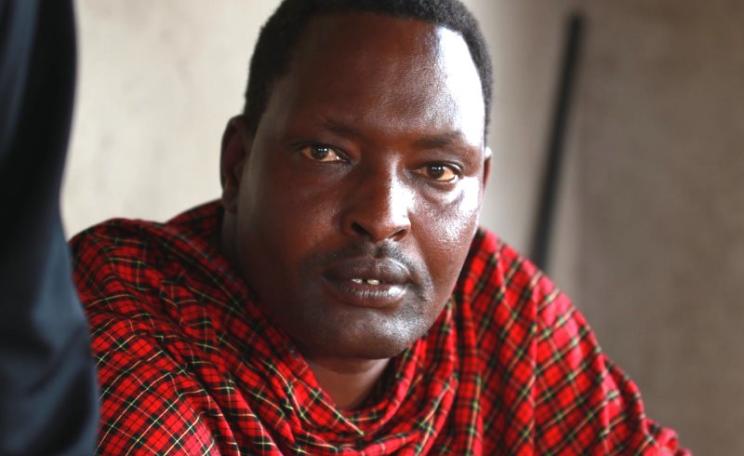
Commuting between land rights negotiations in the city and herding goats on the plains, Edward Loure is at once a traditional Maasai and a modern urbanite, writes Sophie Morlin-Yron. That ability to straddle the two very different worlds he inhabits has been key to his success at having 200,000 acres of land registered into village and community ownership - and his own 2016 Goldman Prize.
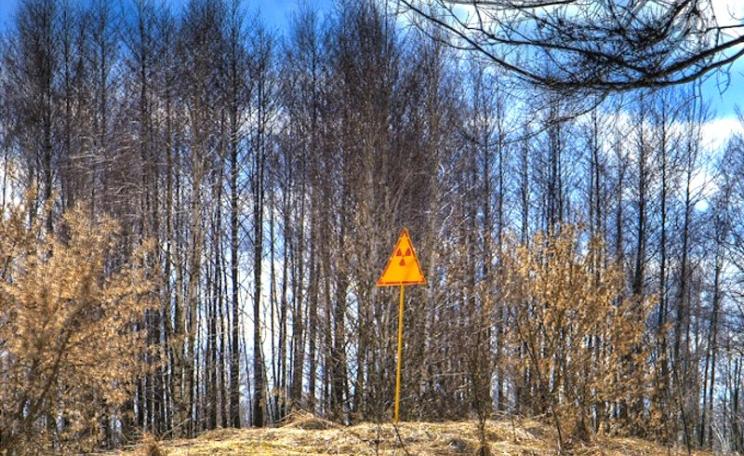
Evolutionary biologist Timothy Mousseau and his colleagues have published 90 studies that prove beyond all doubt the deleterious genetic and developmental effects on wildlife of exposure to radiation from both the Chernobyl and Fukushima nuclear disasters, writes Linda Pentz Gunter. But all that peer-reviewed science has done little to dampen the 'official' perception of Chernobyl's silent forests as a thriving nature reserve.
Faced with multiple converging crises humanity is challenged to redesign the human presence on Earth within the lifetime of present generations, writes Daniel Christian Wahl, and so transform our impact from degeneration to regeneration. We are capable of creating diverse creative cultures elegantly adapted to the uniqueness of place.
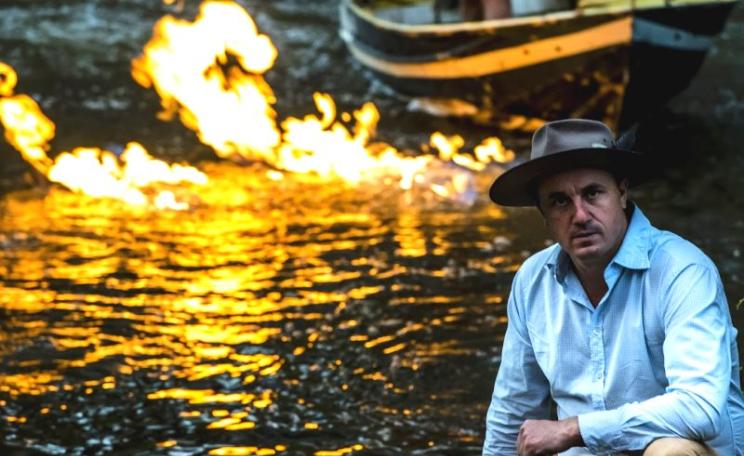
So much methane is bubbling into a river surrounded by hundreds of fracking wells that it's a fire hazard! Local campaigners blame the coal seam gas industry for the gas releases which are spreading along Queensland's river Condamine and gaining in intensity.