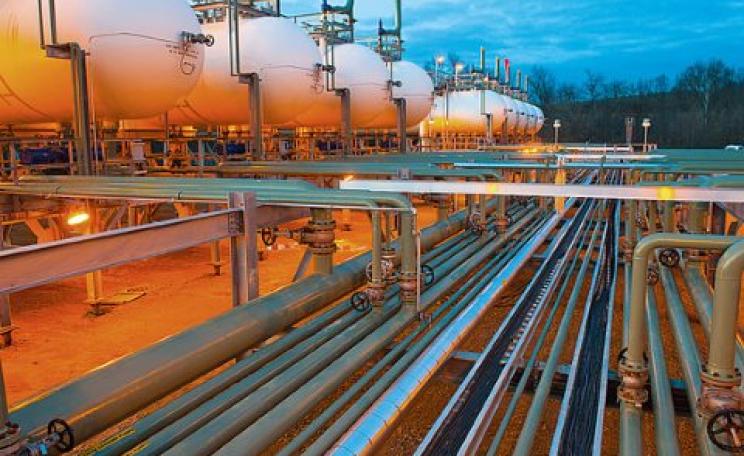
Floating over the US Southwest is a cloud of methane the size of Delaware, writes Mike G - reflecting the release of almost 600,000 tonnes of the powerful greenhouse gas every year. Its origins? Coalbed gas production, fracking and horizontal drilling.
Hinkley C's subsidy package may have won European Commission approval - but now it faces a National Audit Office 'value for money' investigation, following a demand from a powerful Parliamentary committee.
A full-scale rush for shale gas would increase emissions, writes Erik Bichard, giving the lie to politicians' claims that fracking is 'climate friendly'. A new study in Nature shows that abundant shale gas would cause CO2 emissions to rise by a median 4.5%. When 'fugitive' methane is included the figure rises to 9.5%.
Last night's speech on Britain's energy choices by former environment secretary Owen Paterson's caused widespread outrage long before it was delivered. But what exactly did he say on the night? Read on, and be surprised to discover that it makes excellent sense - in parts.
The UK Government promises that the Hinkley C 'EPR' nuclear reactor will lower electricity bills, but Keith Barnham shows that this is the very reverse of the truth. Our best hope is that it will never be built. Legal challenges aside, no sane investor will commit until one of the two EPR prototypes is working, which will be in 2016 at the earliest.
The first ever global life-cycle assessment of clean energy sources shows that a renewable system could supply the world's entire electricity needs by mid-century, writes Tim Radford.
Solar power could be producing over a quarter of the world's electricity within 35 years, according to the International Energy Agency. But in the US, Congress's failure to extend solar tax credits is causing projects to be withdrawn.
Following a 1 million signature Greenpeace petition, LEGO has pledged not to renew a 50-year link with the oil company Shell. The move comes as Shell bids to renew its Arctic drilling in 2015, and following revelations that it is trying to dilute environmental regulation in Arctic waters.
The UK's political mainstream has performed a complete U-Turn in policy on nuclear power, culminating yesterday in the European Commission's approval of a £15-20 billion subsidy package for the Hinckley C project. Donnachadh McCarthy delves into the nuclear industry's deep and far-reaching political links.
The outgoing European Commission has just given the UK's controversial Hinkley C nuclear project the go-ahead, writes Paul Dorfman - approving a deal that will cost the UK public tens of billions of pounds. But now the deal faces a legal challenge in the European Court of Justice.
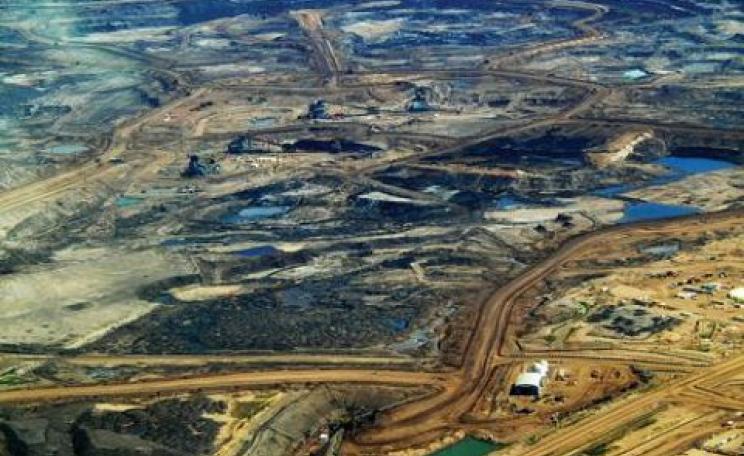
The EU is dumping a plan to label fuel made from tar sands as 20% more polluting than oil from conventional sources, making it cheaper for European countries to import. But the concession - intended to smooth the TTIP trade deal - still has to be approved by the European Parliament.
There's a simple thing we can do to cut everybody's electricity bills, reduce pollution and 'keep the lights on' when demand peaks on dark winter evenings, writes Chris Goodall - phase out power-guzzling halogen bulbs and replace them with LEDs that use a fraction of the power. So let's do it!
Oil majors are gearing up to exploit Arctic oil, writes Mike G. But they don't want to carry the costs of all the safety equipment the US Government is demanding to protect the fragile Arctic environment from spills. And they're reluctant to give up the use of toxic chemical dispersants.
King Coal's reign is coming to an end, writes Chris Rose, at least as a fuel for generating electricity. Following a price collapse half of all production is being sold at a loss - and major coal users like China are still moving away from the high-carbon fuel.
There's an Alice in Wonderland flavour to the nuclear power debate, writes Jim Green. Lobbyists are promoting all sorts of new reactor types - an implicit admission that existing reactors aren't up to the job. But the designs they are promoting have two severe problems. They don't exist. And they have no customers.