As the Arctic ice retreats, a fragile but resource-rich landscape replete with oil, minerals, fish and islands is opening up, writes Conn Hallinan. A new land-rush is on, and it could all lead to war. But it can be avoided provided states respect the rule of law and build on existing regimes of cooperation to protect the precious Arctic environment.
A London court has forced Shell to disclose documents about its pipelines and oils spills in Nigeria, writes Sarah Shoraka - and they reveal that the company has lied about the scale of oil spills in previous legal actions, and concealed the terminally poor condition of its pipelines.
Jim Ratcliffe of Ineos, Environment Secretary Liz Truss, the Environment Agency and its ex-boss Lord Smith all suffer from a blind spot, writes David Lowry - the dangers of fracking, its radioactive emissions and the toxic chemicals that threaten to pollute our aquifers. As for official advice that 'regulation needs to be strongly and robustly applied' - pass the Tippex!
Would UKIP be riding so high if voters knew of the party's links with powerful right-wing US corporate interests promoting fossil fuels, denying climate change, opposing gun control, and supporting big tobacco, teaching creationism in schools, healthcare privatisation and the lifting of nuclear power regulation? An Ecologist investigation exposes the real UKIP.
The Walton family, owners of Walmart and Asda, project a 'public environmentalism', writes Mike Gaworecki. But their real agenda is to advance a monopolistic corporate economic model that is threatened by decentralised energy solutions like rooftop solar. The answer? Exterminate!
EDF has already moved heavy earth moving gear onto the Hinkley C nuclear power station construction site, writes Doug Parr - but that doesn't mean it's a done deal. On the contrary, a host of intractable problems are coming home to roost, and the increasingly troubled project is looking shakier than ever.
With unidentified drones regularly overflying French nuclear power plants, Daniel Salisbury and Christopher Hobbs warn that despite the dismissive responses of nuclear operators, they have cause for concern: the drones may be unable to cause serious damage in themselves, but they compromise site security and open the way to future attacks.
The enabling bill for Keystone XL failed yesterday in the US Senate. Supported by all 45 Republican senators, it fell one vote short of the required 60-vote threshold. But the victory will be a temporary one, writes Alexander Reid Ross. The final battle can only be won by massive grassroots engagement and protest in communities across North America.
Who has the longest nose of them all? Worthy winners of France's fiercely contested 'Prix Pinocchio' 2014 were selected last night, recognising corporate greed, hypocrisy and malfeasance, based on a record vote since the awards began.
The Leader of the US Senate says that under the China-US climate deal, China can 'do nothing at all for 16 years'. John Mathews and Hao Tan examine the claim - and find it's the very reverse of the truth. China is leading the world in greening its energy supply, and has committed to add a massive 1.3GW of renewable power capacity every week for 15 years. Now Mitch - beat that!
Democratising energy would save thousands of lives a year in Britain alone - releasing us from the clutches of corporate utilities, and building an energy commons in which we are all owners and participants, no longer captive, exploited consumers. More than that, it would be a big step forward in saving the planet.
As the governing conservative party lurches ever further to the right, writes Kyla Mandel, it feels like UKIP has already won the election - six months before it's even happened. Tory ministers are already executing UKIP policies, with their ignorant but implacable hatred of renewable energy in all its forms.
Efforts to tackle climate change have failed to make the slightest difference to the exponential increase in CO2 emissions, writes Mike Berners-Lee. The US-China deal at last offers hope that things could change - but to make it work other countries must come on board, and promises must transform into binding commitments.
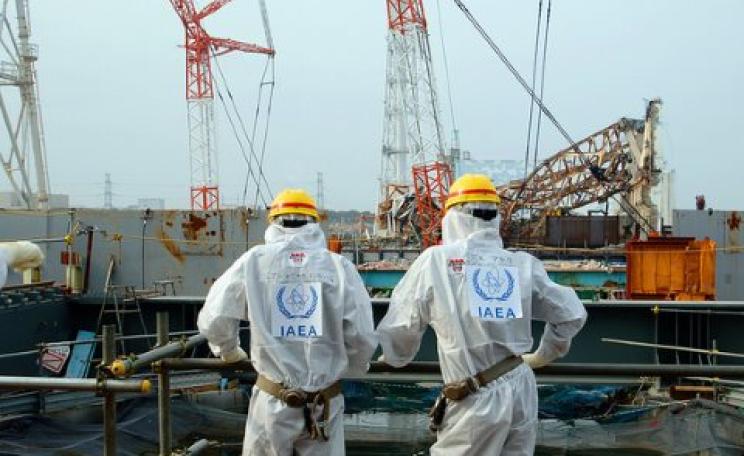
The clean up at Fukushima faces enormous challenges, writes Justin McCurry. First, managing 500,000 tonnes of contaminated water stored onsite. Next, removing molten fuel from reactors 1, 2 and 3, a task so hazardous that it's been put off until 2025. Even robots have been unable to enter the reactor buildings - and no one knows where the molten fuel has gone.
Despite promises to phase out subsidies to the coal, oil and gas industries, a new report G20 governments are still providing them with massive financial help, writes Alex Kirby. The UK alone is spending over £1.2 billion per year to support fossil fuel exploration and production at home and abroad.