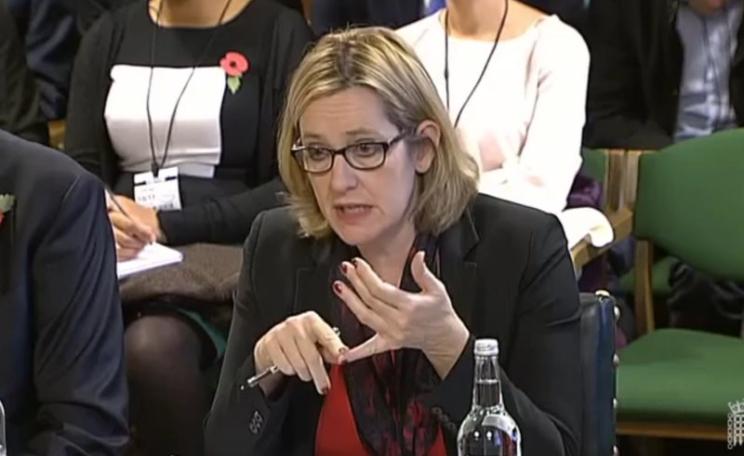
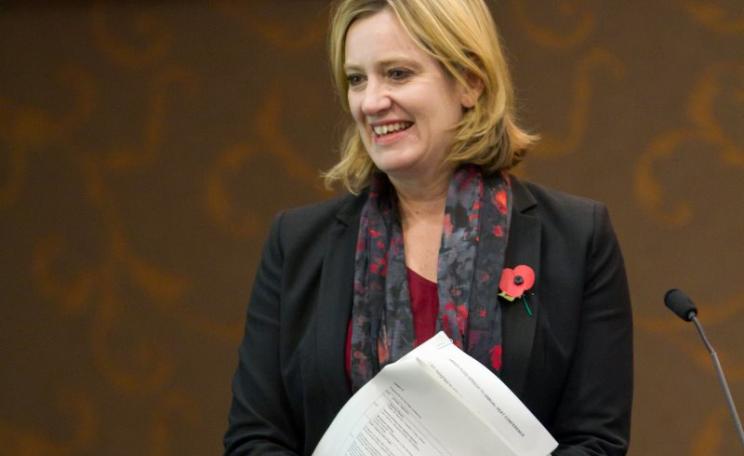
Despite strong public support for wind and solar power in an official survey published today, the UK's likely failure to meet its EU renewable energy target, and an impending legal challenge, Energy Secretary Amber Rudd today told MPs she would not be reversing recent cuts, writes Oliver Tickell.
A passion for traditional drumming led to a project to revitalise land and community in the wildlife-rich Nuimi district of The Gambia, writes Allan Kerr. And now there's plans to take it to the next level, with organic farming, tree nurseries, forest gardening, a borehole for safe drinking water, craft workshops ... and don't forget the music!
The UK-China plan for new nuclear build in England defy the evolving reality of 21st century power networks, writes Paul Dorfman. In China itself, the nuclear dream is hitting construction problems and delays, while wind and solar blossom at ever falling cost. But the phenomenon is global. Despite some governments' nuclear obduracy, renewables are winning the race hands down.
As the world's media hails Burma's first elections since 1990 and the country's 'democratic transition' from military rule, Guy Horton warns against the delusional thinking that underlies these optimistic narratives. The reality is one of fascism, mass murder, genocide and systematic discrimination - in which Aung San Suu Kyi herself is complicit through her silence.
The idea of a 'good, or even great, Anthropocene' as promised in the Ecomodernist Manifesto is purely delusional, writes Derrick Jensen. Worse, it underlies a narrative in which the wholesale destruction of nature and of sustainable indigenous societies is repackaged as a noble mission - one whose ultimate purpose is the complete alienation of humans from the planet that spawned us.
The rise of corporate eco-activism makes a refreshing change from the usual 'campaigners versus corporation' dynamic, write Steffen Böhm & Annika Skoglund. And for companies that embark on this path - like Lush, Ecotricity and Interface - it can work out well for them and the environment. But heed the disastrous consequences for those, like BP, who said one thing, and did another.
A letter from Energy Secretary Amber Rudd leaked to The Ecologist shows that she misled Parliament by promising the UK was 'on course' to deliver on its renewable energy targets - when in fact there is a delivery shortfall in 2020 of almost 25%. Her plan to fill the gap relies on more biofuels, buying in green power and 'credits' from abroad - everything but wind and solar.
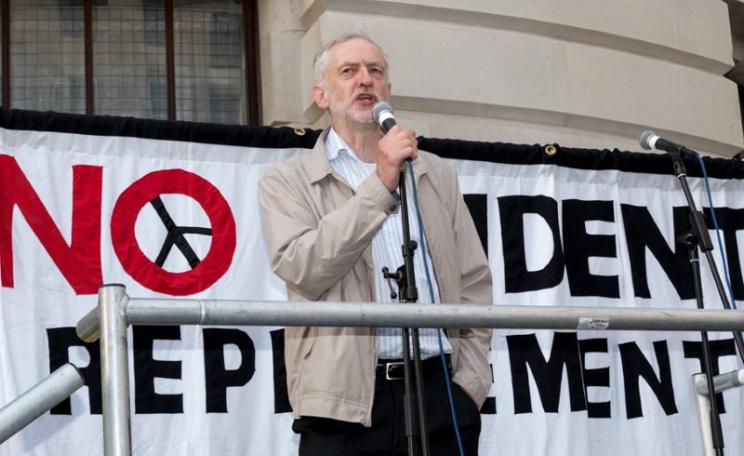
Jeremy Corbyn came under attack yesterday for his refusal to countenance the use of nuclear weapons, writes Commander Robert Green. But his stance is honourable and both legally and strategically correct - especially with his opposition to renewing the Trident nuclear missile system.
The fox-hunting season is now well under way, writes Toni Shephard. But with Cameron still pressing for a Commons vote on wrecking amendments to the Hunting Act, political controversy shows no sign of subsiding. Take, for example, the proposed lifting of the limit on number of dogs that can be used for the 'observation or study' of a wild mammal.
As temperatures soar in the Persian Gulf, modern buildings rely on energy-guzzling air-conditioning to maintain tolerable temperatures, writes Amin Al-Habaibeh. But traditional buildings stay cool passively using shade; wind and thermally driven ventilation; and naturally insulating, reflective materials. For a sustainable future, modern architects must revive the ancient knowledge.
The uprooting and cutting down of over a million olive and fruit trees in occupied Palestine since 1967 is an attack on a symbol of life, and on Palestinian culture and survival, writes Dr. Cesar Chelala. A grave crime under international humantarian law, the arboricide is also contrary to Jewish religious teachings.
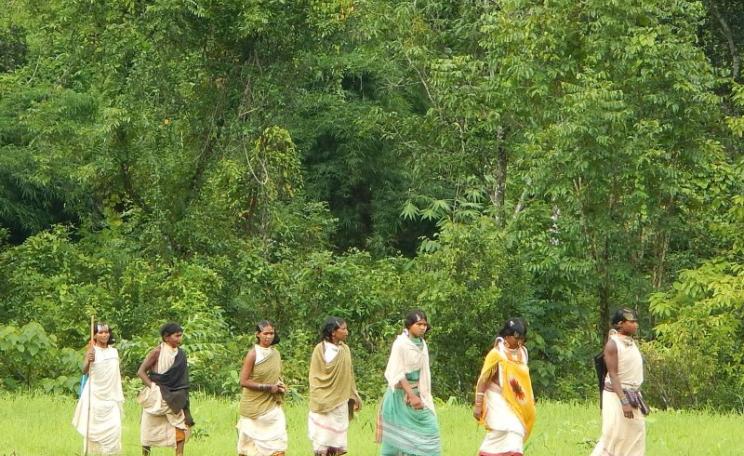
India's neoliberal government is attempting the mass seizure of indigenous lands, commons and forests in order to hand them over for corporate exploitation with mines, dams and plantations, writes Pushpa Achanta. But tribal communities are rising up to resist the takeover, which is not only morally reprehensible but violates India's own laws and international human rights obligations.
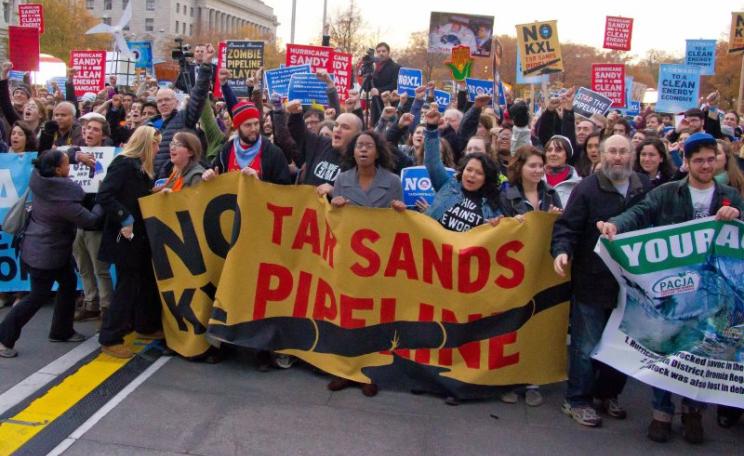
US President Obama today refused to permit the 1,200 mile Keystone XL pipeline from Alberta to Nebraska that would have carried 800,000 barrels of oil a year of tarsands oil into the US, citing climate concerns.
The UK's nuclear deal with China makes no sense, writes Jeffrey Henderson - unless you factor in the simultaneous agreement to forge lucrative links between UK and Chinese financial markets. Lucrative, that is, for the City institutions whose interests the British government so assiduously represents. As for the rest of us, our task is simple: to bear the ever-growing cost.
The European Food Safety Authority is about to decide on a re-authorisation of glyphosate, a 'probable carcinogen', based on unpublished industry studies. In this Open Letter to the European Commissioner for Health and Food Safety, campaigners call on him to ensure an open, scientifically robust process - and to immediately restrict the herbicide.