To date the Amazon has been a huge carbon sink, soaking up billions of tonnes of our emissions from fossil fuels, write Oliver Phillips & Roel Brienen. But now that's changing, as trees grow faster and die younger: the sink appears to be saturating.
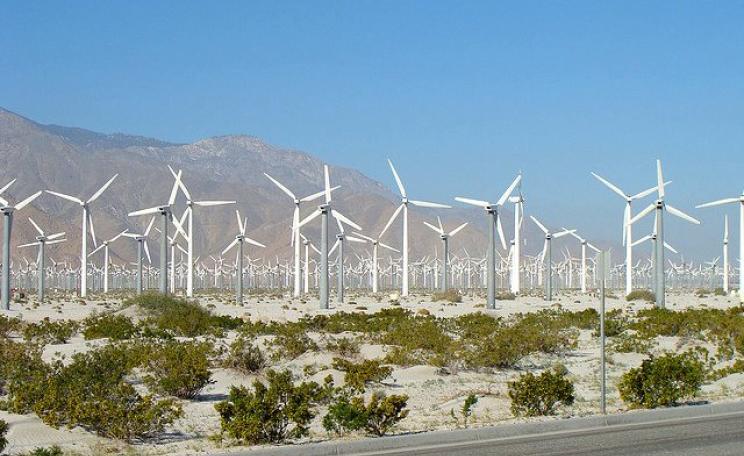
Wind generates almost a twentieth of America's power, writes Kieran Cooke - and that's set to double in five years, despite the phase-out of tax credits. Now the main constraint to future expansion is power line capacity.
The the creation of almost a million sq.km of the South Pacific as a fully protected marine area builds on a long Conservative tradition of protecting the natural environment, write Nick Hurd & Zac Goldsmith - and as factory trawlers close in on Pitcairn's pristine waters, the initiative could not have been more timely.
On Monday the World Bank's Conference on Land and Poverty begins in the US. But farmer organizations, indigenous groups, trade unions and others denounce the whole exercise as a sham that, in tandem with other Bank initiatives, is all about accelerating corporate land grabs and robbing the poor that the Bank was founded to assist.
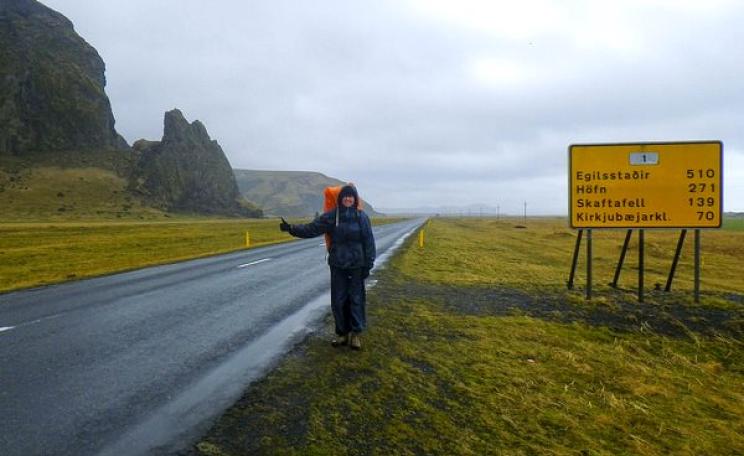
Thumbing rides must be one of the greenest forms of travel, and despite all the scare stories and public service warnings, drivers still stop for hitch-hikers. But Adam Weymouth fears for the future of hitching, as the 'sharing economy' sanitizes the experience and strips out the essential sense of adventure, revolution and travelling into the unknown.
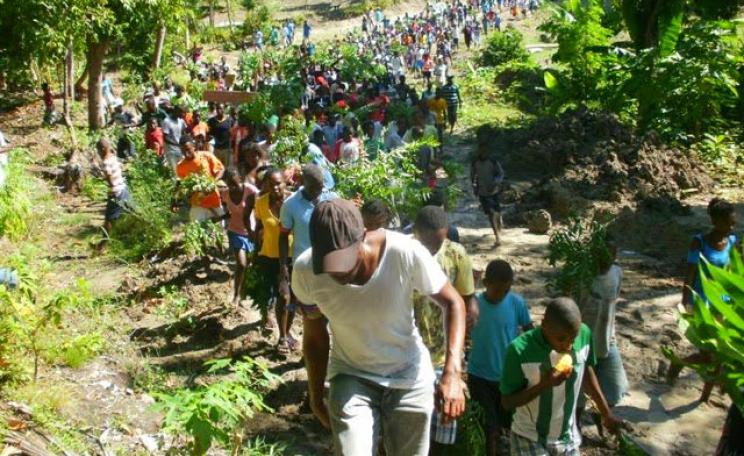
At the heart of Poland's capital, Warsaw, farmers have founded a flourishing encampment known as the 'Green City', writes Julian Rose. It's a focus of protest against the sell-off of their land to agribusiness, the arrival of GMO crops, and the imposition of a failed 'Western' model of farming that's creating huge corporate profits while debasing food and bankrupting small farmers.
Another budget, another missed opportunity: the VAT system charges the full 20% on home upgrades, but 'zero-rates' developers who demolish and rebuild, writes Duncan Baker-Brown. Instead we should target VAT to reward those who meet 'green' criteria for energy efficiency and sustainability. Chancellors in waiting, listen up!
The state of Florida has banned employees from using the terms 'global warming' or 'climate change'. But as George Marshall writes, it shouldn't have bothered. 'Climate change' sounds curiously reassuring and even 'global warming' has a comforting ring. How about 'climate chaos' or 'global heating'?
Rising temperatures will result in more snow falling in Antarctica, and the build-up of ice will reduce sea level rise from other sources. But as the extra weight of ice makes Antarctica's glaciers flow faster, the continent will still be a net contributor to sea level rise.
Univerisities' core mission is one of civilization and enlightenment, and that's incompatible with investing in fossil fuels that pose an existential threat to humanity and the planet, writes Cutler J Cleveland. It's is also financially prudent for for them to avoid sinking capital into future 'stranded assets' of unburnable carbon.
Edelman, the global PR group, has a history of aggressive 'consent engineering' for the fossil fuel industry in North America, writes Paul Mobbs. So what are they doing running 'impartial' UK bodies including a Parliamentary group on unconventional oil and gas, and the 'independent' Task Force on Shale Gas? Are they really US-style 'astroturf' bodies designed to fool us all?
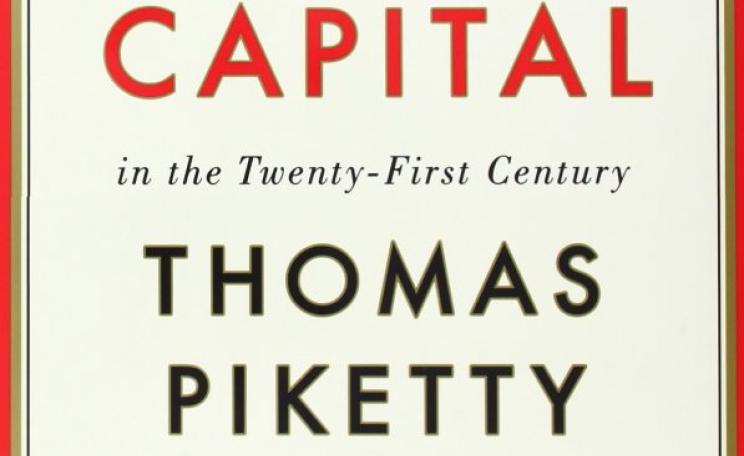
Piketty's 'Capital in the 21st Century' has taken the intellectual world by storm, writes Rupert Read. His analysis of wealth inequality is timely and powerful, but there's one crucial thing he hasn't 'got': that growth must run up against ecological limits - indeed it already has.
The Democratic Republic of Congo is to consult UNESCO, writes Melanie Gouby, over its wish to 'explore judiciously' for oil in Africa's first and most biodiverse National Park and World Heritage Site.
Mining corporations, politicians and big NGOs are meeting in London today to plan the future of extractive industries in Africa, write Nnimmo Bassey & Sheila Berry. Absent African civil society and impacted communities, delegates are setting an agenda for 'resource-led development' that will cook the continent in the greenhouse gases of its plundered oil, gas and coal.
The indigenous peoples of the Amazon are employing the tactics of the Occupy movement against oil companies, gold miners and illegal loggers, writes Marc Brightman. Their methods are home-grown: lacking the protection of the state, they have always had to fight their own battles. But recent campaign successes owe much to outside support. We must maintain, and strengthen, our solidarity.