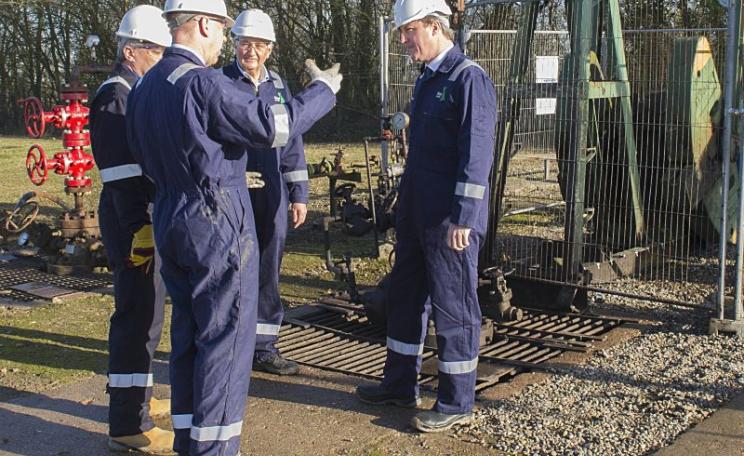
Last week a massive 350 hectare open cast coal mine at Druridge Bay took an important step towards winning panning permission. This got Chris Goodall wondering: what if the land was turned into a solar farm instead? His surprise discovery: solar power on England's south coast already costs no more than coal - and it's only getting cheaper.
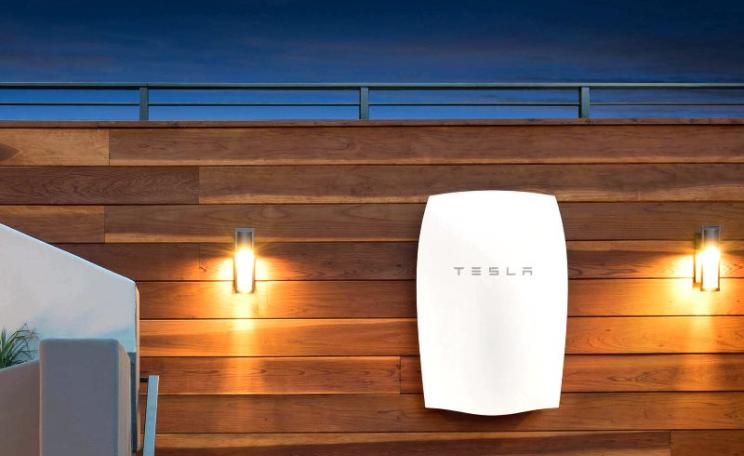
Renewable electricity is already undermining the big energy utilities' business model, writes Emma Howard, breaking their monopoly and bringing down energy bills. But with the unfolding battery revolution, it's going to reach a whole new level as wind and solar powered families and communities become ever more self-sufficient, leaving utilities high and dry.
Campaigners fear that the abolition of DECC, the department of energy and climate change, indicates that climate will take a low priority in Theresa May's policy agenda. Meanwhile the pro-fracking, pro-nuclear Andrea Leadsom is in charge of environment department Defra.
A new dam on indigenous lands at Muskrat Falls will join a network of other hydroelectric projects spanning Innu territories across the Labrador-Quebec peninsula, writes Colin Samson. The continual violation of Innu rights imperils their ability to enjoy healthy and sustainable lifestyles - and follows in a long tradition of indigenous land theft in North America.
A long-awaited report by the UK Climate Change Committee has found that fracking could produce a 'substantial' emissions footprint if left unregulated, writes Victoria Seabrook, and force the government into more rapid emissions cuts in other areas of the economy to compensate.
Louise Ward, investor relations director at renewable energy investor Low Carbon, examines how Britain's renewable energy industry is starting to make other European countries green with envy.
Following the vote to leave the EU, the UK's energy and climate change policy faces major challenges, writes Paul Brown, with new nuclear power and a third London runway at Heathrow runway looking like the first casualties.
The economic impacts of the Brexit vote will very soon make themselves felt to British consumers, writes Chris Goodall - kicking off with higher fuel bills and pump prices. The good news is that nuclear power is now looking increasingly unaffordable. But renewables and green energy research are also likely to suffer, especially if under a right-wing Brexit government.
We know who the likely runners and riders are in the race to be the new Tory leader and prime minister - but where do the prospective candidates stand on fracking and other environmental issues? Joe Sandler Clarke finds them all decidedly un-green.
Thanks to fracking company Cuadrilla, grandmother Tina Rothery will be in court tomorrow over a £55,000 'debt' imposed on her for joining a peaceful occupation of a fracking site in Lancashire. But as she explains, she can't pay, she won't pay, and even if she could pay, she wouldn't. Someone has to stand up to corporate vandalism and abuse of justice - and in this case, it's her, no matter what the consequences.
Almost all UK laws that regulate fracking's impact on the environment emanate from EU directives and regulations, writes Zachary Davies Boren. Once out of the EU, the UK would be free to amend them, scrap them or simply ignore them. And given the UK's record of support for fracking and lobbying in Brussels for deregulation, that may be exactly what the Brexiteers have planned.
There are now some 50 Marine Conservation Zones (MCZ) in England and Wales. Amy Hall reports on how campaigners fighting the re-opening of a Cornish quarry in one of the zones are effectively testing what the designation really means and how much protection it guarantees.
The key study that justifies the Government's claim that fracking is a climate change 'solution' is based on serious scientific errors, writes Nick Cowern. Not only has the Government failed to correct them, but it is now delaying the publication of a new official report that would reveal the truth - that fracking is considerably worse for the world's climate than coal.
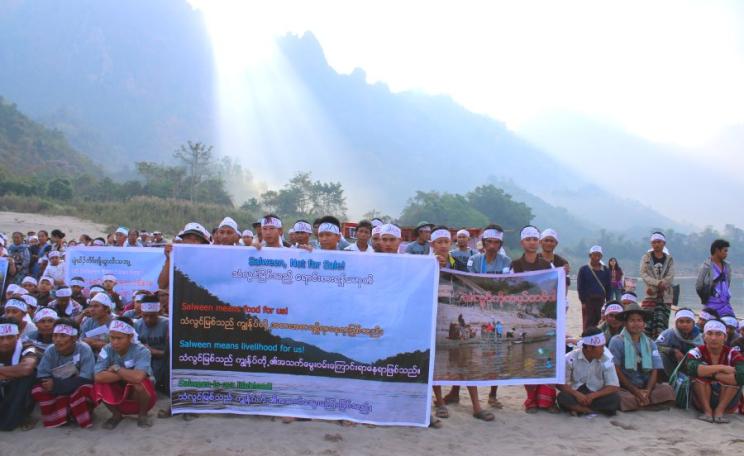
The free-flowing Salween is the last big undammed river in Southeast Asia, home to a flurry of endangered species including tigers and clouded leopards, writes Tom Fawthrop in Hpa-an, Karen State, Myanmar. And thanks to support from both the indigenous Karen people, and senior officials in China who see the huge ecotourism potential of the river and its dramatic gorge, it could just stay that way.
The UK government is all for fracking, writes Dr Robin Russell-Jones, but on climate grounds alone it should be banned. Evidence from the US shows that shale gas is twice as dirty as coal from a climate viewpoint due to 'fugitive emissions' of methane. That makes fracking incompatible with the UK's climate change commitments and the Paris Agreement - as the CCC may soon rule.